
The Emerald Tutu is a grant-funded research group working to design and implement biomass-based coastal protection/restoration infrastructure. Much of our current work, experimental deployment areas, and community connections are in East Boston, Massachusetts—but the techniques we’re developing are widely applicable to coastal areas where our dominant plant species, Spartina alterniflora a.k.a. common saltmarsh grass or cordgrass, grows natively.
We design, build, and deploy floating wetlands and living shorelines with biomass and natural materials, using a community-based, “Do-It-Together,” approach. We believe that these simple, inclusive techniques for Nature Based Infrastructure and coastal restoration are crucial to scaling these up beyond small, one-off pilot projects to more significant ecosystem transformations. Adding any soft, spongy vegetation between the wave energy of the ocean and the human structures on land helps dampen waves—thus reducing erosion, storm damage, and flooding while improving habitat and water quality of the ecosystem.
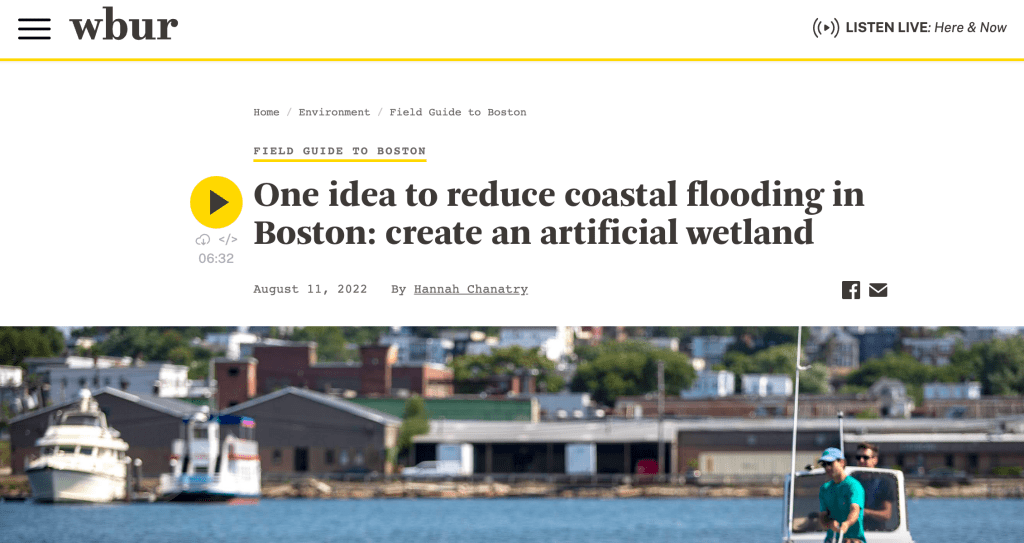
One major area of our research—floating wetlands—imagines a network of interconnected, massive organic growing modules anchored in nearshore coastal areas.
The other major area of our research—living shorelines—imagines a mosaic of massive organic growing beds that nurture young plants and allow them to root into the intertidal areas of the shoreline itself.
Mission
The mission of the Emerald Tutu is to develop coastal resilience infrastructure solutions that:
- Are deployable, inexpensive, modular, and soft,
- Do not require major construction or earthmoving, and
- Utilize living plant tissue for structure, and plant waste and biomass as raw materials.
Despite the need for more coastal protection against the ravages of storms and rising tides, traditional “gray infrastructure” solutions such as hard seawalls, groins, revetments, and barriers are no longer permissible by most US regulatory bodies. They have been shown to cause ecological and structural harm, with unintended effects such as sediment scouring, wave reflection, or washout, and they use carbon-intensive materials such as concrete and steel.
There is an urgent need for simple, scalable alternatives that protect coastlines while providing habitat and minimizing harm.
Origins
In the 1870s, the infamous “grandfather of landscape architecture,” Frederick Law Olmsted, was tasked with some tricky marsh management problems on the Muddy River in Boston. He envisioned a varied but unified multi-purpose network of parks where inhabitants of the loud, smoggy, industrialized city could find healthy physical activity and mental peace. And he called it the Emerald Necklace. This naturalistic picturesque series of public spaces would bring miniature bits of nature into the city, providing public space while managing drainage and integrating parkway roads and electrified trainways.
In our era, the Emerald Necklace is one untouchable treasure among many that comprise our hollow and calcified urban history. We need to buck the overly-reverent attitude, rewriting the city in a new image that reflects the urgency of change. We need an approach of abundance and lightheartedness, cheekiness and willingness to try new things. While seriously addressing the most serious crises—gentrification and climate change—we need to stop taking ourselves so seriously. We need a tutu.
Philosophy & Methodology
Design Philosophy
Prioritize Natural, Soft, Living Materials
Living plant roots strengthen over time and self-renew, whereas manufactured materials weaken and degrade. Soft materials absorb wave energy, whereas hard materials reflect incoming energy and amplify damage elsewhere. Engineering with these natural, soft materials presents many challenges, but low-carbon low-impact ecological design requires innovative engineering standards.
Elemental Engineering
Our design approach prioritizes elemental simplicity. We shy away from extra hardware or “add on” solutions to design problems, instead focusing on the fundamental relationships between materials, organisms, and energy at a systems scale.
Modularity, Scalability, Replaceability
Our design approach aims for multiplicity. This approach gives us the ability to expand as budgets and timing allow, and to know that failures are not catastrophic. We design with maintenance in mind rather than presuming to design for permanence.
Ecosystems First
We approach infrastructure design with intended ecosystem rehabilitation as a given, rather than solving an engineering problem and assessing its side-effects after the fact. Our approach prioritizes the creation of new habitats and the improvement of existing habitats.
Community-Benefit Methodology
In our era, public investments in civil infrastructure for climate resilience should be joyful and accessible, encouraging everyday recreational use and environmental benefits.
Moreover, these infrastructure investments should target the local populations, keeping the economic benefits local for both initial implementation and ongoing upkeep. Our research approach creates material knowledge, observational guidelines, and hands-on methods that are learnable without a formal scientific or engineering education.
We have worked extensively with teams of locals through “Climate Corps” youth programs, local service non-profits, and scientists from local academic labs. Whether you call it field work, green job training, or “community engagement,” we value hands-on work, observational skills, and team power mentality.
Our era has come to understand and define ecosystems as infrastructure. We believe that infrastructure should be more like a community garden and less like complex machinery requiring specialized technicians.
PRESS LINKS
Click the images below to read our featured articles!



Meet the Team
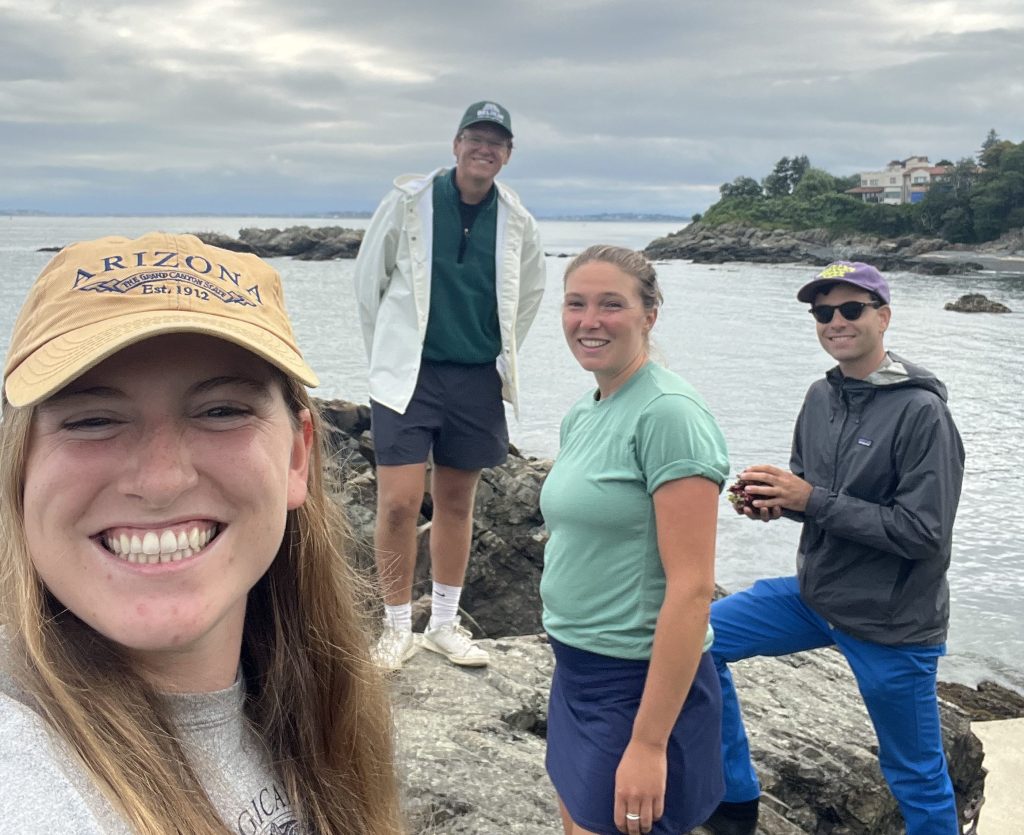
Click below to see the members of The Emerald Tutu!
Read more about Permitting, Funding, Regional Planning, and Related Groups.
Along with The Emerald Tutu’s interesting history, our workplace in East Boston at the Hess Site has an even more complex and fascinating past.
Read more about the site, our dreams, and ambitions.
 emerald-tutu.com