
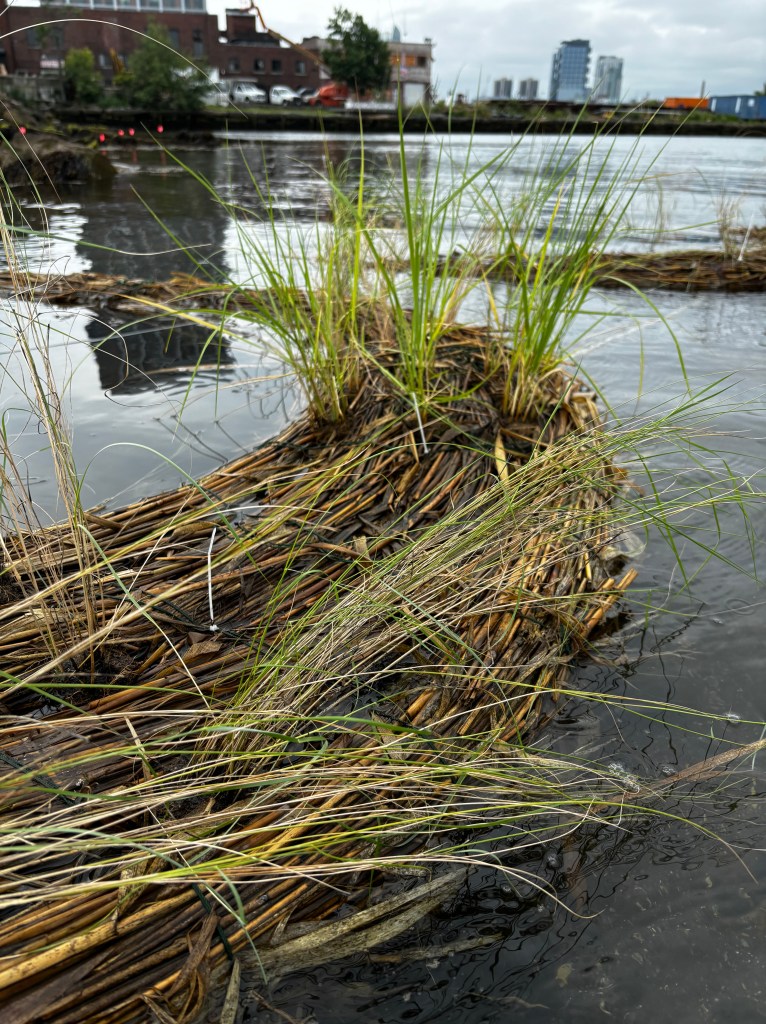
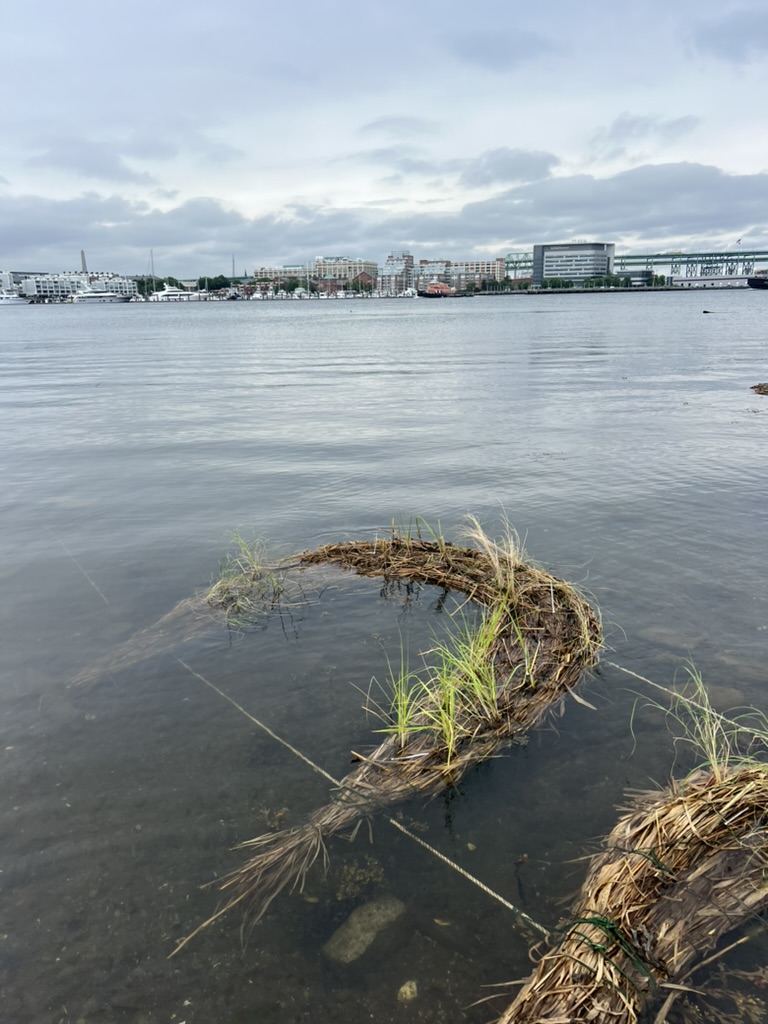
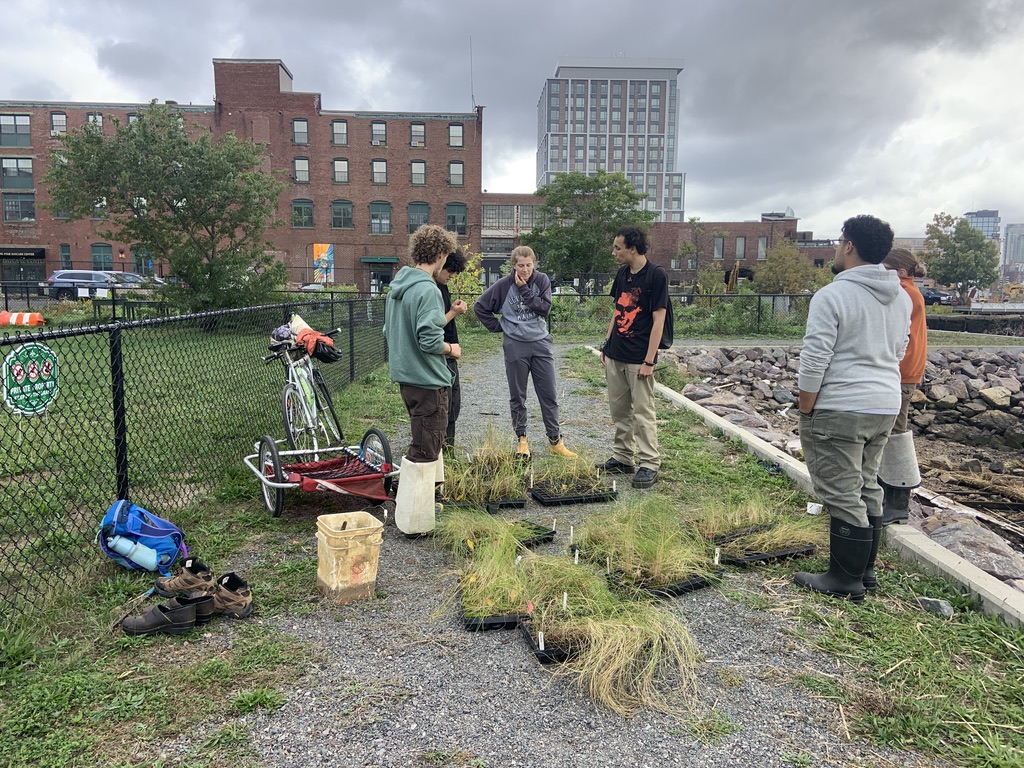
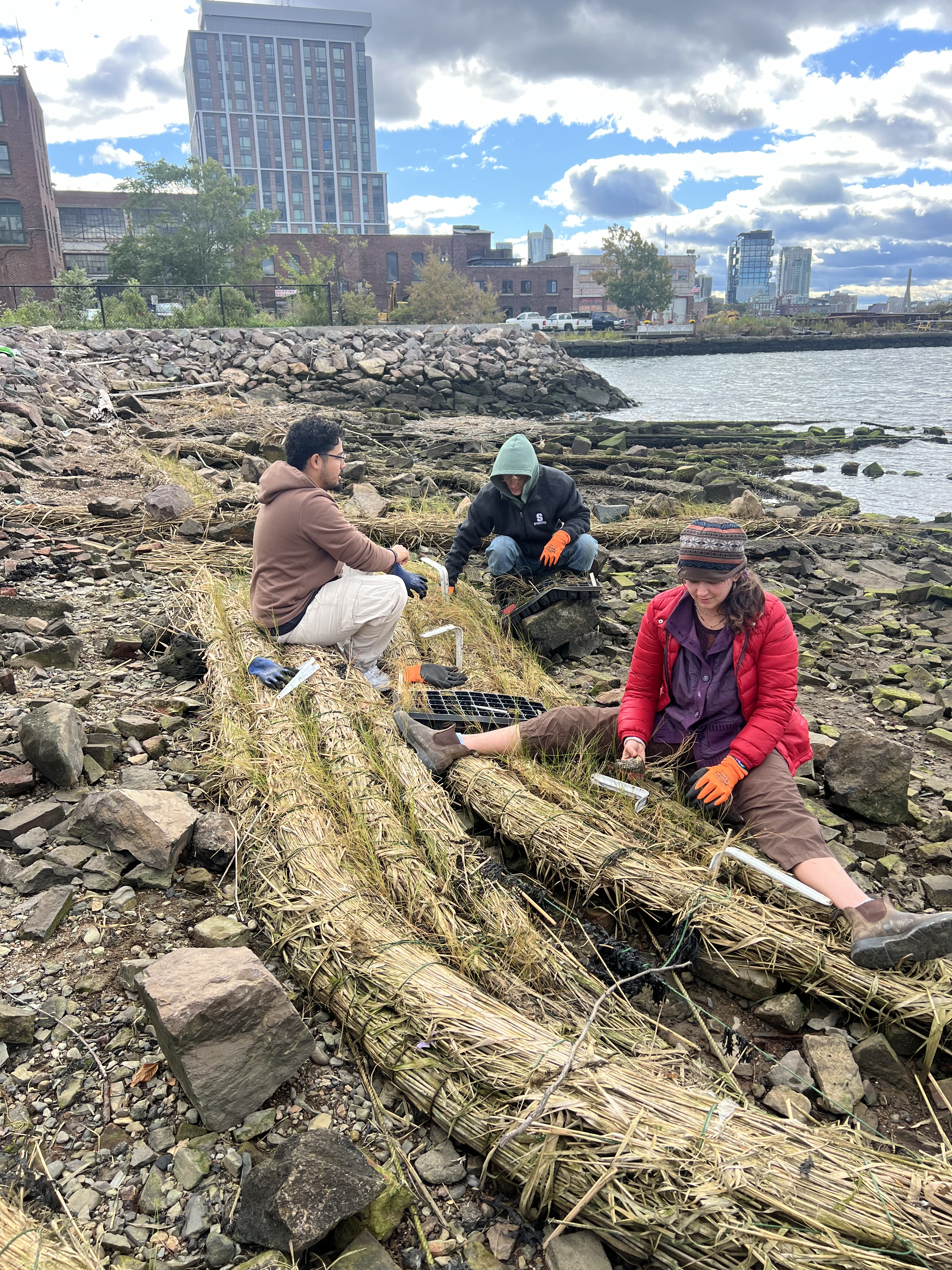
This experiment was led by scientists from Northeastern University’s Hughes Lab for Marine Biodiversity and Conservation, further building on our prototype work and expanding participation to include the Climate Corps trainees. Spartina alterniflora and Spartina patens seedlings were planted into crescent-shaped Phragmites australis living shoreline prototypes to explore the following question: How do population diversity and sourcing strategy impact plant success in a post-industrial waterfront site?
Specific field research questions:
- How do locally grown vs. commercially-sourced seedlings perform in the field? (survival rate, number of live stems, stem height)
- Does the performance of Spartina alterniflora and Spartina patens improve when grown in mixed-species plots in comparison to being grown individually?
- How does the performance of Spartina alterniflora and Spartina patens vary across elevations in the intertidal
Set Up
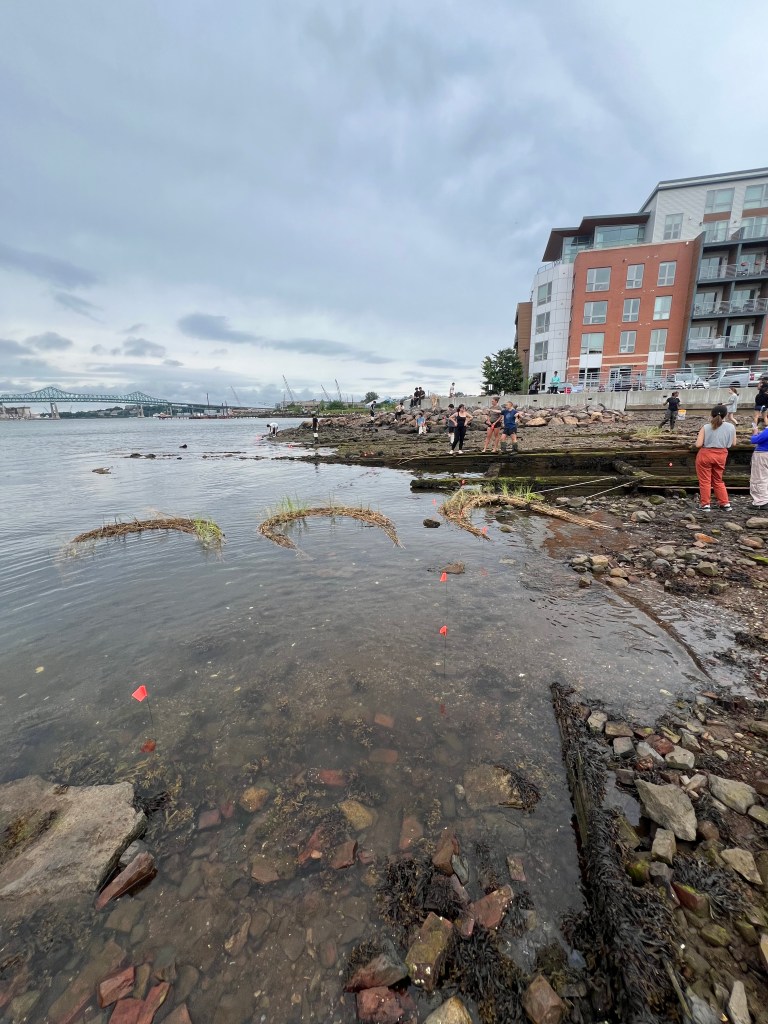
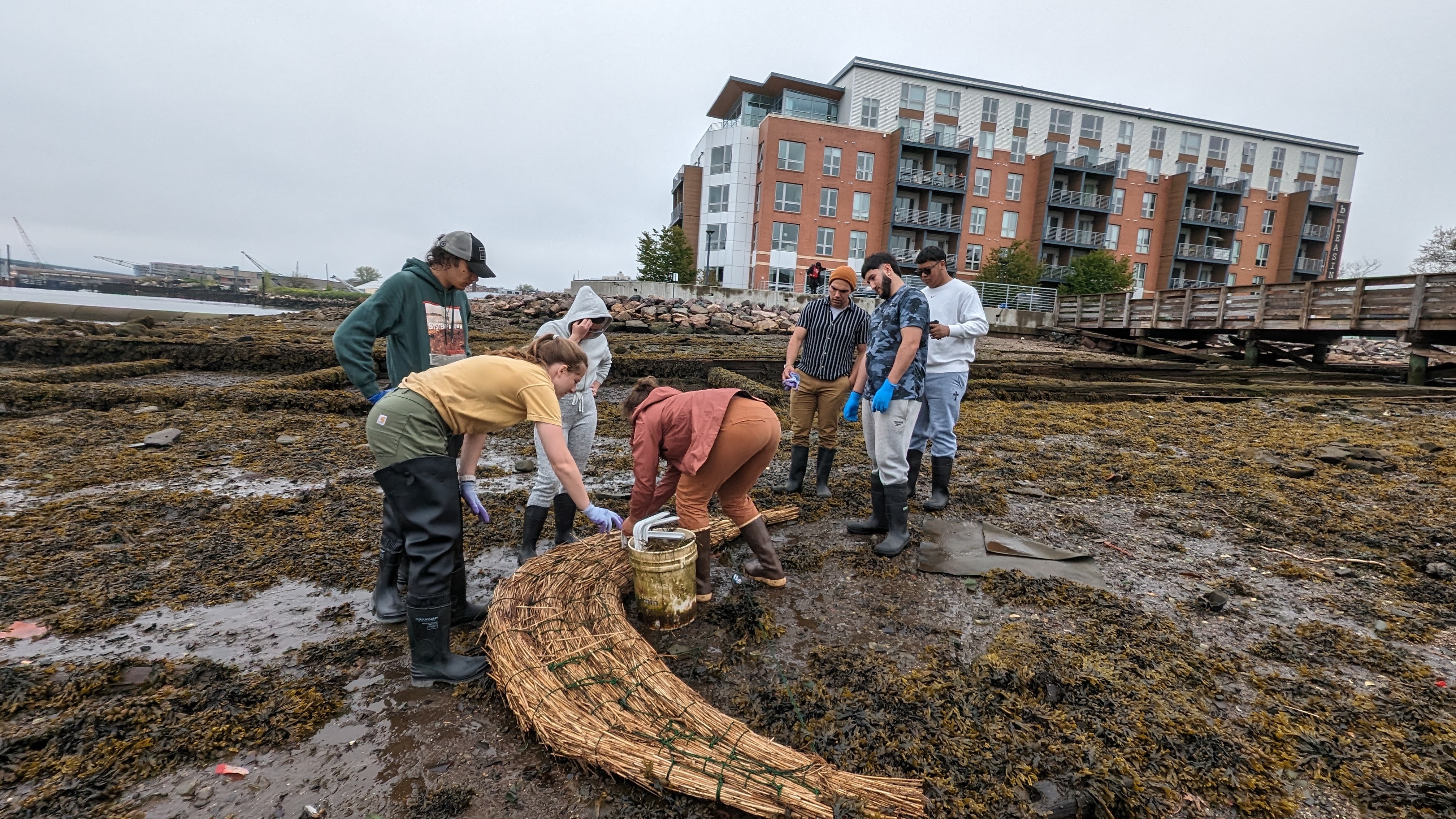
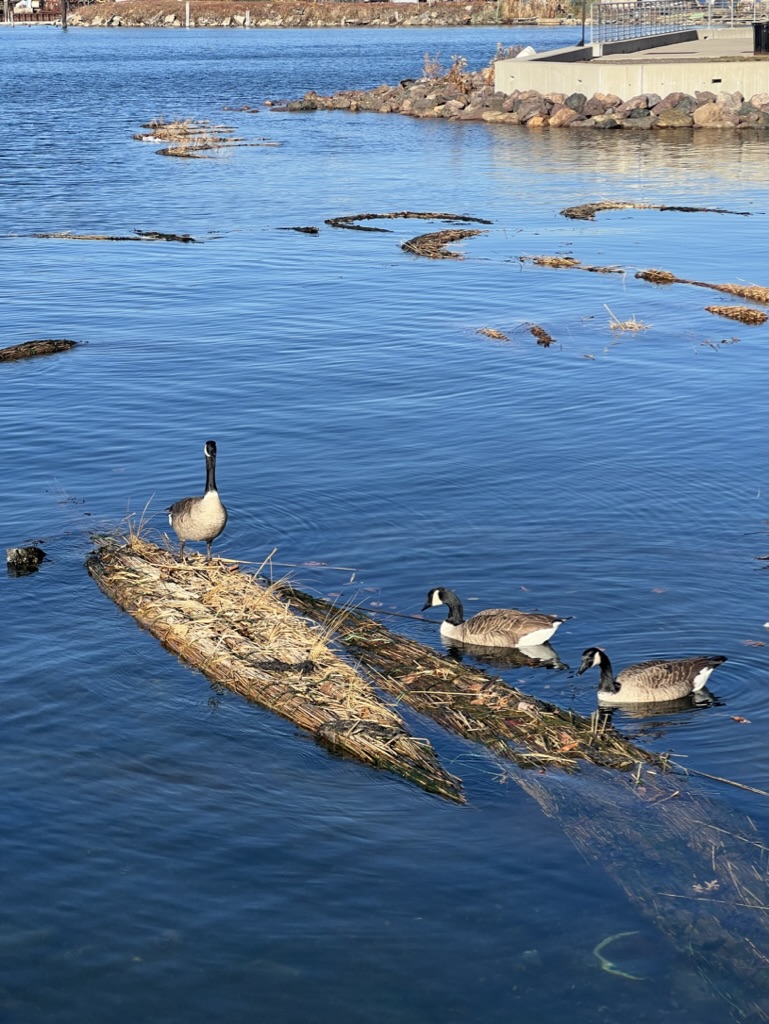
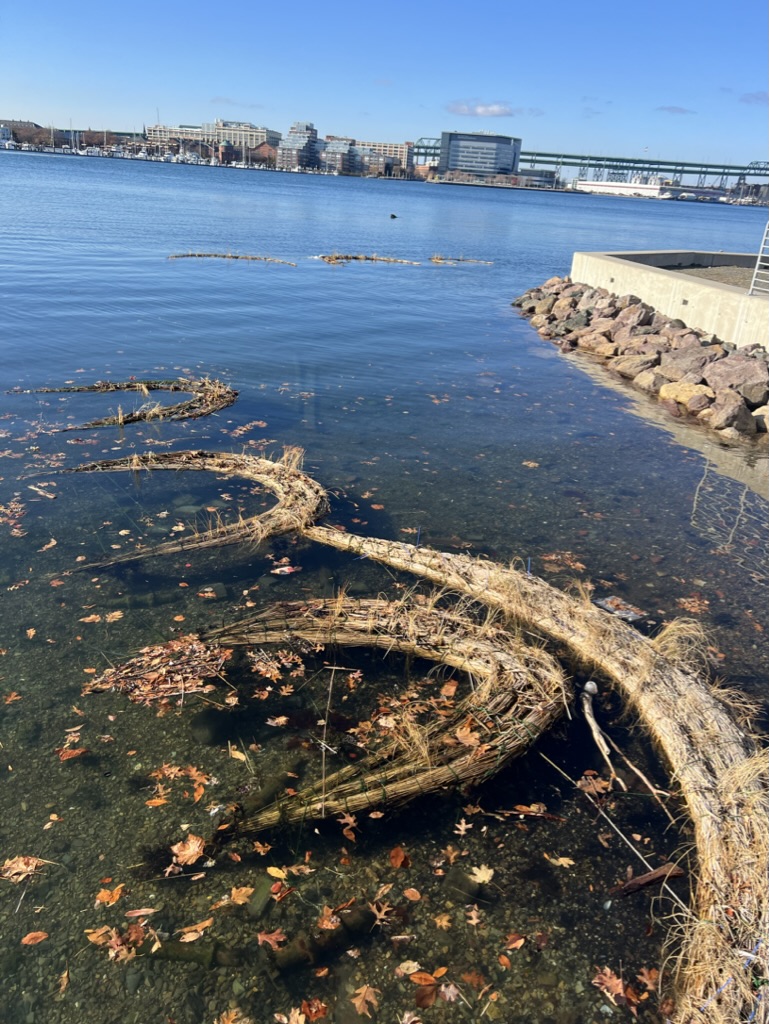
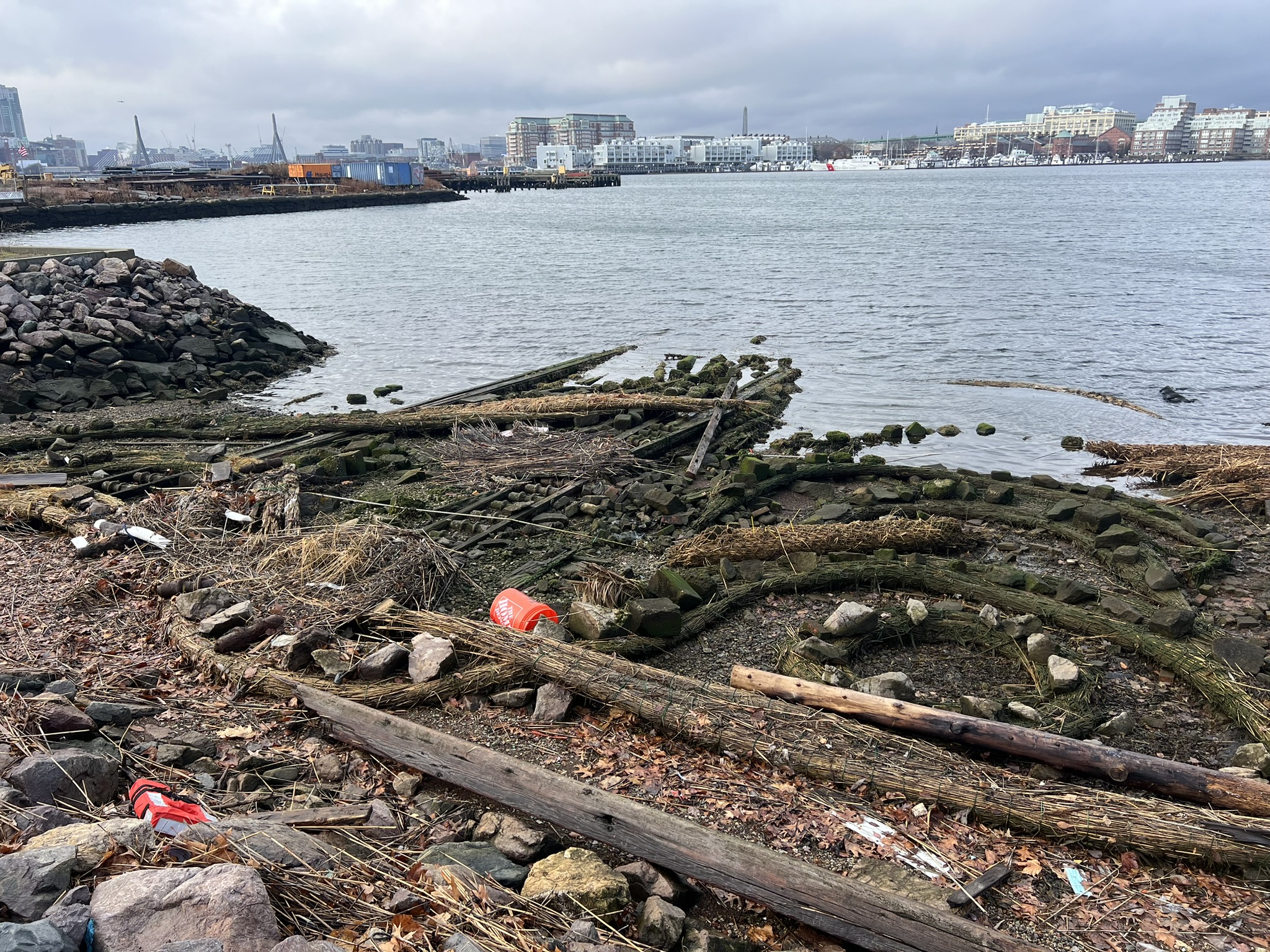
The Emerald Tutu team and the CIVIC Climate Corp Fellows built and deployed five lashed bundle living shoreline prototypes in the shape of crescents at different elevations at the Border Street Waterfront site. The prototypes were tied to the shore using rope and were originally weighed down by rocks and cast iron rollers. When Spartina plugs were planted into the living shorelines, the weights were removed to ensure the seedlings would not be crushed. This allowed the still-buoyant prototypes to float with the tide.

Results
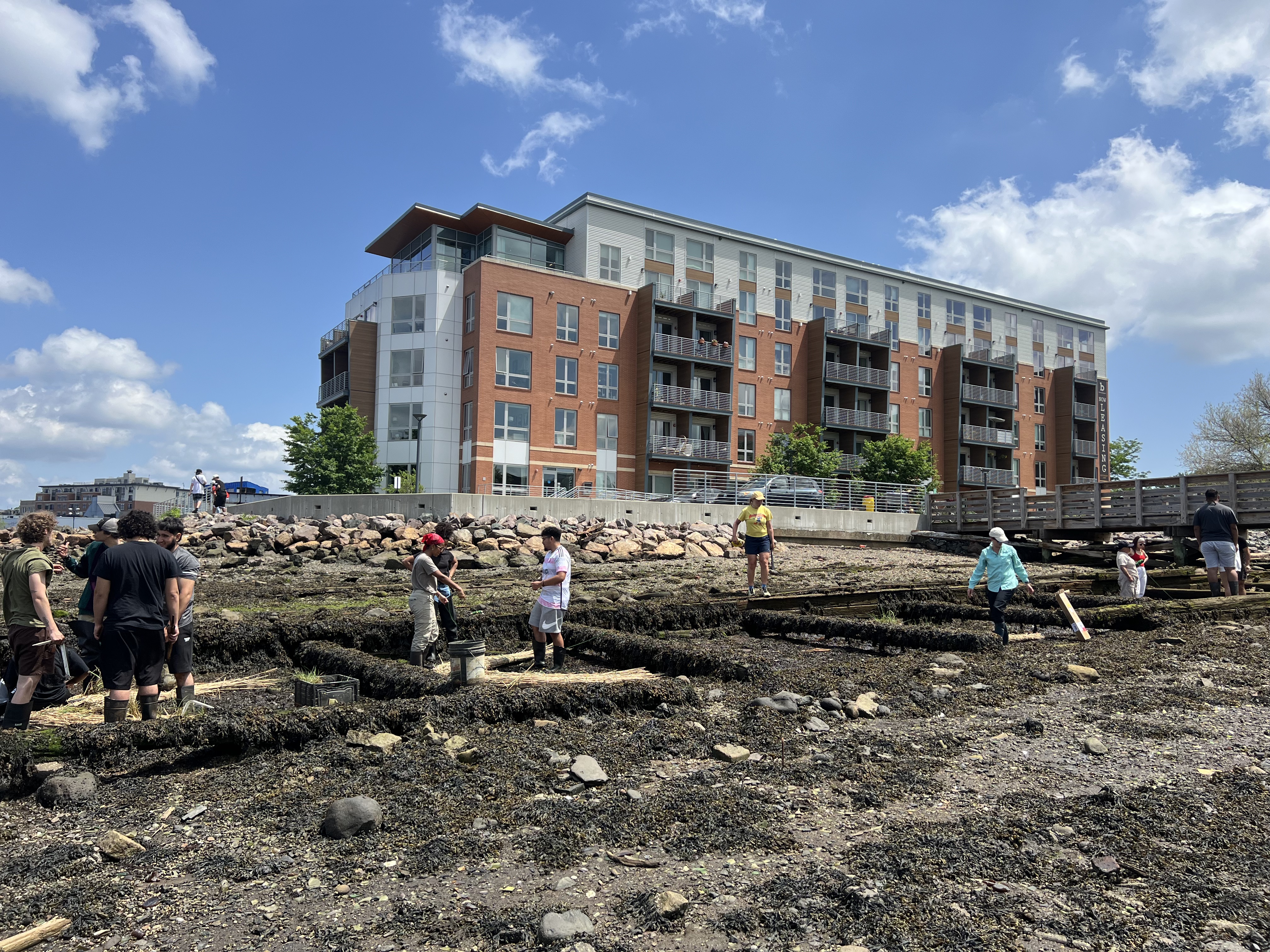
The experiments were monitored once a month to collect data on performance (survival rate, maximum stem height, number of stems) throughout Fall 2024. Preliminary observations showed that all seedlings planted in the lower elevation zone of the site experienced high mortality towards the end of the summer. The plants had a much harder time surviving at lower elevations than at higher elevations likely due to the combined stressors of inundation with seawater and not having a soil community to protect the roots.
In addition, debris continuously washed up on the beach and geese grazed on the plants, causing mortality on some frames. By the last date of collection (November 2024) most plants were not obviously alive, but they might come back in the spring.

 emerald-tutu.com