
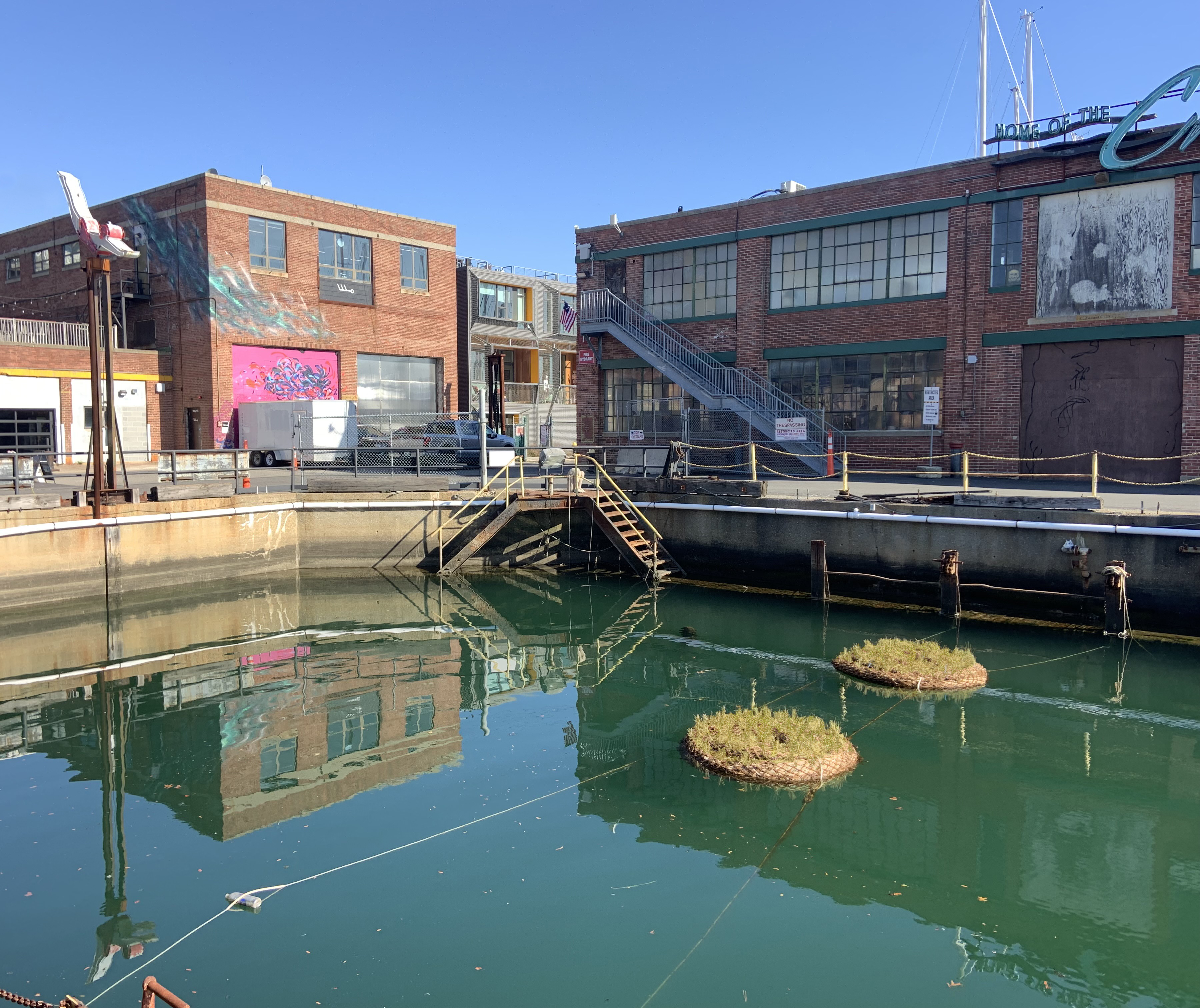
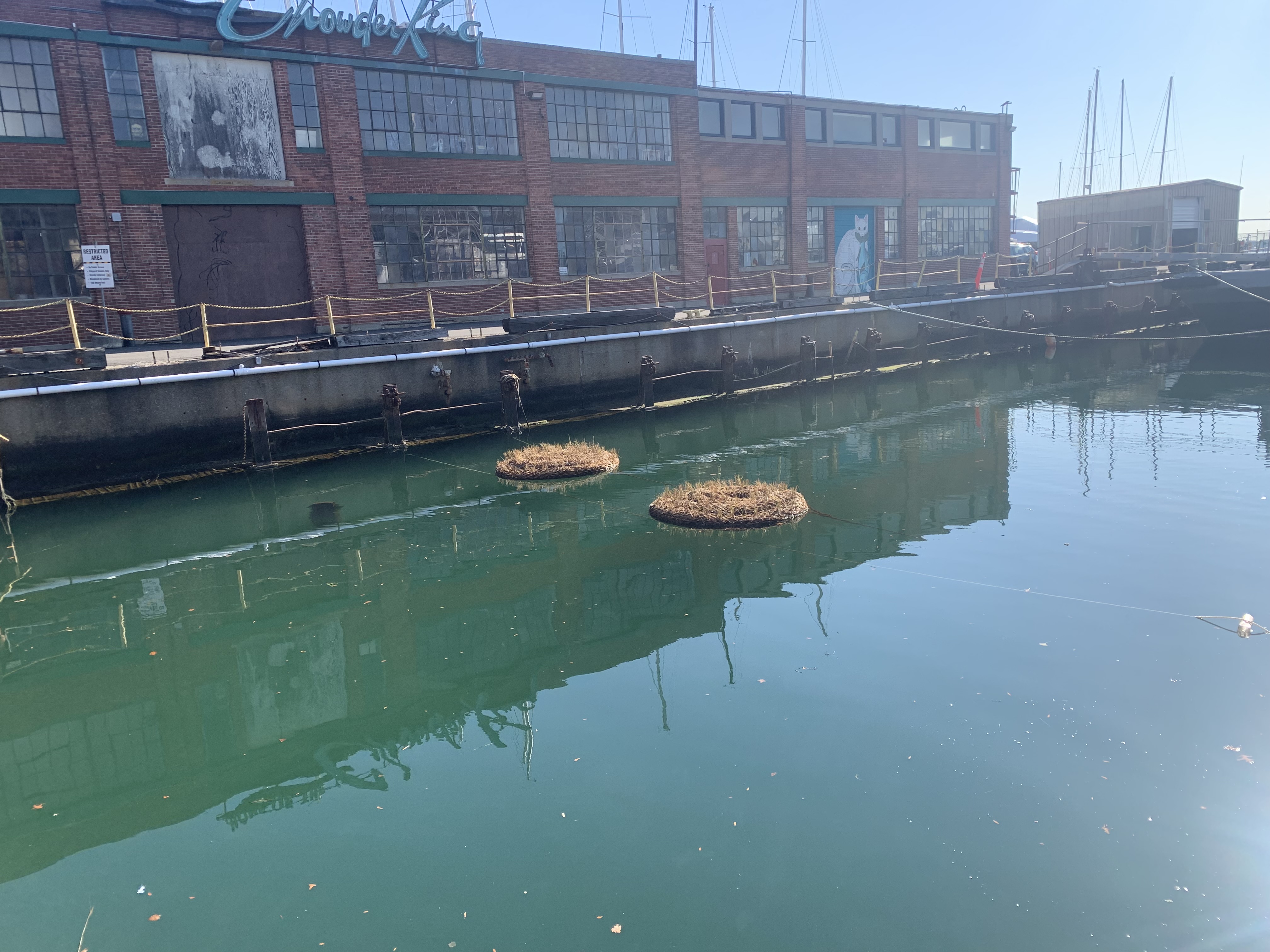
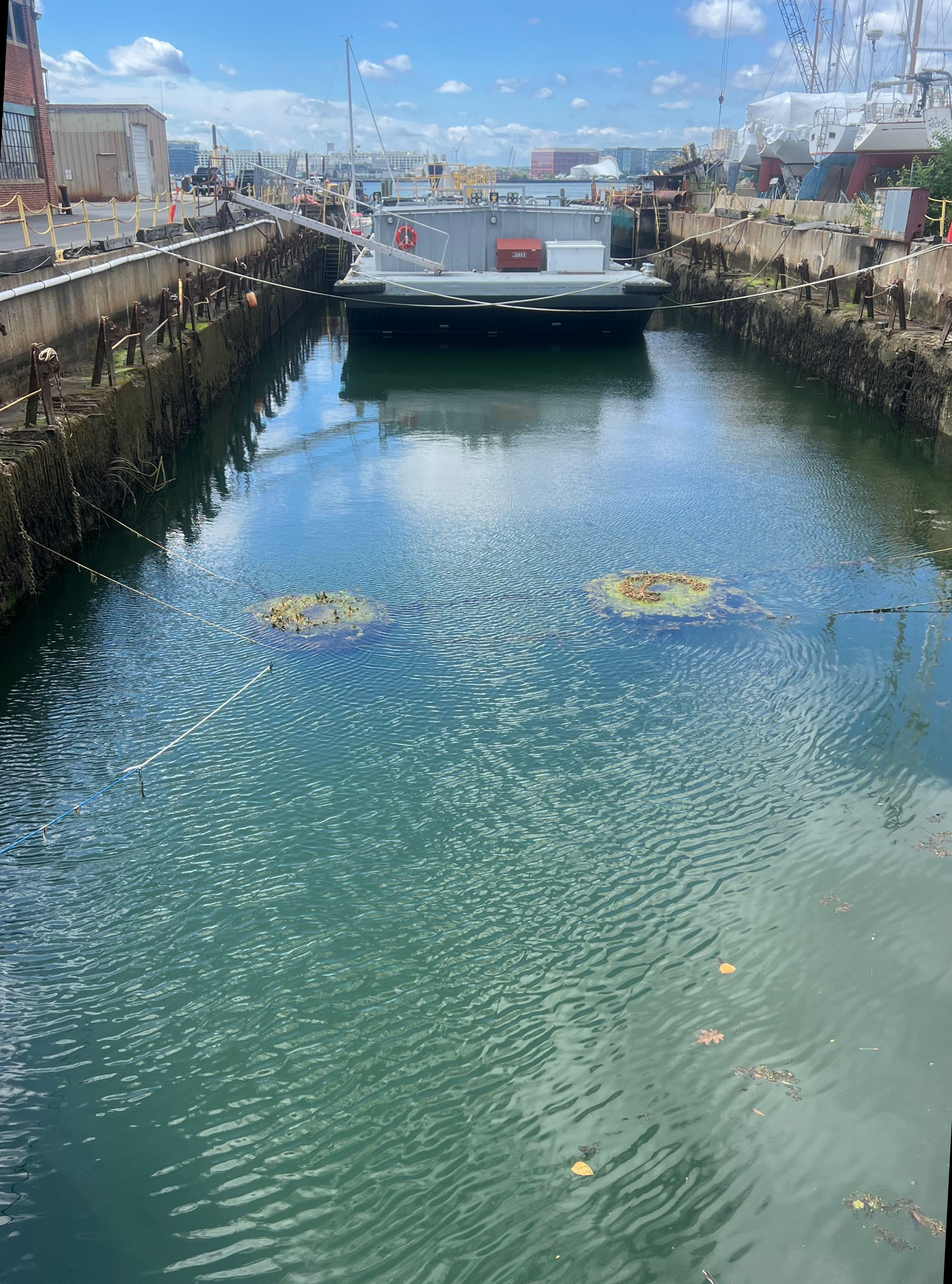
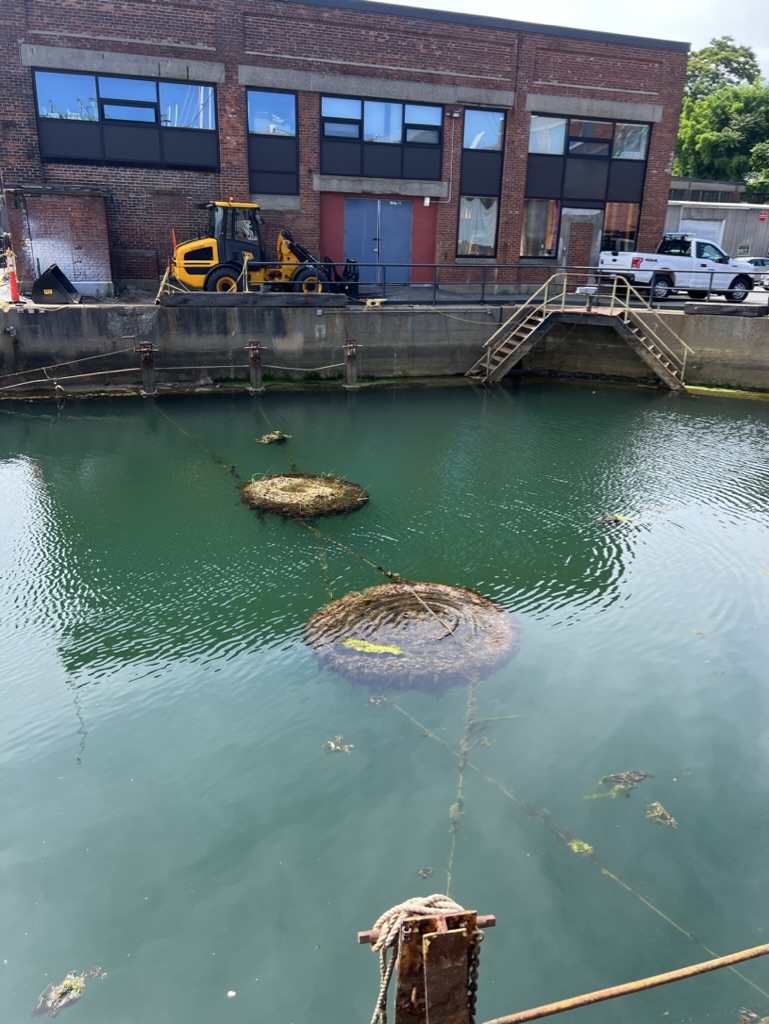
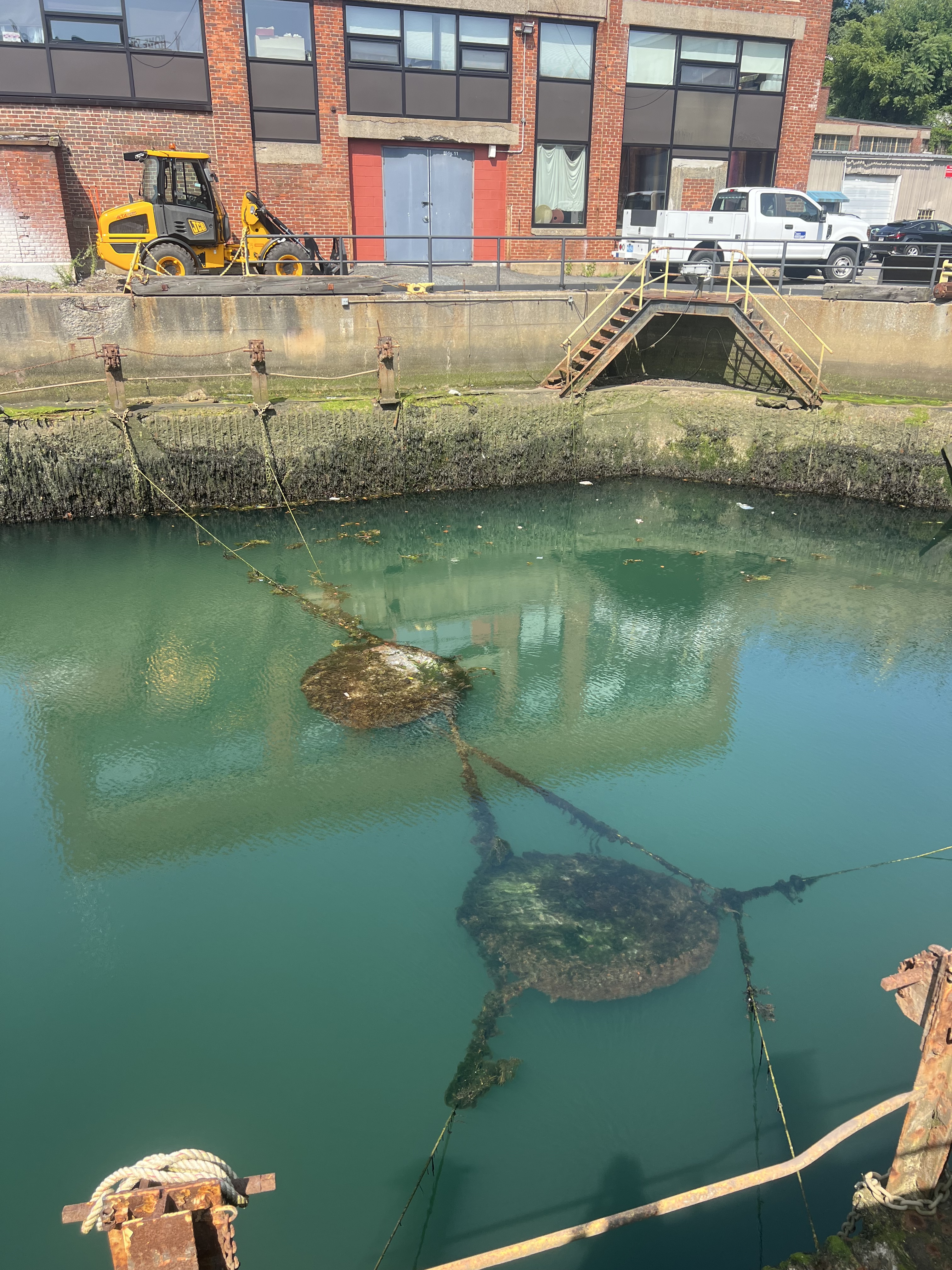
The Graving Dock is a non-functional historic dry dock in the East Boston Shipyard. The site is blocked from wind and wave energy from all sides, but subject to Boston Harbor tidal flow. The concrete wharfed inlet is lined with disused steel hoists, allowing rope attachment directly to the wharf edges to hold our prototypes in place while allowing flexibility for the tidal range.
Site Description
The graving dock was built in 1942 and is 256 feet long and 45 feet wide. The berth is surrounded on three sides by a vertical concrete wall, with an intermediate ledge that sits 5 feet below adjacent grade level. The watergate mechanisms are broken, so the inlet is open to the harbor although it is almost completely blocked by an unused barge blocking its mouth. The tidal range is 12 feet, so average high tide reached up to about 2 feet below grade level of the adjacent access roads and parking areas.
There were many logistical benefits to this site as a deployment location for floating wetlands. There is no wave activity, low wind energy, abundant mounting points, and easy observation points. There is also easy launch access from land, so no boat is required. If needed, a nearby kayak launch allows watersheet access within minutes. These conditions are perfect to track plant growth in sheltered conditions.
Prototypes
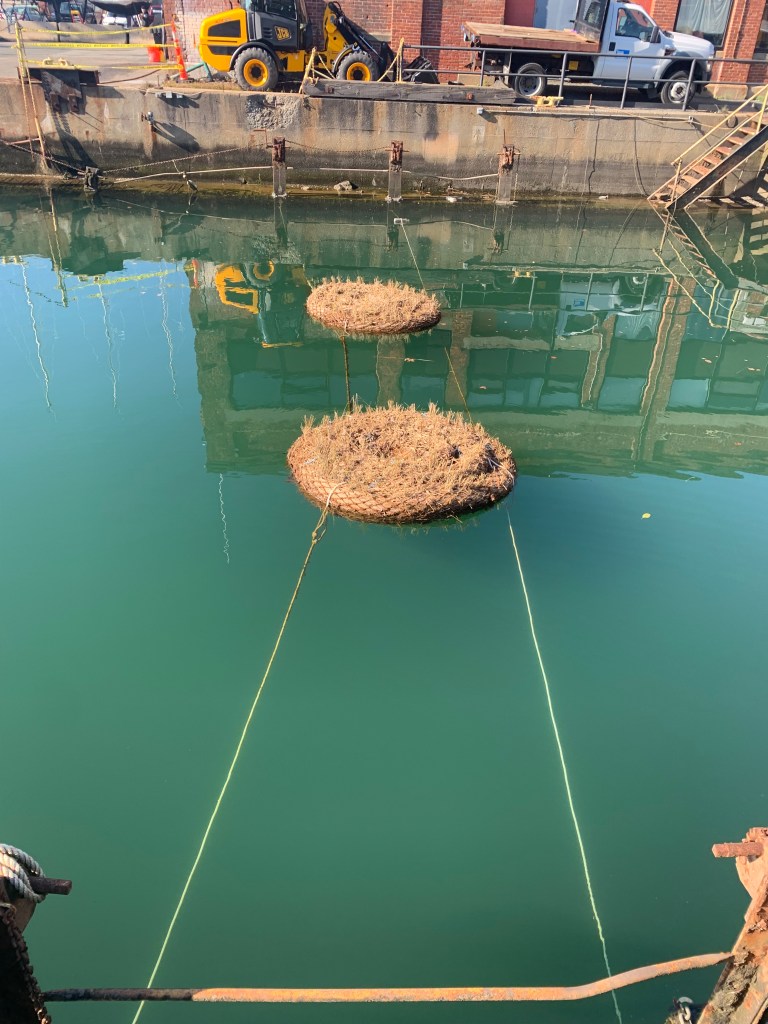
This location held two Spiral Net Prototypes attached side-by-side by two parallel ropes. On each sidewall, chains were hung vertically allowing for the cross-connections to be located at mid-tide height, and allowing for some flexibility for extreme low and high tides. The parallel ropes served as connection points for the prototypes.
Monitoring
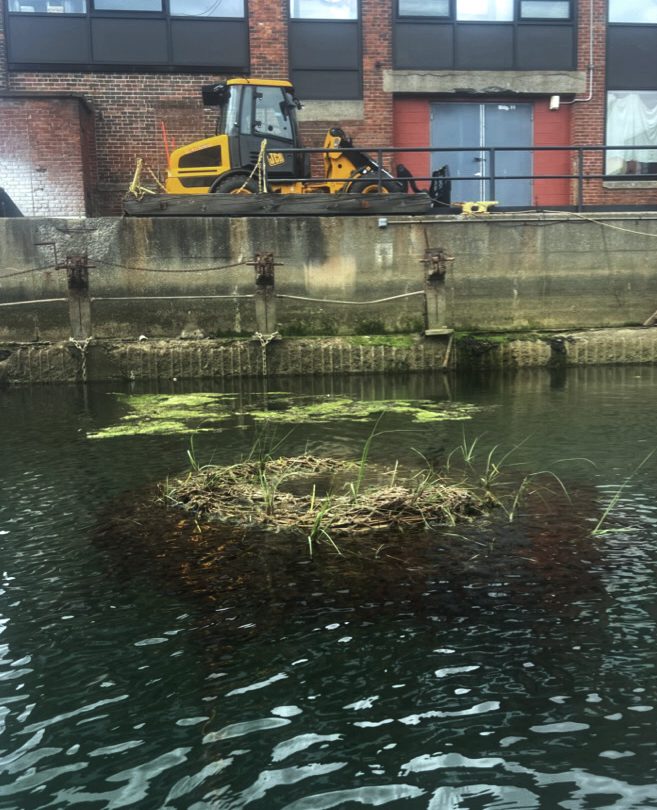
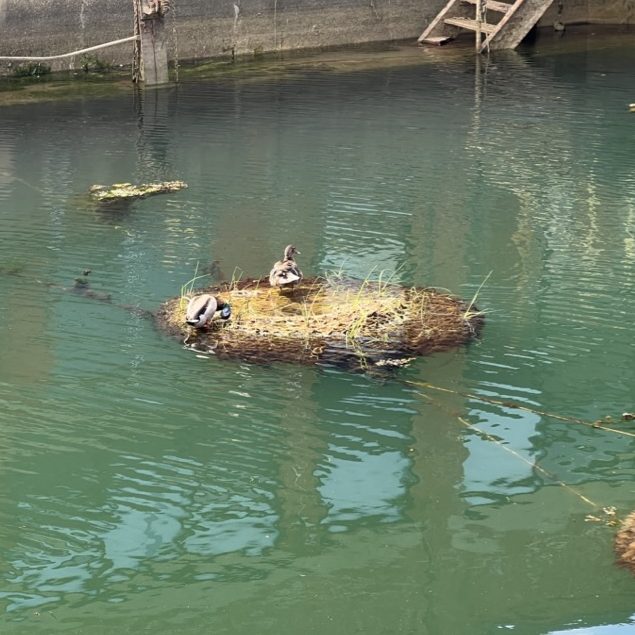
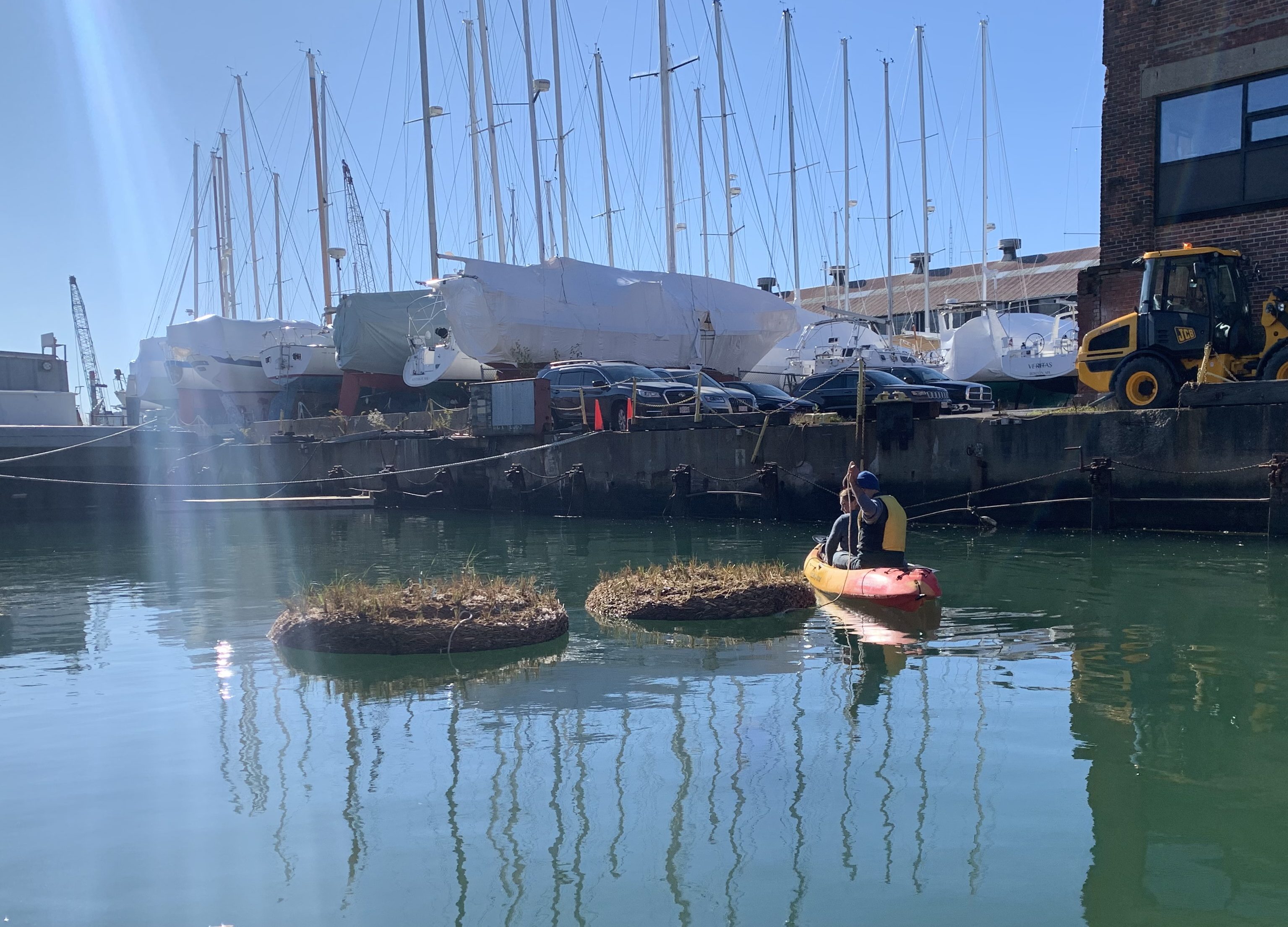
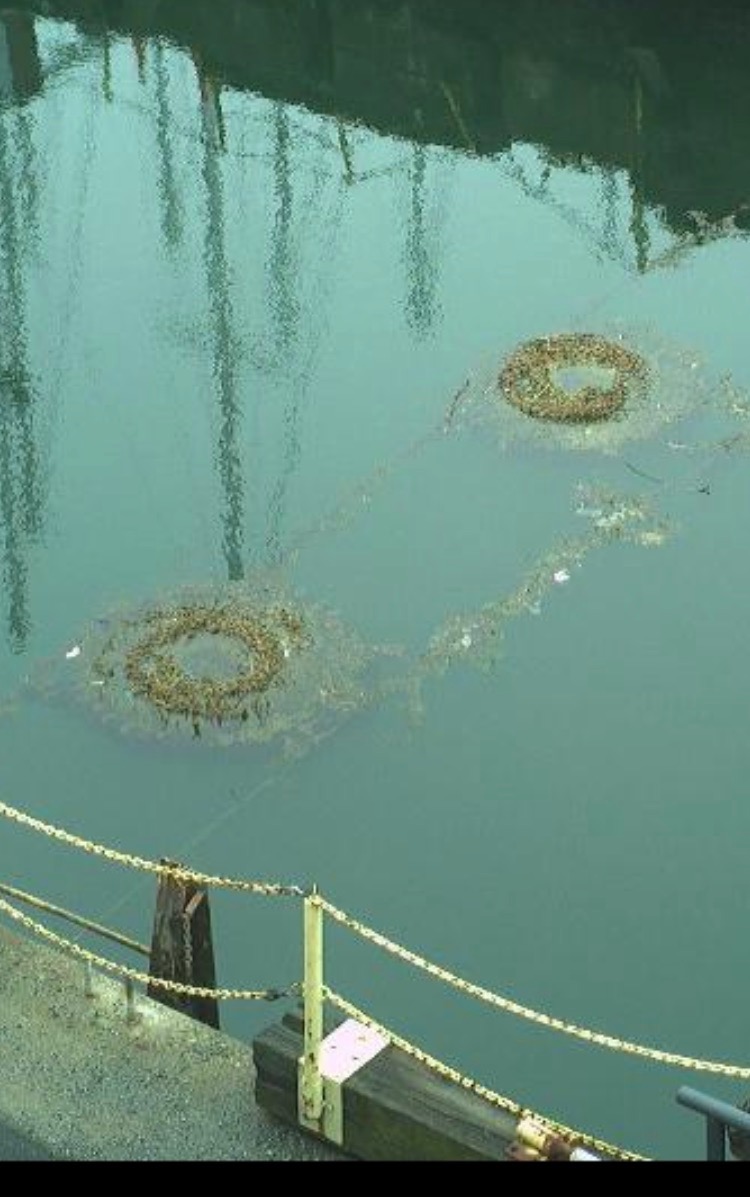
This location provided the most accessible and easy monitoring. The prototypes were very close to land and could be observed easily from shore. Birds, sprouting grass, algae extents, and buoyancy were immediately visible. We also mounted a solar camera on the adjacent building, so we were able to monitor the prototypes remotely.
Successes & Failures
Successes:
- We outfitted a highly controlled and easily accessible marine prototype site.
- Setting up a camera to view the prototypes remotely allowed us to look at growth and deformation more regularly throughout the winter.
Failures:
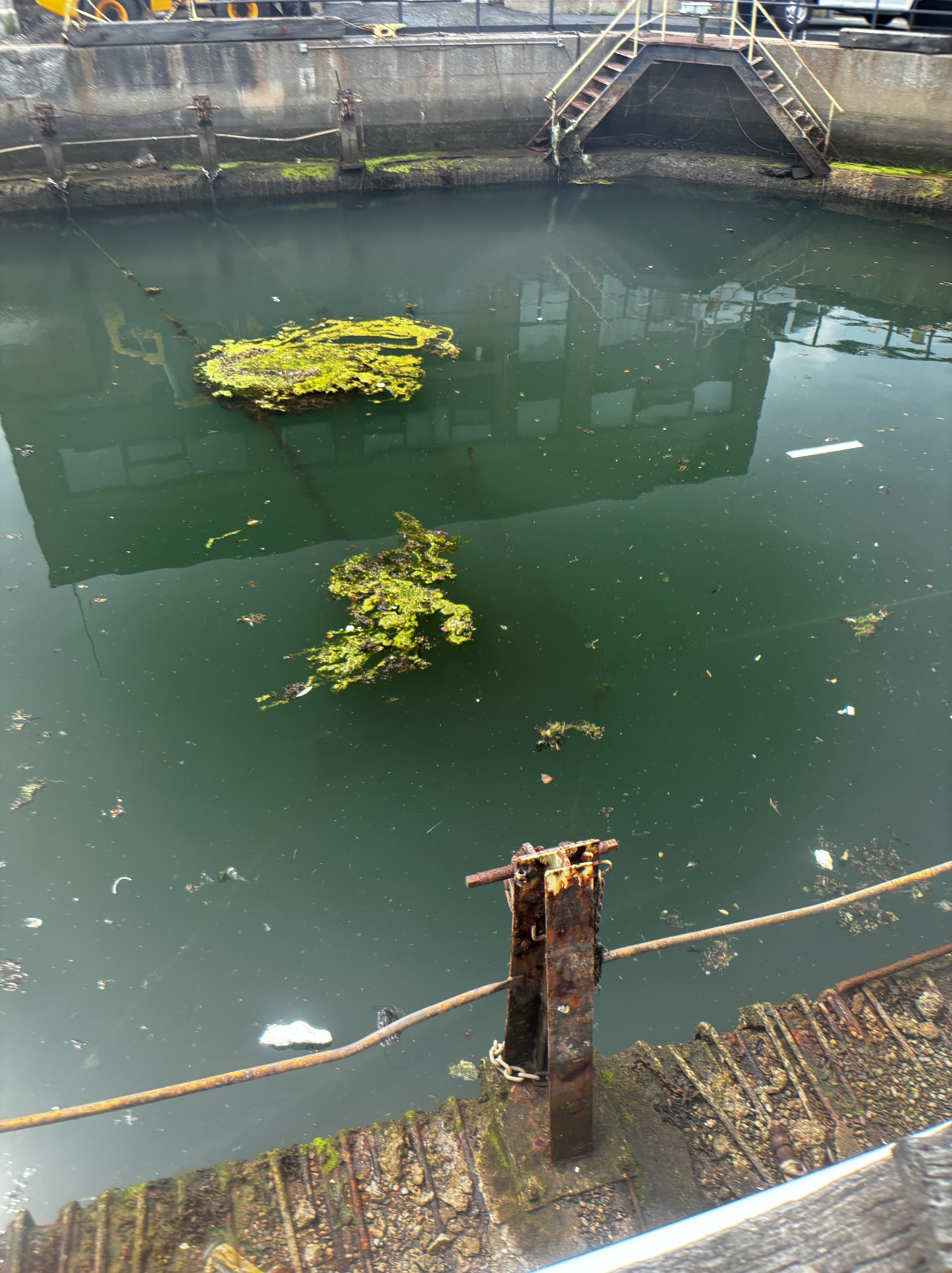
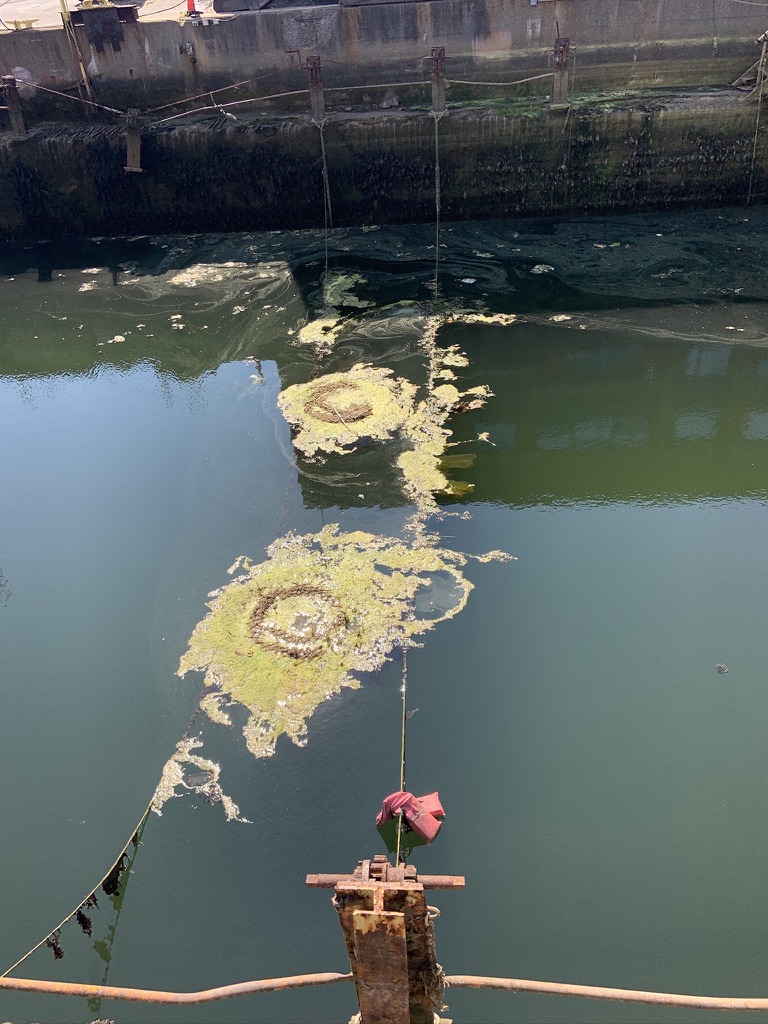
- Minimal water movement allows extreme algae growth on the prototypes and rigging, which negatively affects marsh grass plant growth.
- Uneven forces from the rope system compounded any buoyancy disequilibria in the prototypes, which became unstable and even flipped over.
 emerald-tutu.com