
Expanding on our Local seed-cultivated Spartina tests research, we harvested around 900,000 Spartina alterniflora seeds from 9 regional marshes in Fall of 2024. Due to low germination rates and previous failures, we followed the established protocols developed by nurseries and research labs very carefully.
Set Up
In late September and early October—saltmarsh seedtime in the Northeast—the team harvested Spartina alterniflora seeds from 9 marshes along the Northeast: Gloucester, Quincy, Rowley, Rumney, Belle Isle, Ipswich, Barnstable, Falmouth, Wells.

To carefully compare successes between sources, we followed an identical protocol for all seeds:
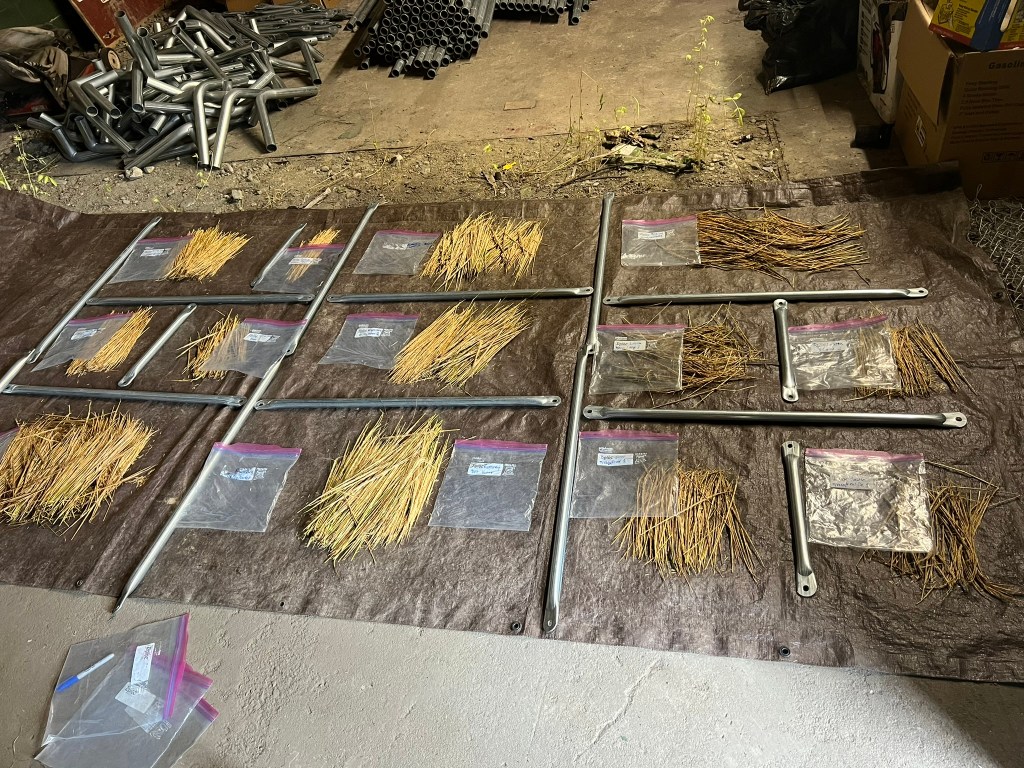
- Leave harvested spikelets for about a week in an enclosed warehouse to ripen.
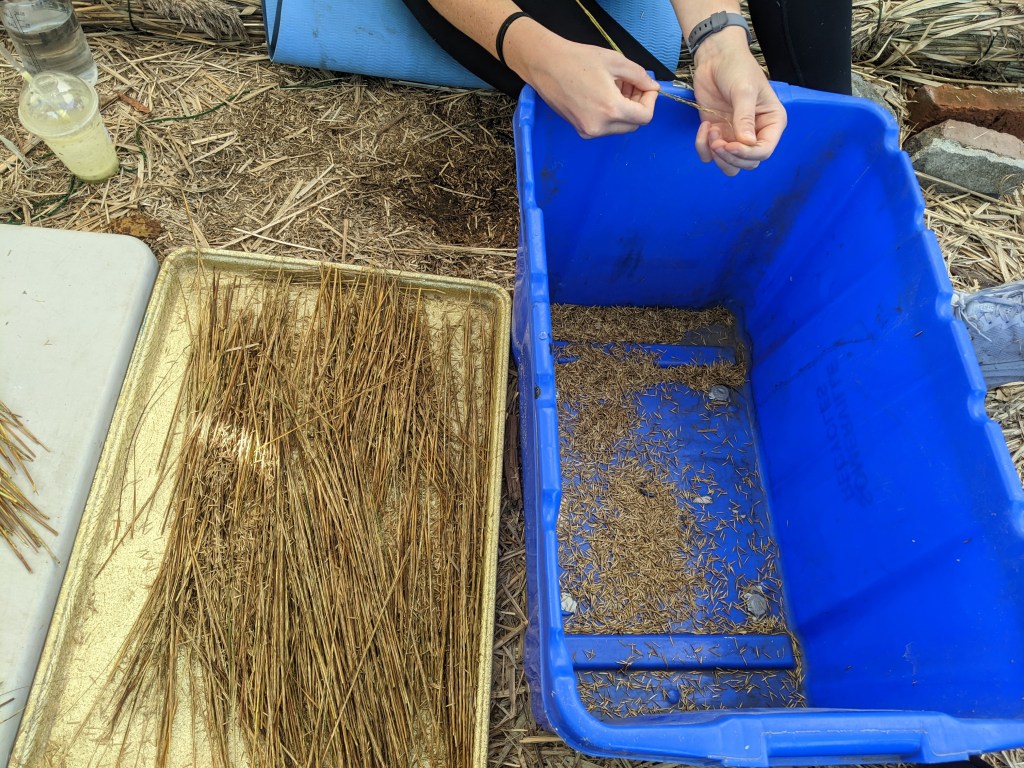
- Separate all the seeds from the stalks by hand.
- Place the seeds in cold storage at 3-4 degrees Celsius and at 16 parts per thousand (ppt) salinity to stratify for a few months.

Seed Viability Check
The Spartina seed lies within the glume attached to the spikelet on the seed head. During collection, the team noticed that many glumes felt empty, perhaps because they hadn’t been pollinated. Before stratifying the seeds, we estimated the % of viable seeds for each marsh location. To do so, 20 glumes were counted and the number that had full, fertilized seeds inside the glume was recorded based on visual observations and thickness / harness of the glume.


Seed Germination Test #1
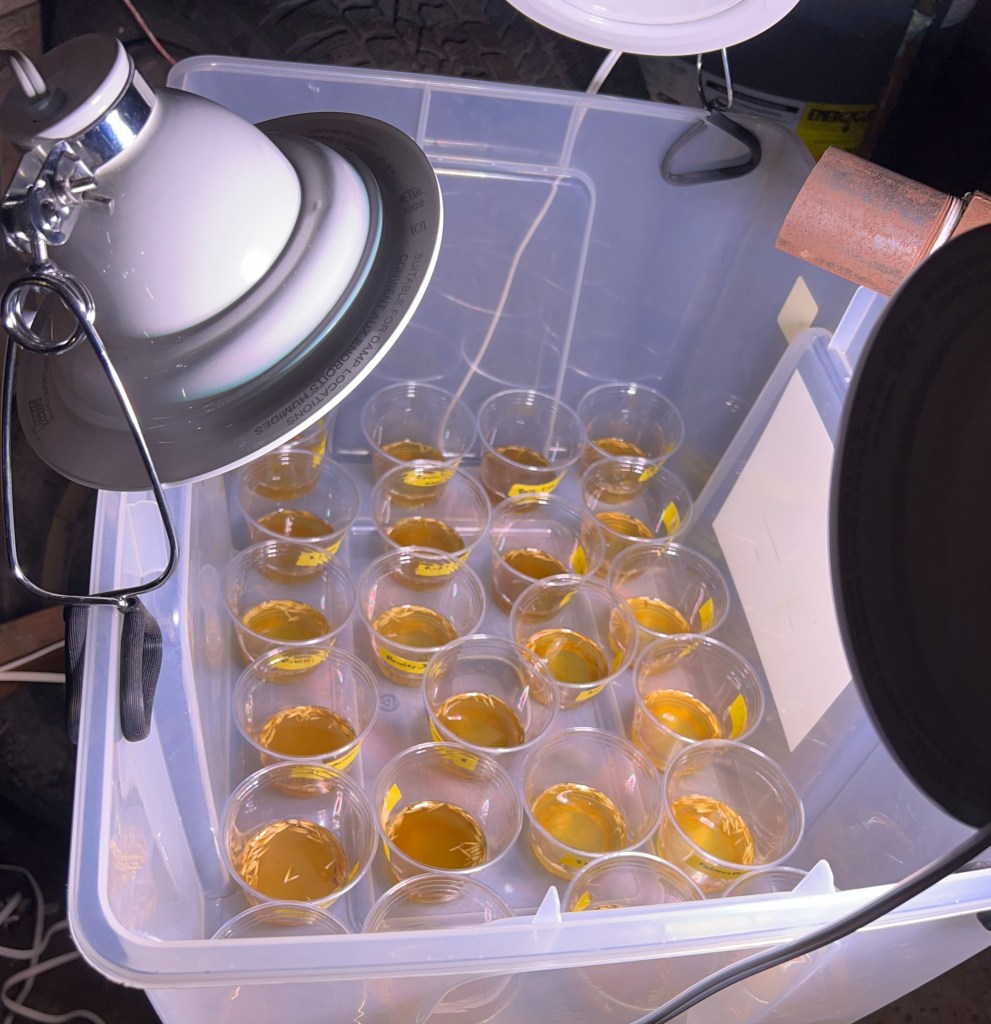
After about 4 months of refrigerator stratification, three samples of about 100 seeds from each marsh were taken and placed in cups. The cups contained only saline water from the stratification chambers (~16 ppt). The cups were placed in a large tray and three grow lights were attached to the top. It was placed near a water heater in a dark room as a makeshift greenhouse. The seeds were watered with saline water on week one, then watered with freshwater for the next 3 weeks. Every week the number of sprouts per cup was counted.
Seed Germination Test #2
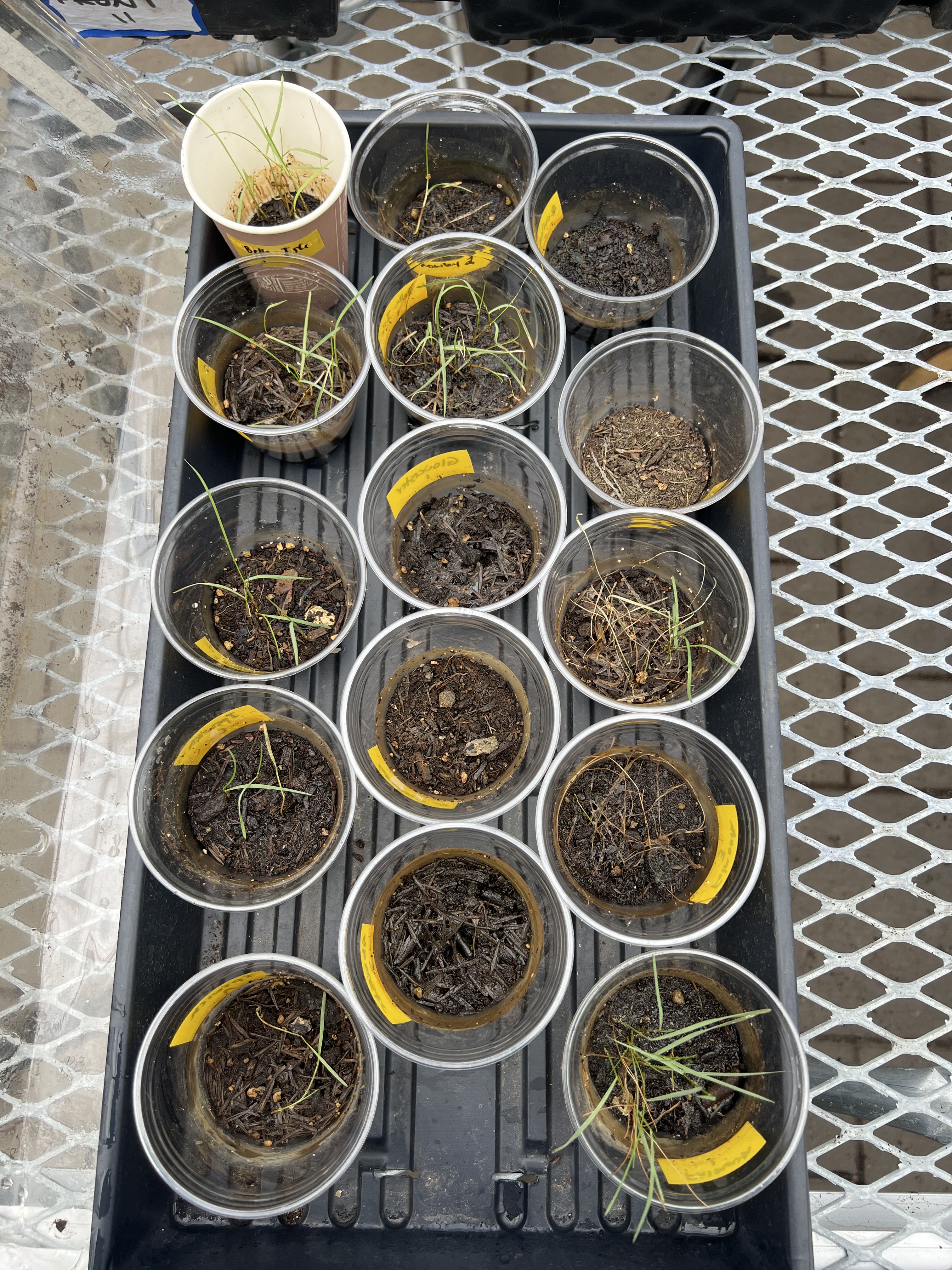
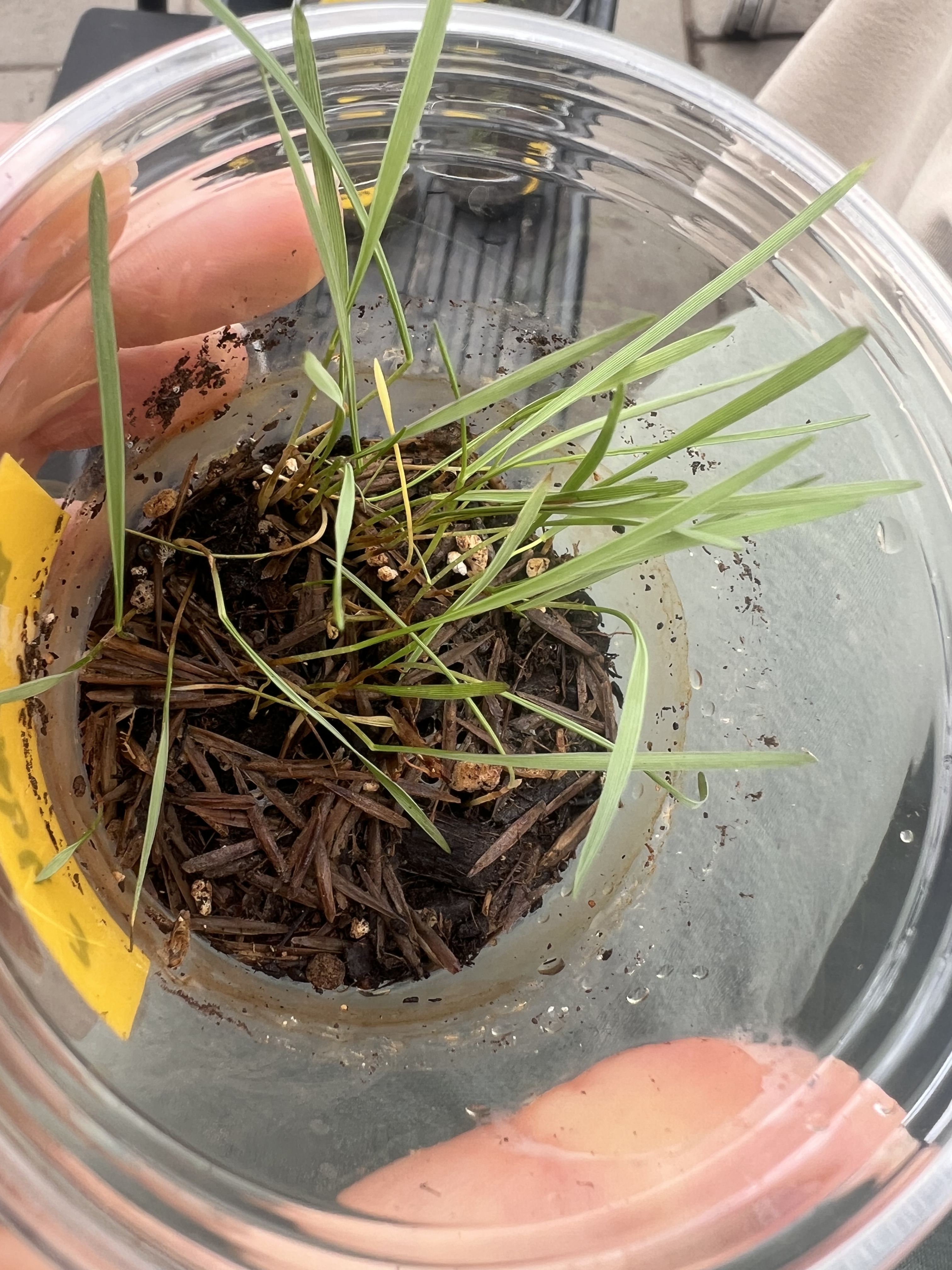
After about 4 months of refrigerator stratification, three samples of about 100 seeds from each marsh were taken and planted in cups filled with soil in a greenhouse with ample light and warmth. The seeds were watered with freshwater once a week for 6 weeks. Every week the number of sprouts per cup was counted, and the maximum length of sprout per cup measured. Some cups never had any sprouts, others had so many it was hard to count! The data collected from the three cups from each marsh location were averaged for data analysis.


Results
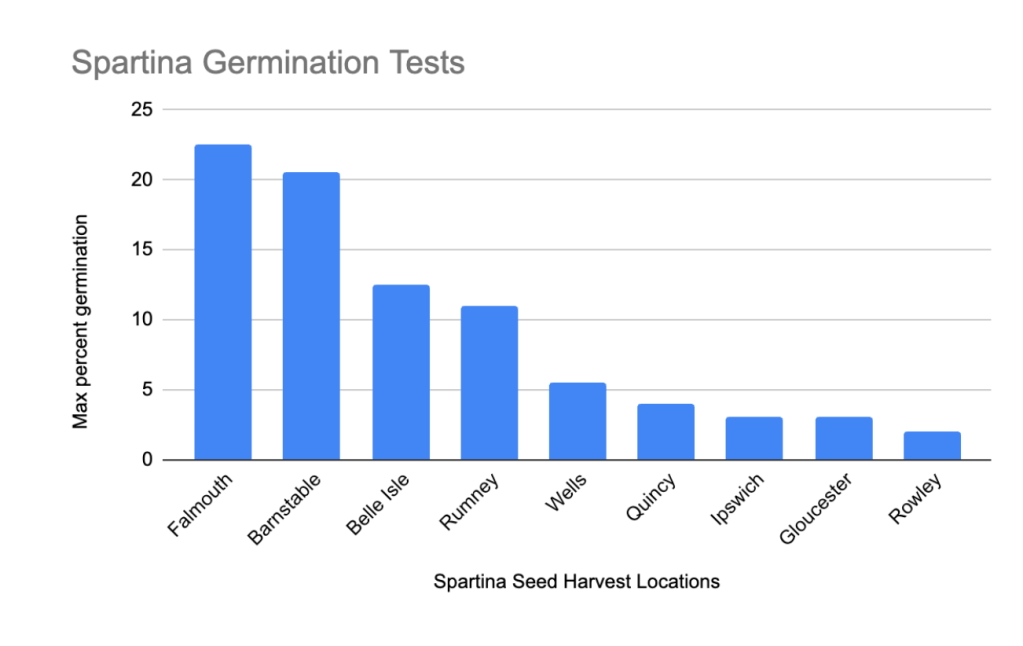
The germination rates between marshes were widely variable, but statistically consistent between the two sprouting germination tests. We found that the seeds collected from Falmouth, Barnstable, Rumney, and Belle Isle were the most viable. The first germination test conducted was discontinued after a few weeks due cold temperatures and widespread slow growth. The grow lights and water heater were not providing enough warmth for the seeds to sprout and the 3 – 8 seeds that did germinate from Falmouth, Barnstable and Belle Isle, grew slowly and quickly died.
The second germination test hosted in soil in the greenhouse was highly successful. The locations on Cape Cod –Falmouth and Barnstable– had greater than 20% germination with 30 to 35 sprouts each. Rumney and Belle Isle had 10-15% germination. The seeds collected from Wells, Quincy, Ipswich, Gloucester, and Rowley had less than 5% germination. We learned from prior experiments that if the seeds don’t grow, there is no definitive way of knowing why they didn’t. Meaning the other locations could have not sprouted for a variety of reasons. However, from our estimated % viability data, we found many glumes did not contain viable seeds. The estimated % of viable seeds was very low for all marshes except for Barnstable, Falmouth, and Gloucester. Barnstable and Falmouth both line up with the seed germination results, whereas Gloucester was unexpectedly not accurate.
More research needs to be conducted to determine why the natural marshes had low amounts of fertilized seeds.
 emerald-tutu.com