
The overall goal for these floating designs is to produce a human-scale unit that could be duplicated and linked into an expansive implementation of Nature-Based Infrastructure—an interconnected modular network of floating marsh mats. The network would provide large-scale coastal protection, habitat restoration, and water quality improvement while creating new public places and pathways on the nearshore watersheet. The modular approach means that we can focus on the single-unit design details while tracking the properties, performance, and costs that would be expected with future multi-unit network implementations.
We have been working since 2021 to prototype individual units, figuring out the key materials and methods to create thriving floating marsh mats made with locally-sourced biomass materials as much as possible. Along the way, we developed a design philosophy of “elemental engineering,” finding elegant, simple synergies between the properties of living plants, human-made materials, and biomass.
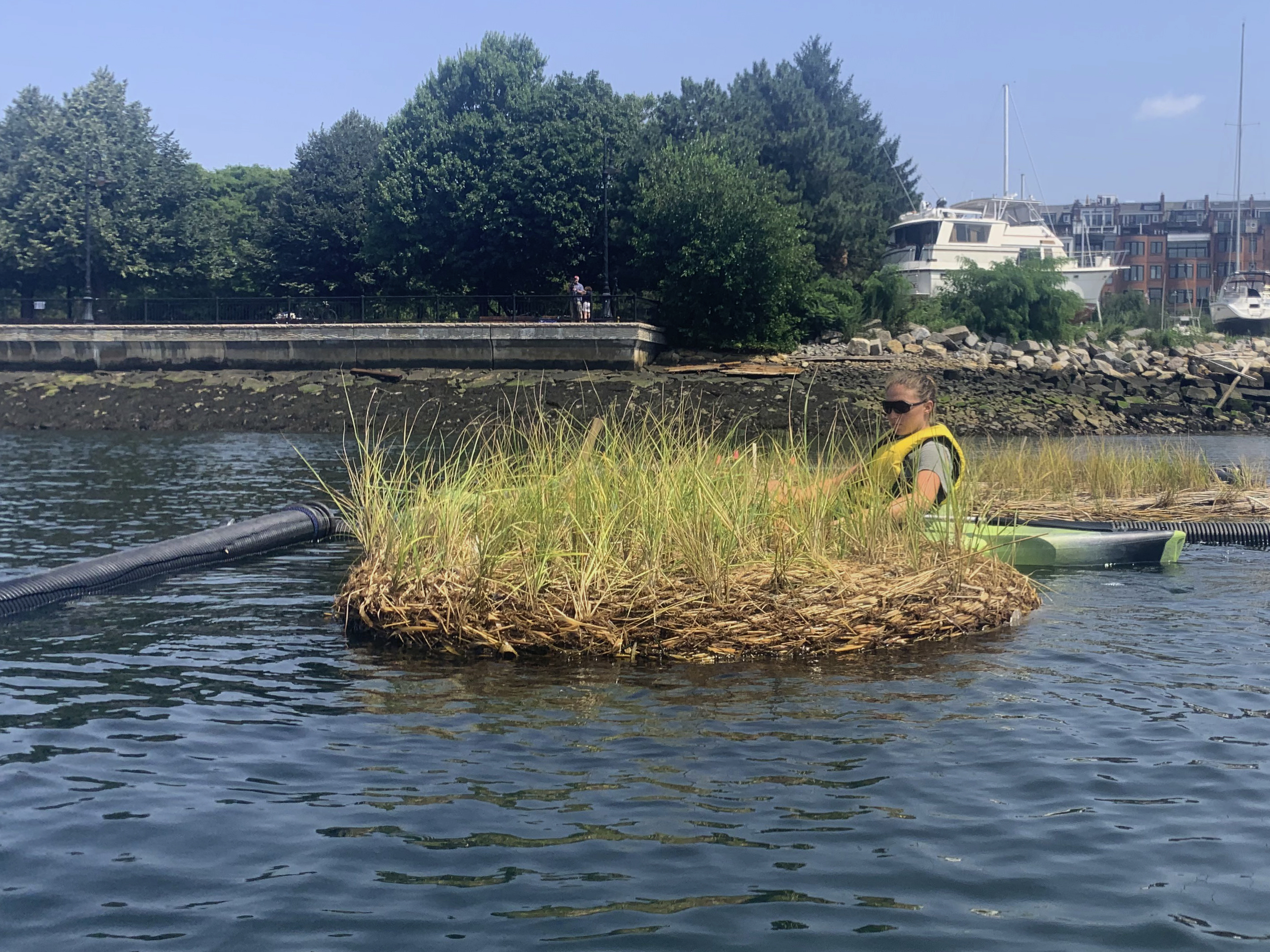
Our most successful family of prototypes! A long tube of coconut fiber net stuffed with Phragmites reeds, and then rolled and lashed into a spiral disc form.
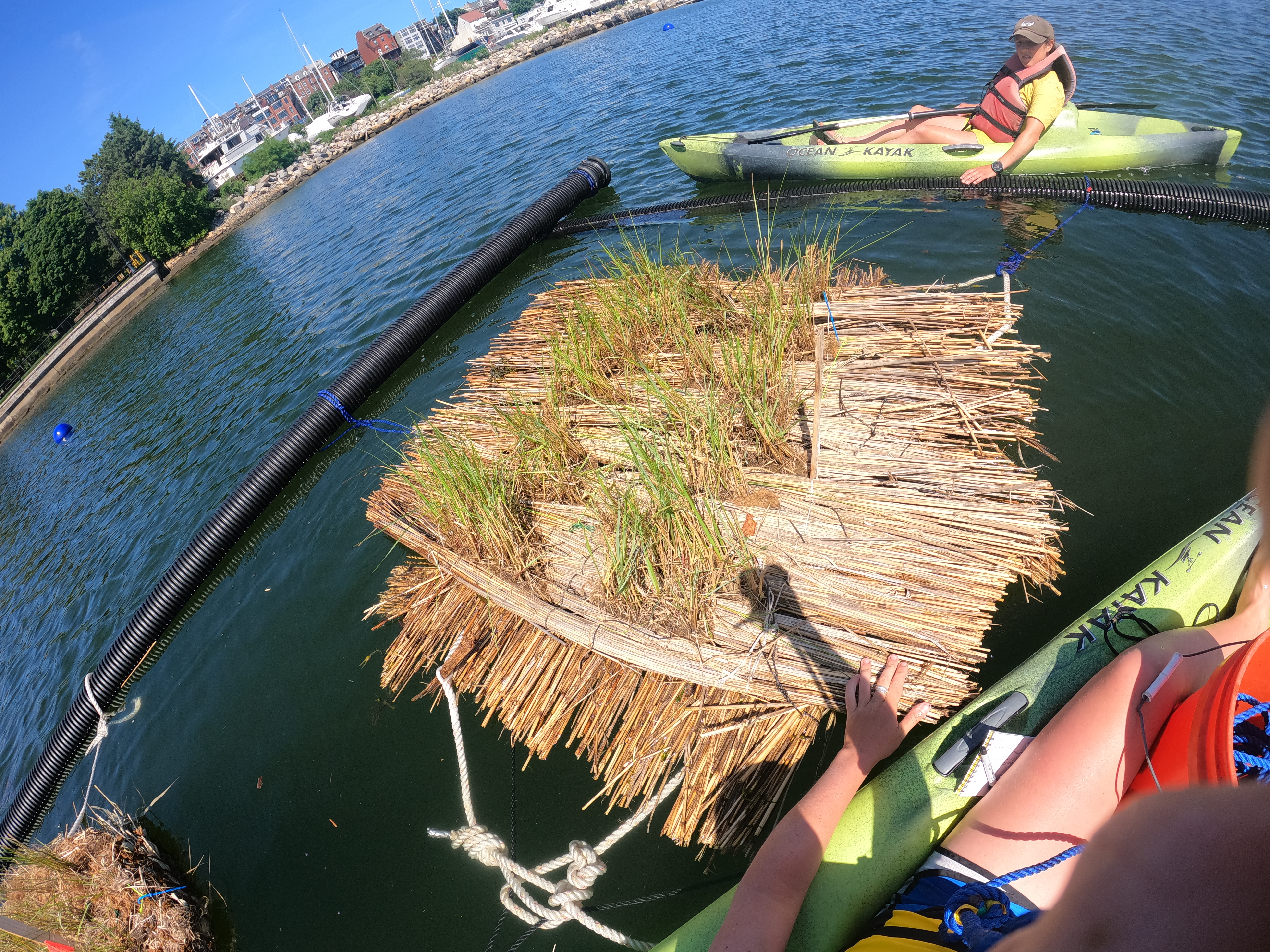
Woven Phragmites reed mats stacked in three layers, the reeds in each layer oriented 120º from the adjacent layers.
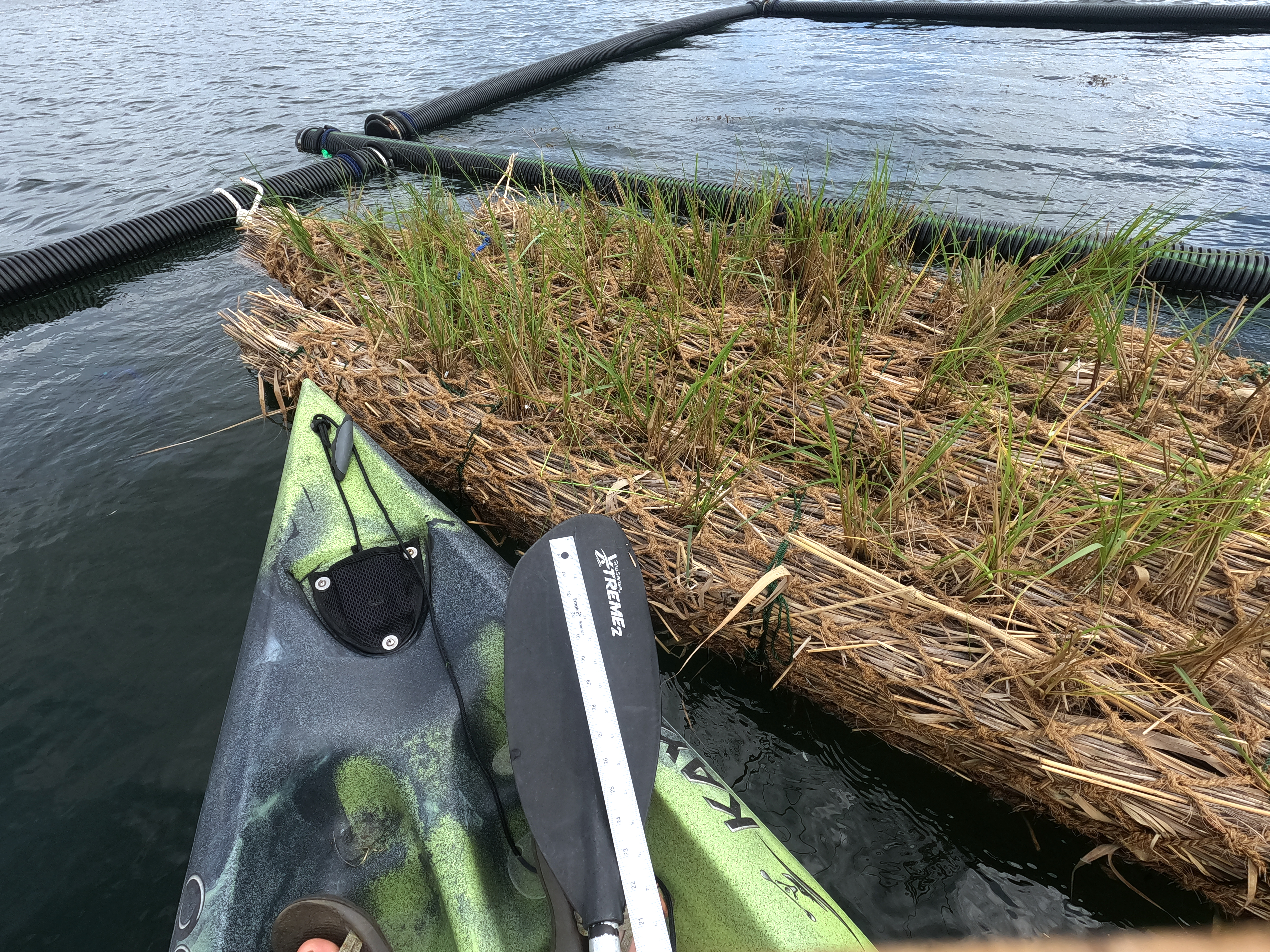
Three coconut fiber net tubes filled with Phragmites reeds, bound to each other side-by-side.
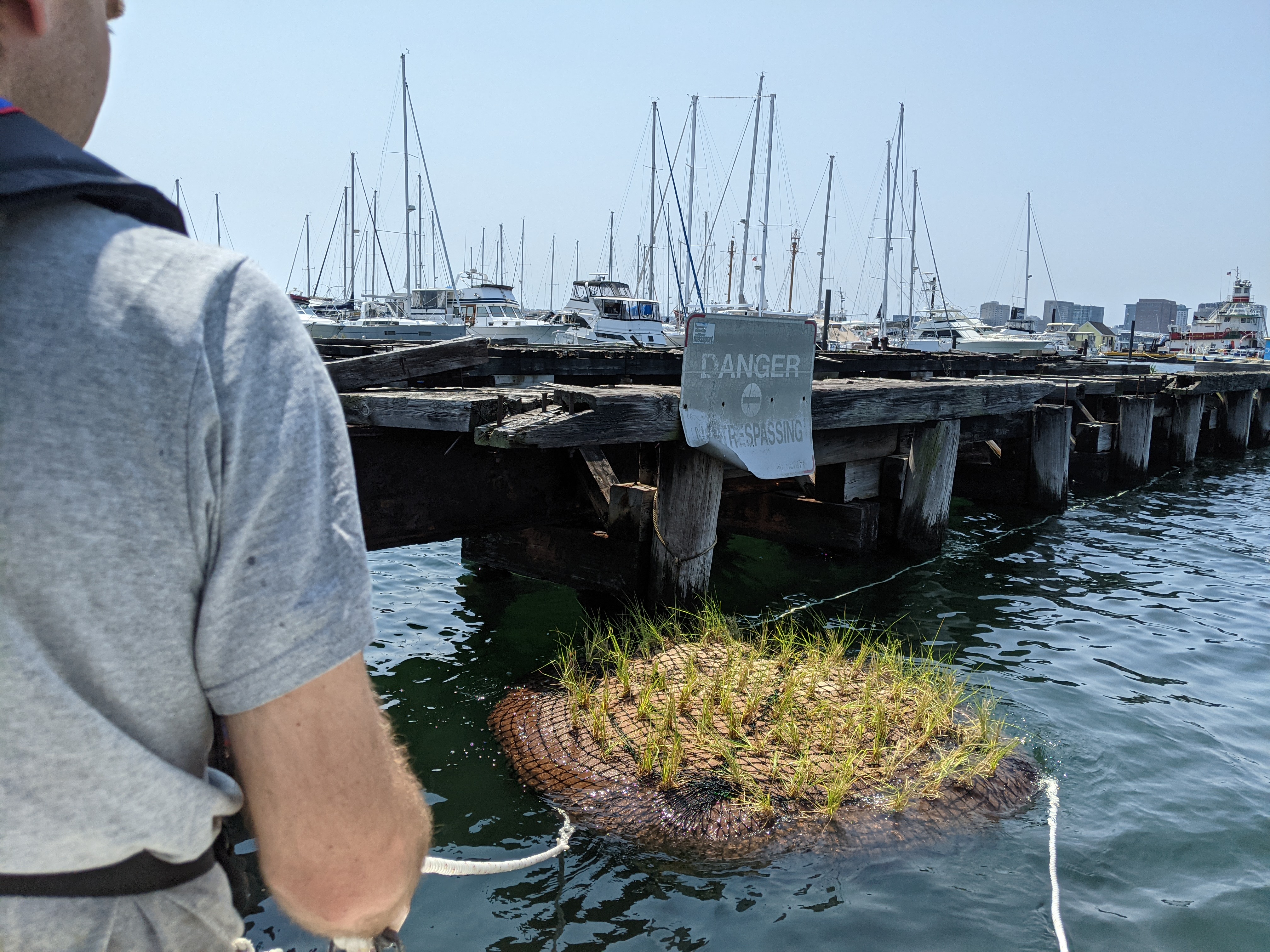
Biomass of various types enclosed in a nylon net enclosure.
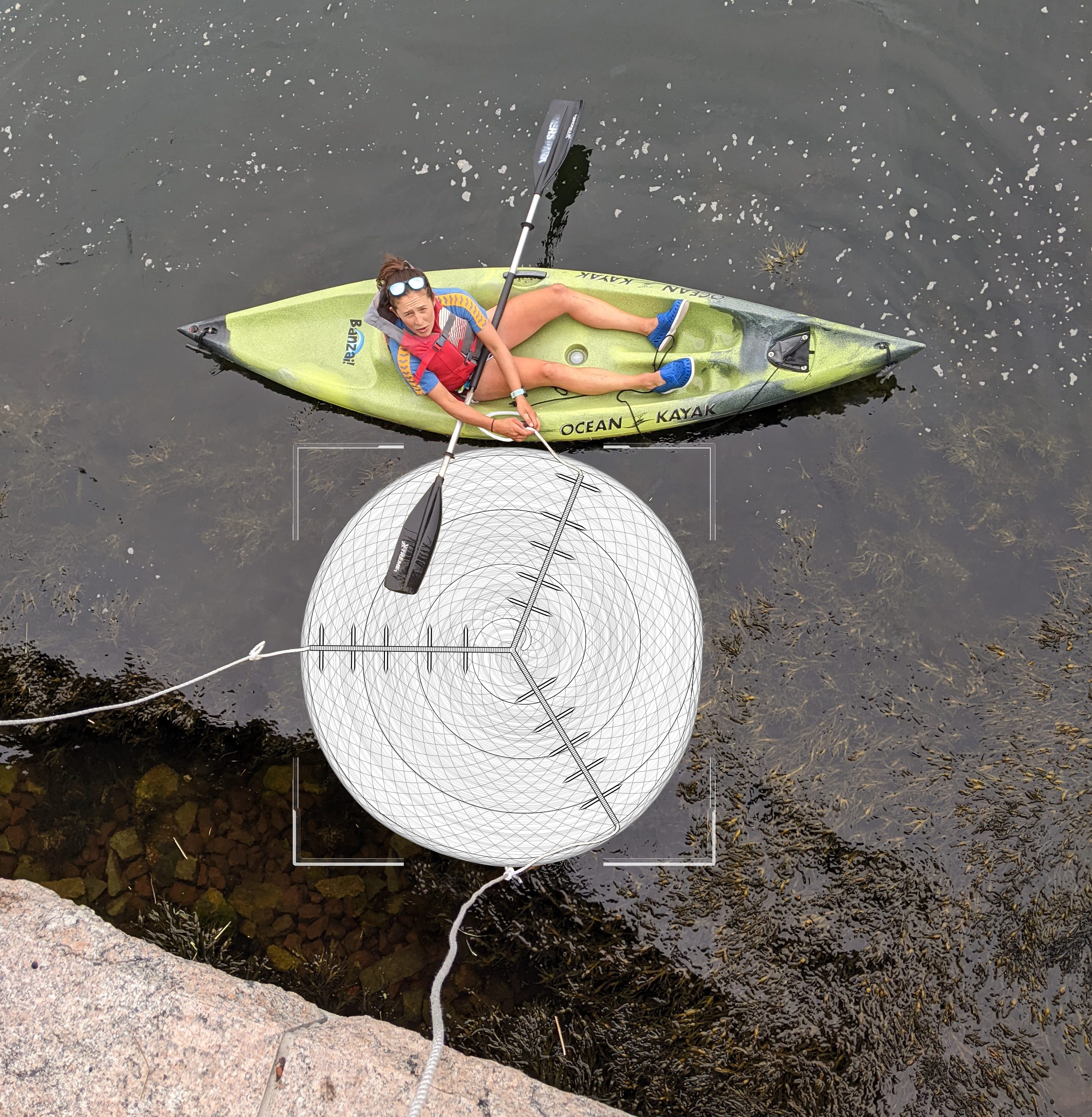
All floating units, from the very first designs to the most recent prototypes, employ our patented Tension Yoke to attach them to neighboring units or other structures
 emerald-tutu.com