
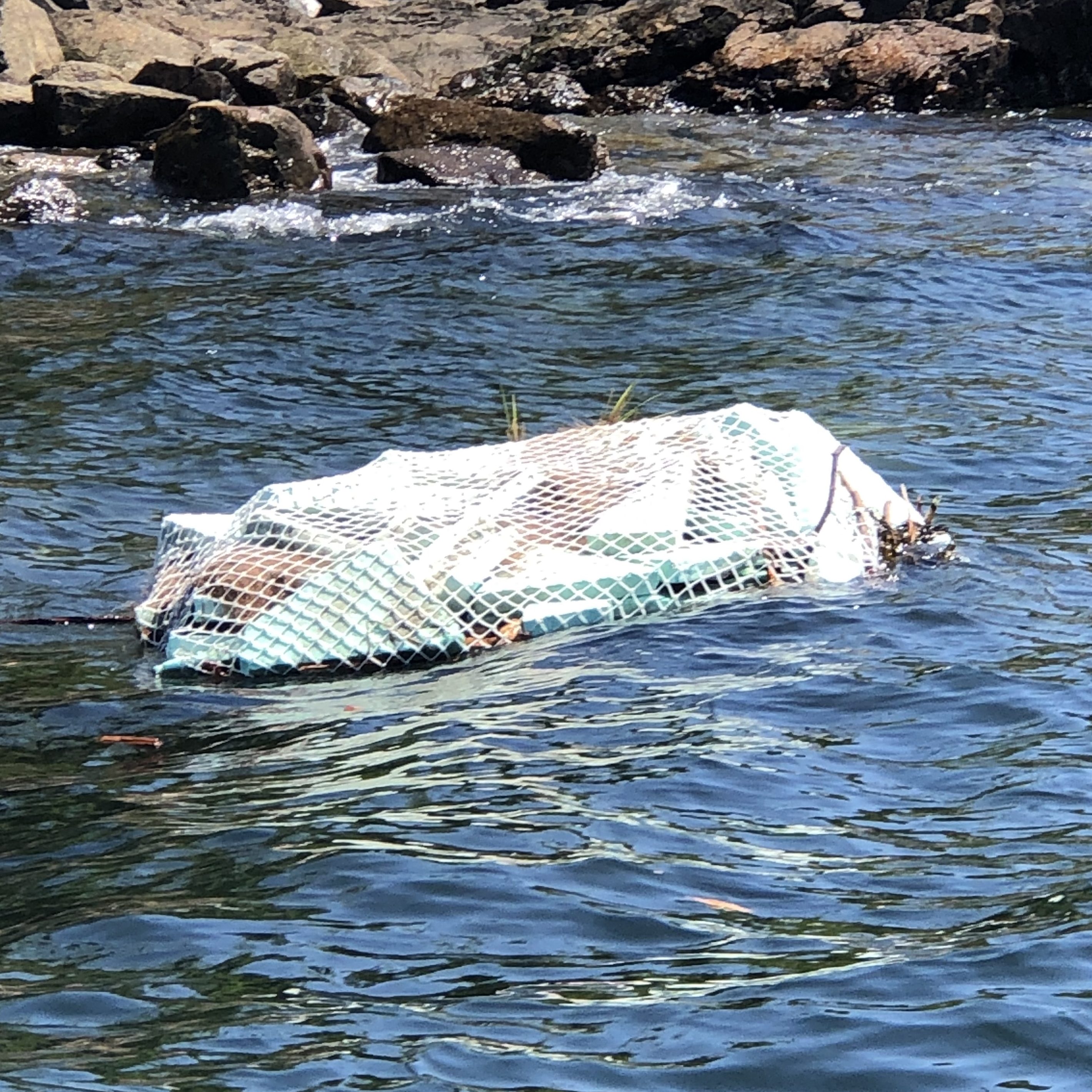
We connected with two high schools that both focused on marine education, Landmark School in Beverly MA and Sound School in New Haven CT. With open invitations and launch boat support from the respective marine educators, we deployed one prototype of the Pouch Net type in a nearshore area 100 feet from a rocky bluff in Beverly, MA and an identical prototype 200 feet from a shallow intertidal shore in New Haven, CT.


Site Description
In Beverly, one of the site’s seafloor rocky crags is exposed at low tide, lending it the ominous moniker Black Rock. Around Black Rock, the scalloped coast is exposed to significant open ocean waves and weather, and the rocky shore reflects that wave energy making for an aggressively rough wave field. The logistical challenges of this site were also intense, with no nearby sheltered launch areas. Our site partners were encouraging and helpful, and we proceeded.
In New Haven, the site was similarly exposed to wave action but with much more smooth and gradually-sloped bathymetry, and a sandy bottom. The relationship with the adjacent school was similar and they provided resources and encouragement. At both sites, we were offered an existing boat mooring to use.
Prototypes

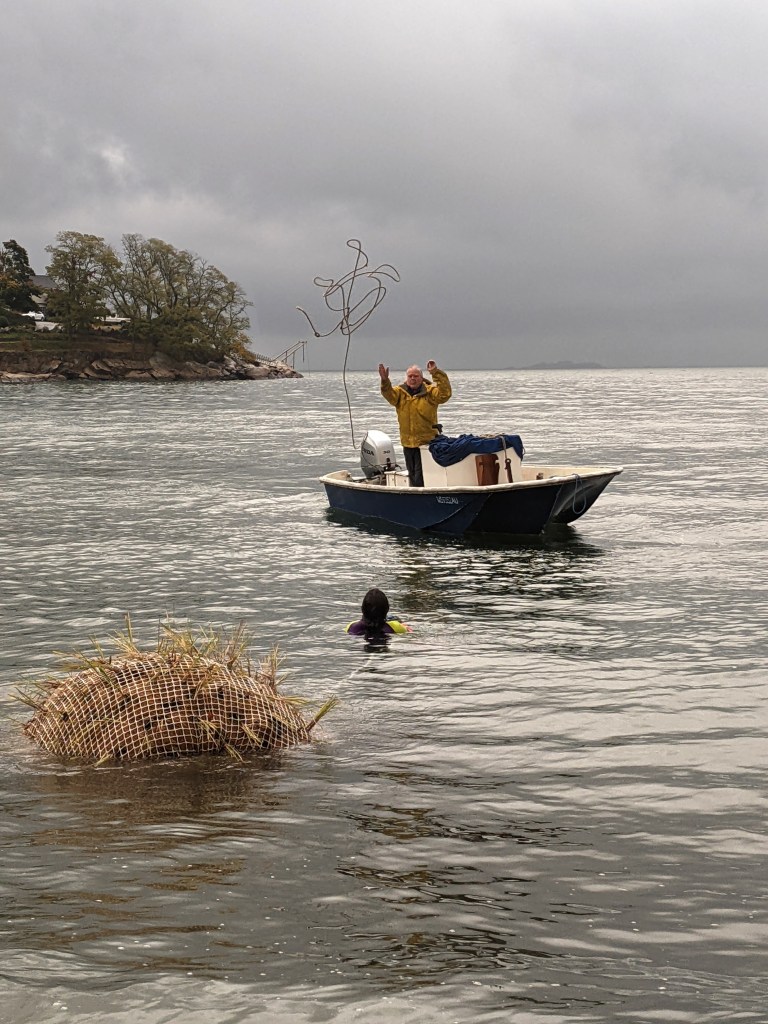
The Pouch Net prototypes deployed here, unlike more recent design iterations, weighed about 500 pounds dry. We had devised and built a custom cradle that fit onto a boat trailer for transport. However, in Beverly, the closest boat ramp was several miles away and the prototype would have to be towed for more than 90 minutes to the mooring point. Instead, we decided to drag the prototype trailer over a short stretch of sandy beach. Working in wetsuits on a miserable rainy day, we launched our prototype by force of will, finally tossing the prototype’s tow line to our gracious site host waiting in the launch boat, and linking it to our mooring. In New Haven, the site was much easier to maneuver, with an appropriate boat ramp immediately available and many helping hands.
Monitoring
Monitoring was minimal in Beverly and in New Haven due to the remote deployment locations
Successes & Failures
Successes:
- We connected with two outstanding high schools that emphasize marine education—from marine biology to offshore wind internships to sport sailing.
- We navigated launch logistics for an extremely tricky site in Beverly, putting our trailer-based launch method to the test.
Failures:
- We were not able to adequately observe the prototypes at either location, so information was spotty. Although geographically closer than New Haven, the Beverly site also proved difficult to access as the prototype was too remote to observe from shore.
- The preexisting mooring that we used in Beverly was not positioned properly, so the long leader line allowed the prototype to scrape against a shallow rock. This probably caused the pouch to rip, which would have destabilized the prototype. We heard from our site partner at Beverly that it had “disappeared,” and the New Haven folks “retired” our prototype as they needed to use the mooring. We learned the value of site access and consistent observations.
 emerald-tutu.com