
Since 2024, The Emerald Tutu has designed, built, and deployed living shoreline installations at intertidal sites in East Boston and Lynn, MA. Throughout 2024, we partnered with Eastie Farm’s CIVIC Climate Corp Fellowship program and began working with crews of local youth, training them for possible future green jobs in the fabrication, maintenance, and evaluation of Nature-Based Infrastructure.
The Border Street Waterfront and Clippership Wharf Shoreline in East Boston, and the Lynnway South Bulkhead in Lynn are intertidal, sloping shores but have some key differences. All locations provide a unique wave and wind exposure profile, key factors to study for the internal performance and external effects of living shorelines, with Lynn more exposed to serious waves and wind at times. They differ significantly in sediment type as well. The Lynnway site is sandy, the Border Street site is rocky and is strewn with a variety of post-industrial artifacts such as bricks, metal rails, and wooden ties, while the Clippership Wharf was constructed to create mudflat and salt marsh terraces.
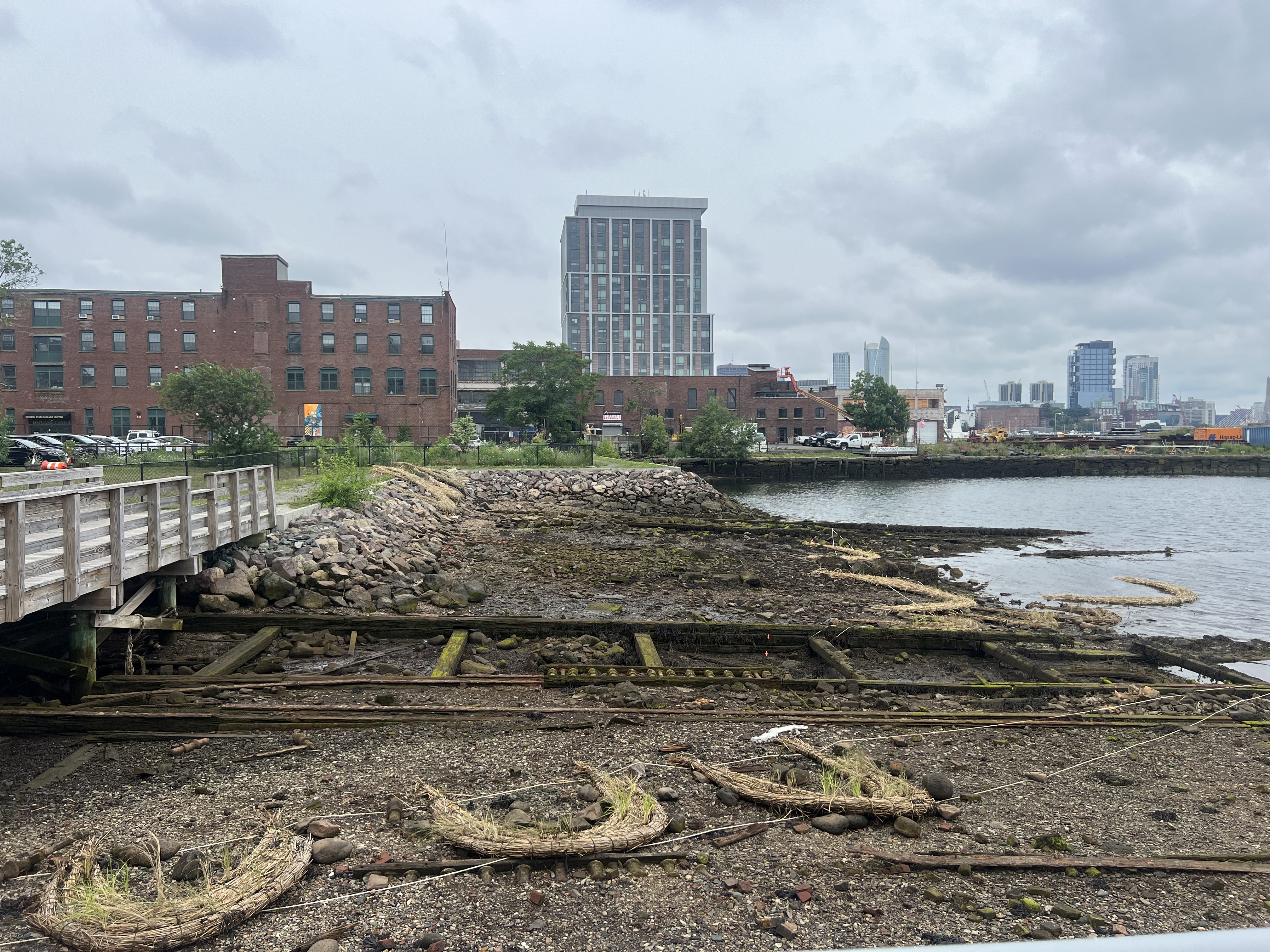
Post-industrial rocky intertidal beach with abandoned wood ties and pilings, rusty boat launch rails, and scattered bricks and cobblestones. Exposed to moderate Boston inner harbor waves and weather.

Eroding intertidal sandy beach behind wooden bulkhead seawall that has been breached and undermined. Blocked from significant wind and weather by the seawall remnants.

East Boston waterfront residential development with a living shoreline buffering the buildings from the harbor. Exposed to moderate Boston inner harbor waves and weather.
 emerald-tutu.com