
Spartina alterniflora is notoriously hard to grow from seed and can have very low germination rates. Techniques to grow Spartina have been developed by various scientific labs, nurseries, and restoration professionals based on their own needs. Although the techniques vary by use case, they all involve an initial process of stratifying harvested seeds, placing them in cold storage at 3-4 degrees Celsius and in 16 ppt salinity for about 3 months. Any viable seeds will sprout when removed from the stratification refrigerator and exposed to warmth and light.
Our goal for this experiment was to try several distinct cultivation sequences for the seeds after harvesting by adjusting stratification protocol strategy, timing of planting, and location of planting. The rationale was to mimic the seasonal conditions in a natural salt marsh for the seeds, while they are physically located in experimental apparatuses.


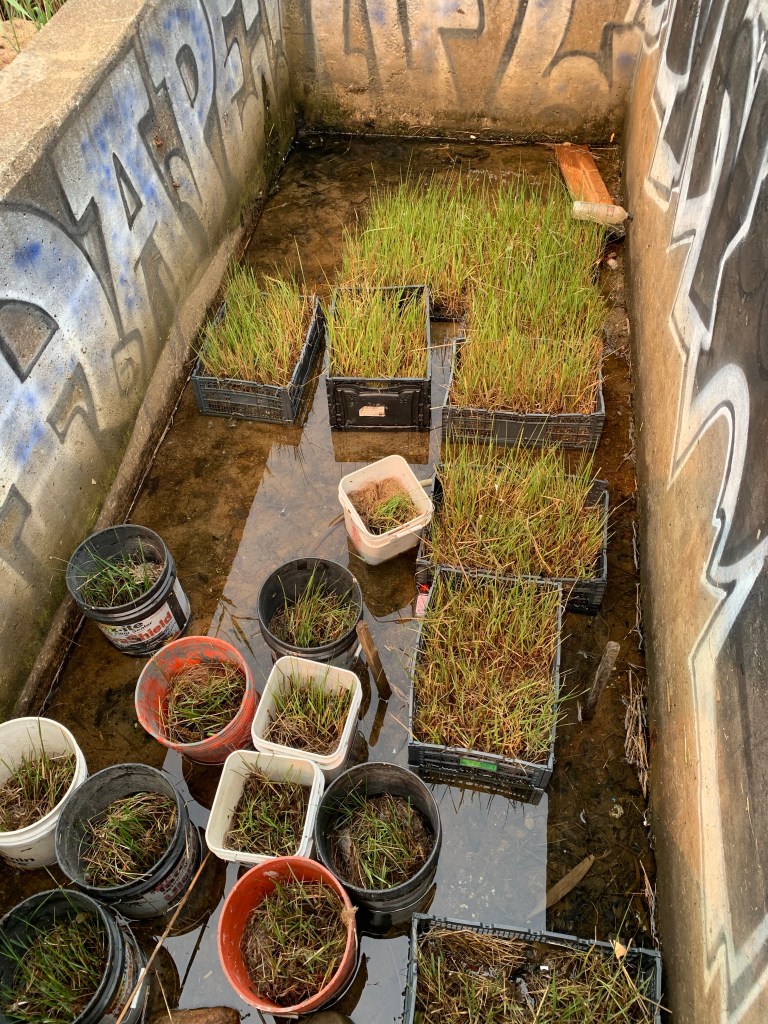
Set Up

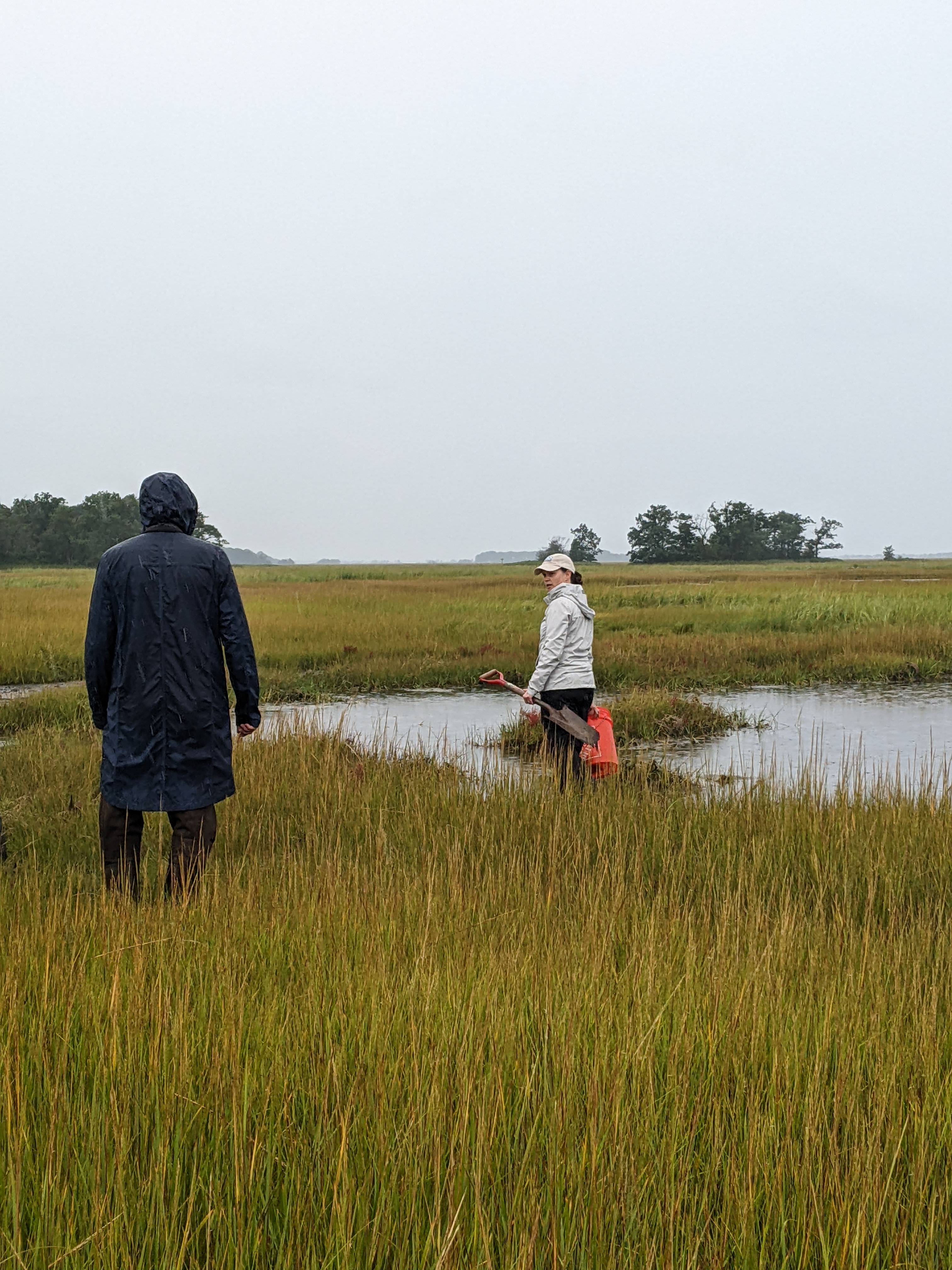
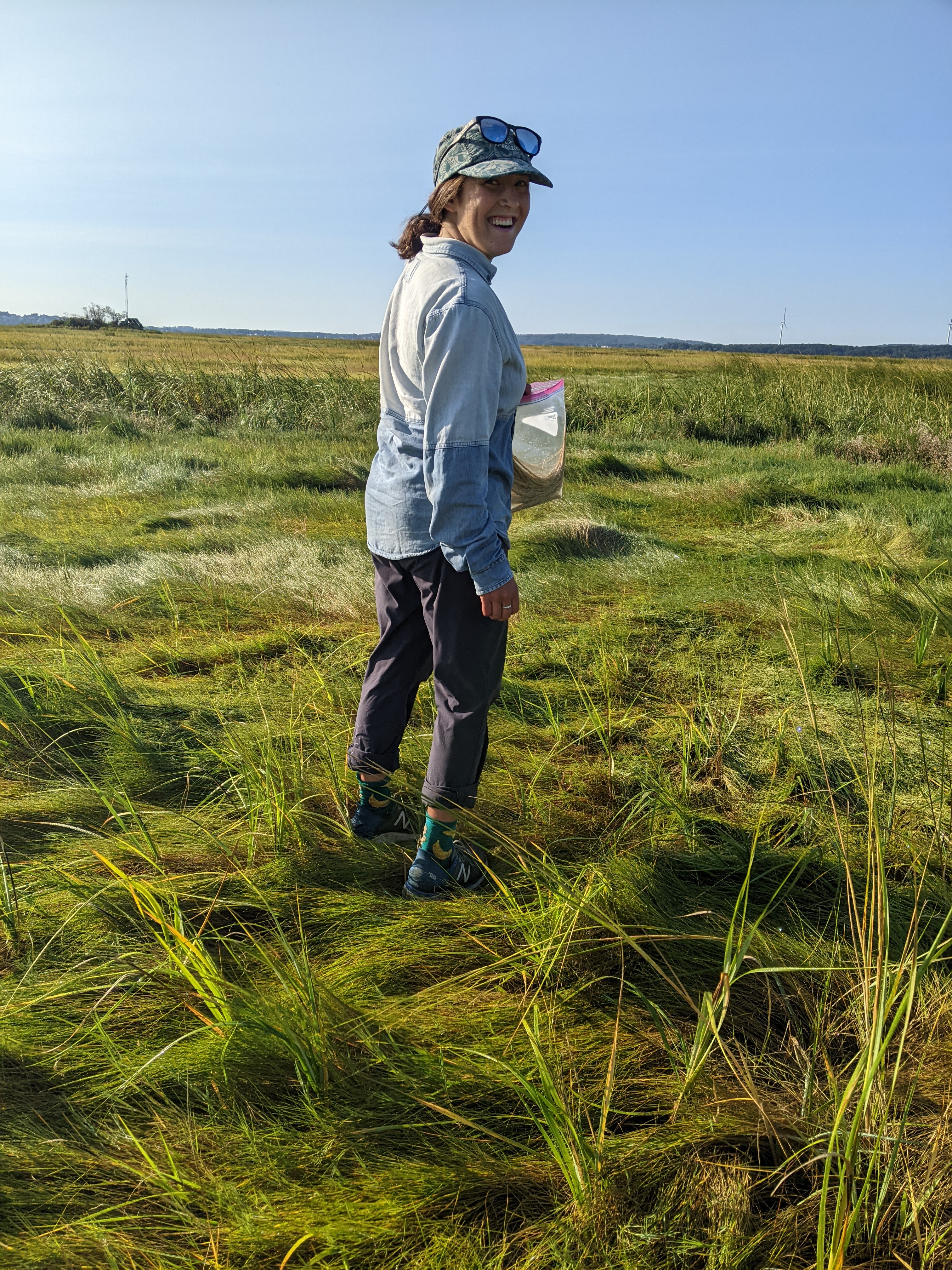
In Fall of 2023, the team harvested Spartina seeds from 8 marshes along the Northeast: Wells, Joppa Flats, Plum Island (“Stackyard Road”), Crane Beach, East Boston, Quincy (“Squantum Marsh”), Duxbury (“Bay Farm”), and Barnstable (“Sandy Neck”).
We experimented with three stratification options:
- Harvested seeds left to overwinter and stratify in a marine location to observe propagation without the need for a freezer, greenhouse, or irrigation.
- Harvested seeds left to overwinter in a dry, enclosed building to reflect overwintering in a dry environment for 3 months.
- Harvested seeds left in saline water to stratify in a refrigerator at 3-4 degrees Celsius for 3 months to follow established practices.
Post stratification, we also experimented with a variety of propagation environments for these Spartina alterniflora seeds by placing them in various saltwater locations in East Boston:
- Floating wetland prototypes
- Living shoreline prototypes
- Containers attached to the Floating frame
- Grow trays inside a concrete tank open to tidal flow at high tide
We tested various combinations of these stratification protocols and propagation techniques with the harvested seeds. After not much growth in any of the trials, we created a “control” to see if the harvested seeds would grow in ideal conditions: both Dry and Wet seeds were sown into growing trays filled with a mixture of compost and soil and were watered with freshwater. Still, we had almost no growth. Our theory is that this results from the Dry seeds needing to stratify in wet conditions and the Wet seeds needing to be planted immediately after being removed from the refrigerator. The other possibility is that the harvested seeds were never viable, having not been fertilized in the marsh.


Results
We learned a fundamental lesson about growing plants from seed. If seeds don’t grow, there is no definitive way of knowing why they didn’t. In other words, any experiment with seeds always needs a strong control setting for each seed type to make sure that the seeds themselves are reasonably viable before subjecting them to experimental conditions—this is particularly difficult with Spartina since seed viability can be very low to begin with.
Although we left this experiment with more questions than answers, this has inspired our current work to attempt seed-growing Spartina in more ideal, controlled locations.


 emerald-tutu.com