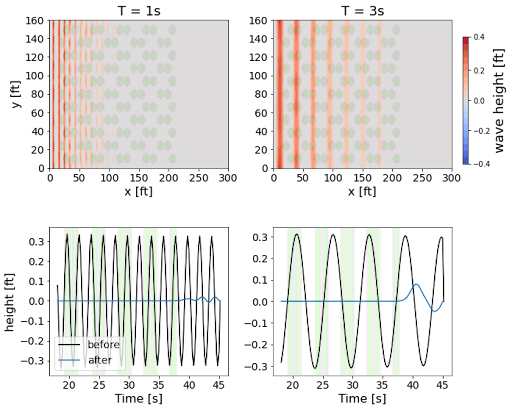
We demonstrated through both numerical modeling and physical lab tests that floating prototypes successfully reduce wave energy and could be used to protect a shoreline. But our goal of engineering with nature is much broader: we want to use the biological properties of successful native marsh grass to drive structural and biochemical performance of green infrastructure installations. This section discusses our research on several species of native marsh grasses, with the goal of quantifying its performance and creating ideal conditions for it to thrive in a slightly unconventional context.
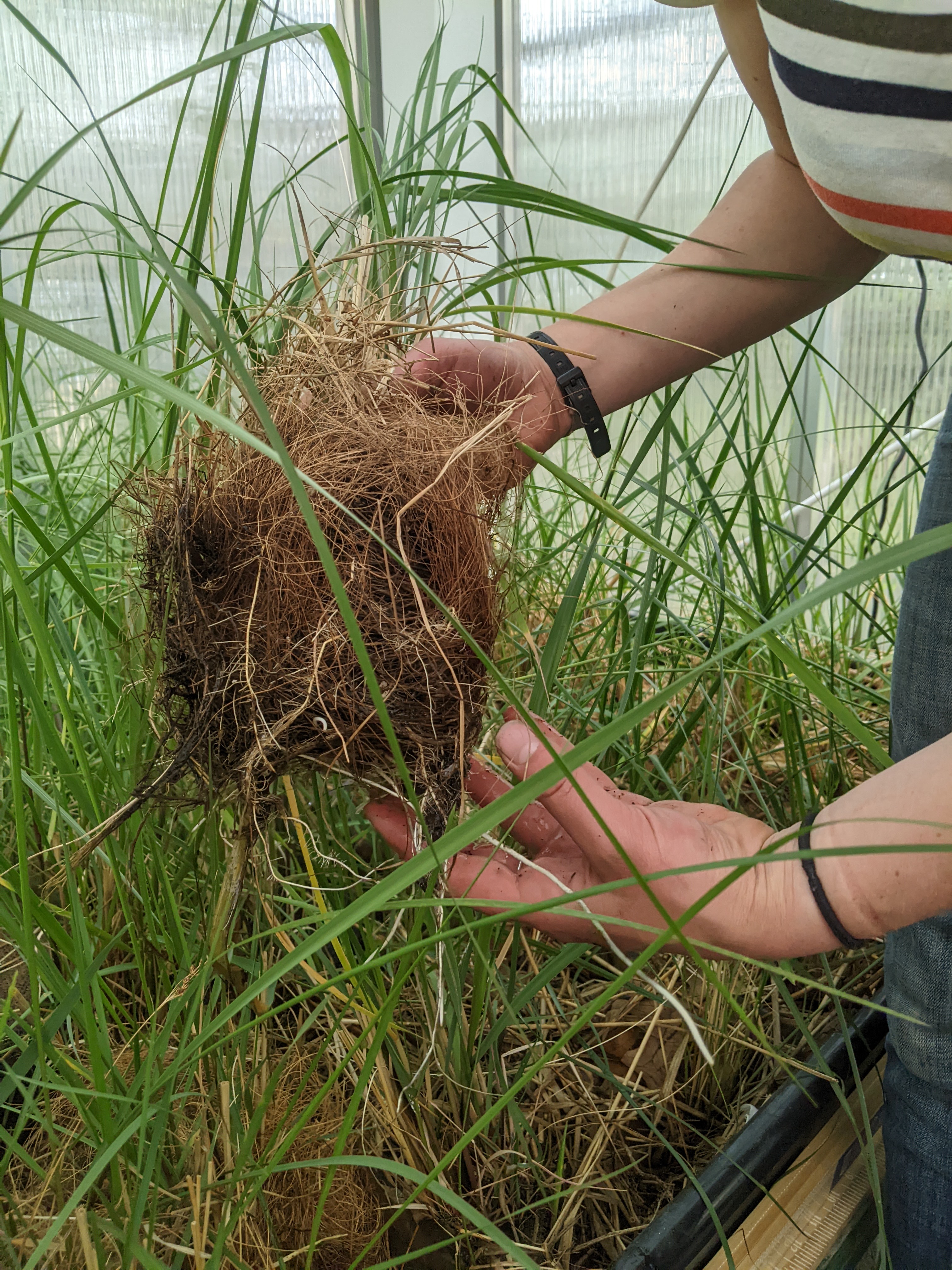
Comparative substrate tests for growing Spartina in a greenhouse
Spartina alterniflora seedlings planted into woven mats of dead Phragmites australis reeds and other natural fibers, and cultivated in a greenhouse flood table at Eastie Farm Greenhouse, East Boston, MA
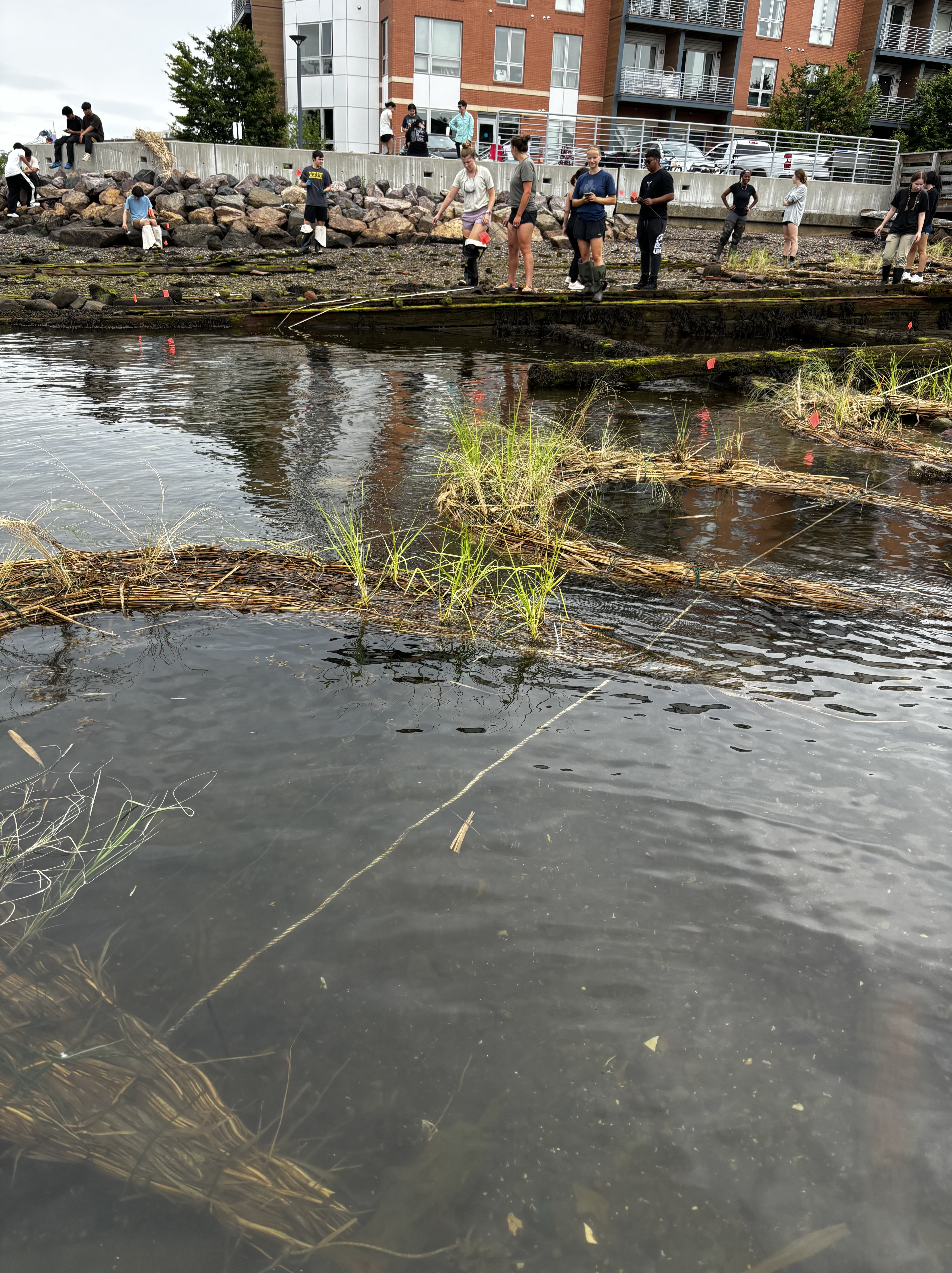
Biomass substrate tests for growing Spartina in marine intertidal areas
Spartina alterniflora and patens seedlings planted into the Phragmites australis bundles and mats in the living shoreline prototypes at Post-industrial urban waterfront site, Border Street, East Boston, MA

Spartina nitrogen and carbon uptake experiment
Spartina alterniflora in 12” diameter, 6” tall burlap pouches stuffed with coconut fiber and wood chips in Water-irrigated tanks in a laboratory greenhouse, Nahant, MA
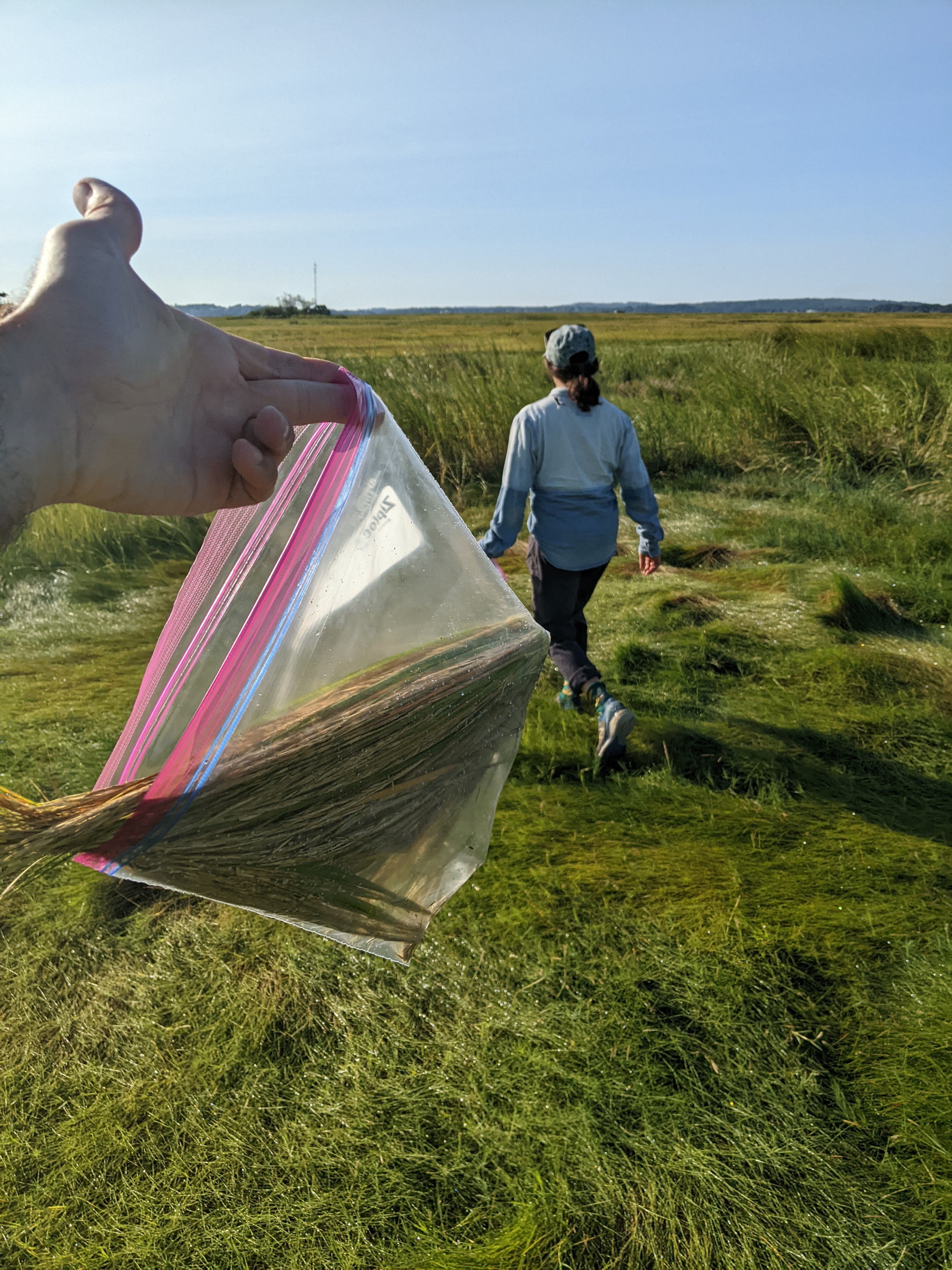
Local seed-cultivated Spartina tests
Harvested Spartina alterniflora seeds propagated in floating frame, concrete tank, packets on floating prototypes in Northeast Marsh Ecosystems
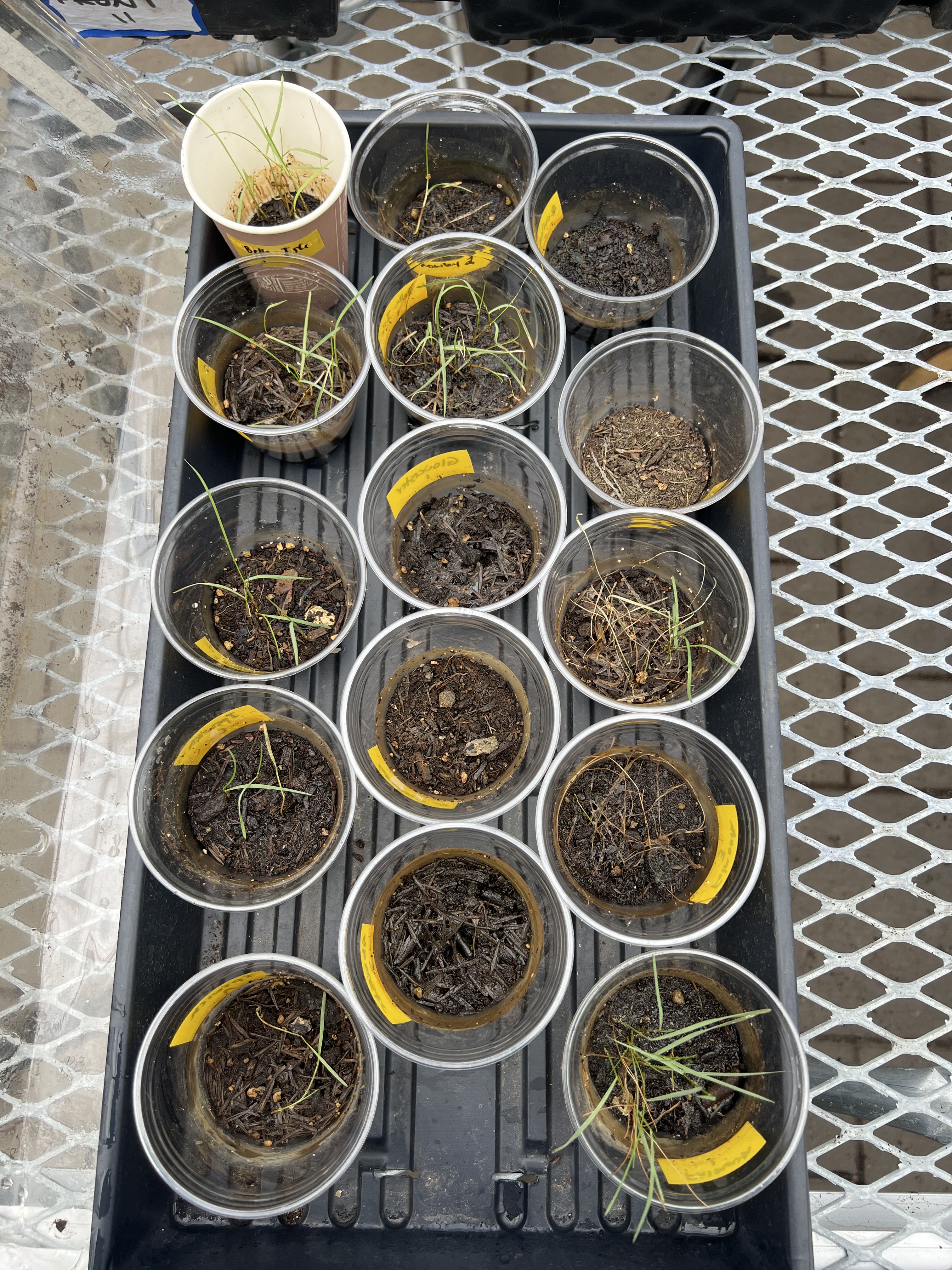
Current Spartina seed research
Expanding on Local seed-cultivated Spartina tests, 900,000 seeds were collected and stratified from nine Northeast Marsh Ecosystems
 emerald-tutu.com