
Coconut Fiber Netting
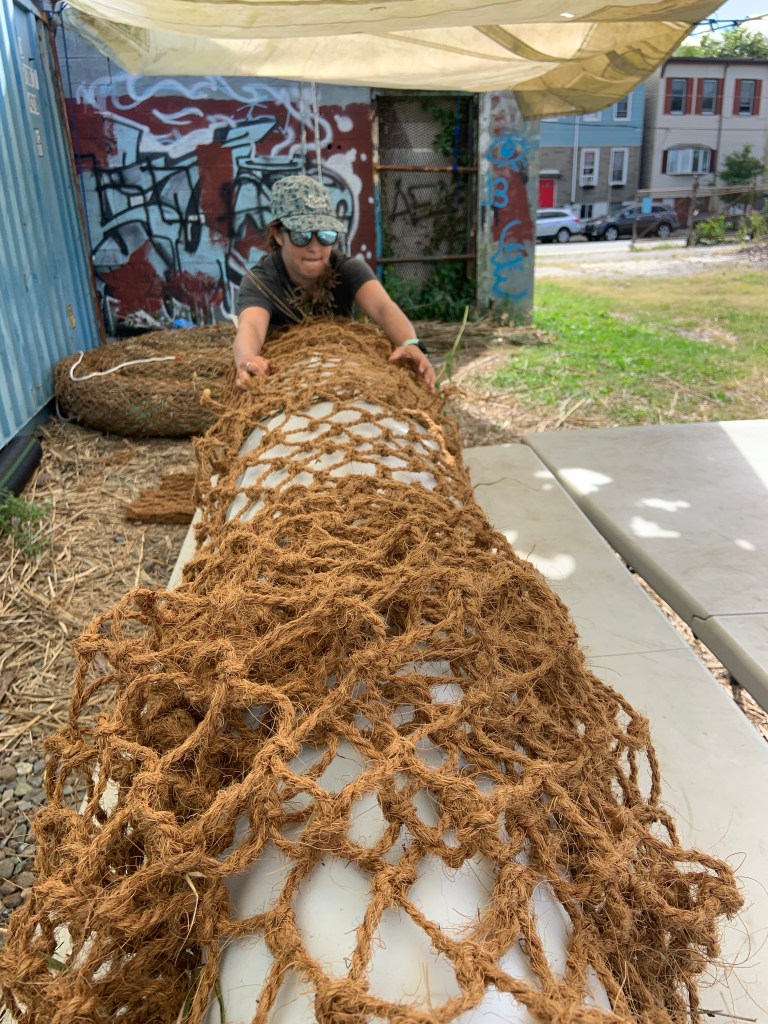
Coconut fiber netting holds any inner substrate materials together, ensuring that they stay tightly packed and stable. The natural coconut fiber strands remain strong in marine conditions; for this reason, coconut fiber (or “coir”) is a common material in coastal restoration applications. We found that the net retains its ability to encapsulate inner substrate materials in saltwater for up to two years without risking major failure. The fibers are weak enough to be ripped individually by hand after about 8 months of immersion, but major breakage can be avoided by minimizing concentrated forces. We source the nets from Sri Lanka, from CoirGreen Coco Solutions.
Spartina alterniflora

Spartina alterniflora (a.k.a. smooth cordgrass or salt marsh grass) is the main emergent (above-water) growing species in all of our prototypes. This salt tolerant plant can grow in a range of soil conditions. The geomorphological biotope that we call “salt marsh” in North America is only possible because of the salt and saturation tolerance of this species. Over the centuries, marshes have grown by trapping tidal sediment and expanding roots through it, forming wide, flat, living expanses of lush grassy shoots over a bed of thick roots and peat.
For our engineered mat units, the roots grow to extend throughout the other substrate materials, binding them together solidifying the unit as the original dead plant fibers used in assembly break down. Since 2023, we have harvested Spartina alterniflora seeds from a dozen natural marshes in MA, ME, CT, and RI when the grasses release their seeds in late September. We also buy pre-grown plugs from Pinelands Nursery in New Jersey.
These plants need to stay wet to survive, so our prototype design and assembly processes must take this into account. Many of our prototypes do not have the Spartina added until they are deployed at a coastal location.
Spartina patens

Spartina patens (aka. saltmeadow cordgrass or sea hay) is also salt marsh grass native to the Atlantic coast of North America. Spartina patens resides in the high marsh due to its lower salt tolerance. This grass plays a vital role in protecting shorelines and providing habitat for marsh wildlife, including crabs, birds, and fish. Spartina patens does not spend as much time underwater as Spartina alterniflora so the plant was not generally used in our floating wetland prototypes. However, experiments utilized Spartina alterniflora and patens in our living shoreline installations.
Phragmites australis
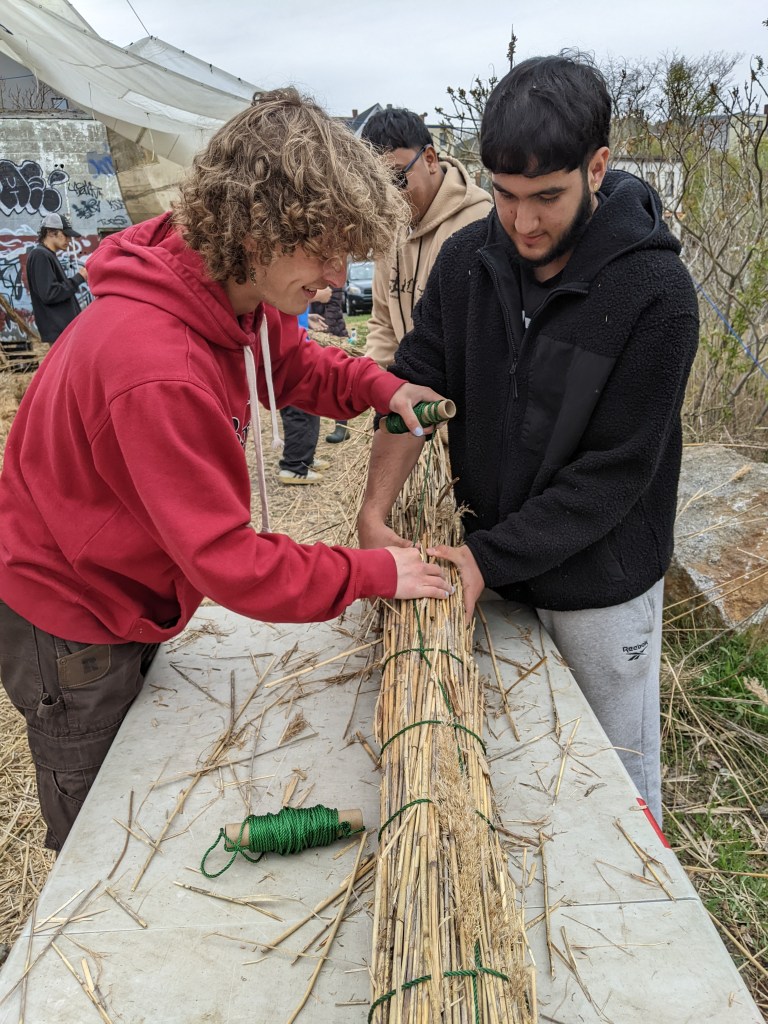
Harvested Phragmites australis reeds make up the bulk of many of our growing units, and comprise a strong but porous growing substrate. The stiff, long reeds resist shifting and stratification in marine conditions, providing a stable structure for the marsh grass roots and aquatic vegetation to grow through.
Phragmites is considered invasive in the Northeast US, but grows abundantly and vigorously especially in land that has been disturbed by development or where tidal flow has been interrupted. It likes wet, freshwater conditions and can easily outcompete native species. We have found that the plant’s stalky reed is an ideal material for growing substrate. All of our prototypes that use Phragmites are deployed in areas where it is already endemic. Furthermore, our deployment locations are all saltwater, ensuring that any Phragmites rhizomes or seeds will not be able to survive, reproduce, or grow.

Marine-grade foam

A small amount of marine-grade foam provides sufficient buoyancy to maintain floatation for each individual unit. Biomass in the growing substrate is naturally buoyant at first, but becomes waterlogged after several months in seawater and must be supported to prevent sinking.
The spongy living root mass peat of a thriving marsh is only about 15% heavier than seawater by volume (Boelter, 1968), therefore a small amount of added buoyancy can keep a large peat mass afloat indefinitely.
We have studied many materials for buoyancy in experiments dedicated to documenting comparative material behaviors in ocean water. Plastic foam, in general, has significant drawbacks—high cost, chemical leaching—but is necessary in small quantities to ensure stable buoyancy over time, as the biomass breaks down and the root mass grows. Polystyrene is the most durable marine foam, but is rigid and brittle and therefore difficult to integrate gracefully. Polyethylene is flexible, and much easier to integrate with the other soft materials we use, but degrades faster. We have tested alternatives such as mushroom-based “mycofoam” and wood waste, but have found that any natural material quickly becomes saturated and sinks.
Nylon rope and string
We use nylon rope and string for lashing components together and connecting units to each other and to mooring points. Nylon is the industry standard for fishing and other marine uses, and is thought to be a major source of marine microplastics. Resistant to abrasion and rot from marine growth, the polyamide polymer filaments maintain strength and flexibility in the dynamic ocean salt water for years.
We also use nylon rope to create our “Frictional Tension Yoke,” an apparatus that extends through the units and enables them to be securely affixed to neighboring units or mooring points.
Found Materials
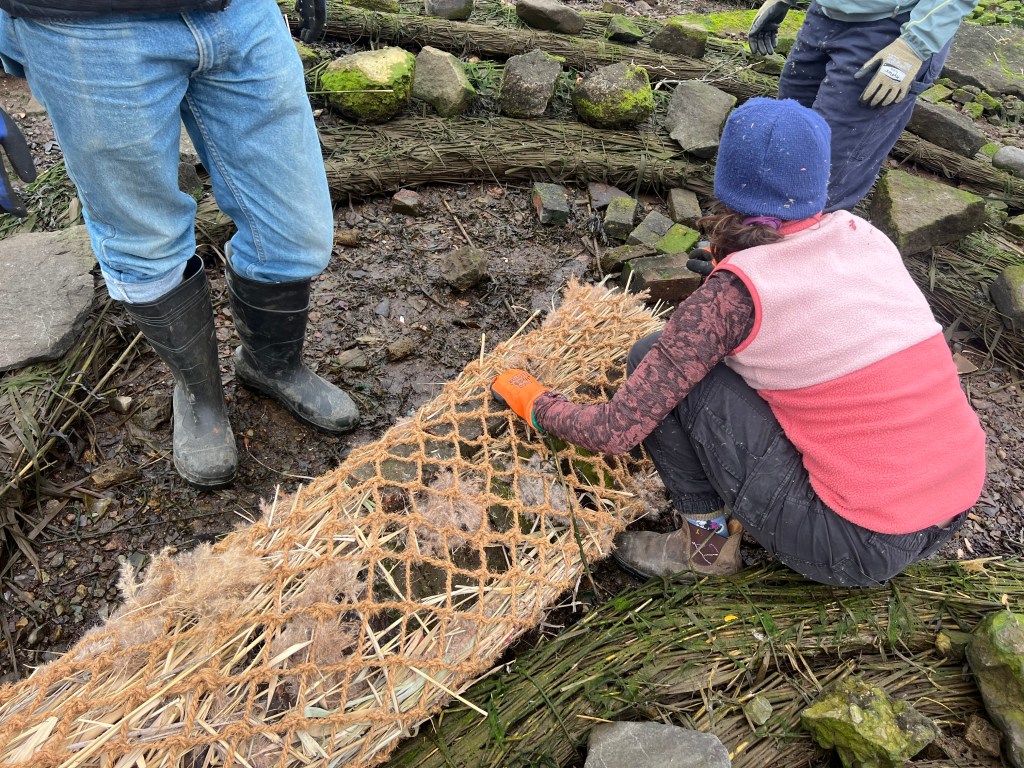

We prefer to use found materials from the site or area in which we are installing our prototypes. For some living shoreline prototypes, we were able to use discarded bricks, cobblestones, or old rusty iron rollers from the intertidal area as weights instead of sourcing new materials.
 emerald-tutu.com