
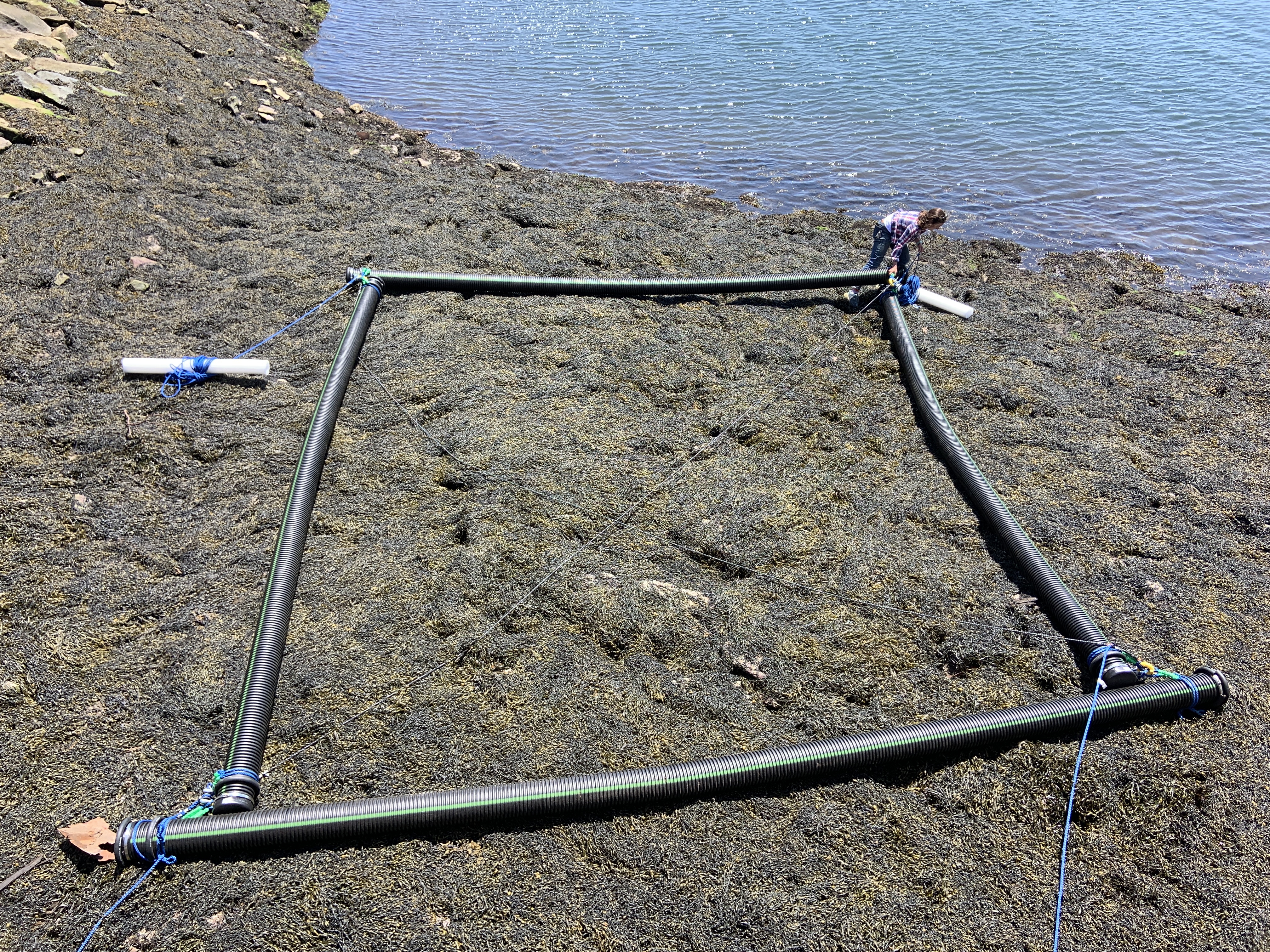
After a season of mostly-failed prototype deployments in 2021, when Spring 2022 arrived, our team jumped into action, creating 10 new floating wetland prototypes with new ideas for materials and form factors. We had been working through the long process of obtaining permits for use of the site, and were ready to fit out our proposed experimental zone. We built and launched our 20 x 40 foot “Floating Frame,” anchored 200 feet offshore, giving us the ability to easily deploy any future prototypes by affixing them directly to the frame.
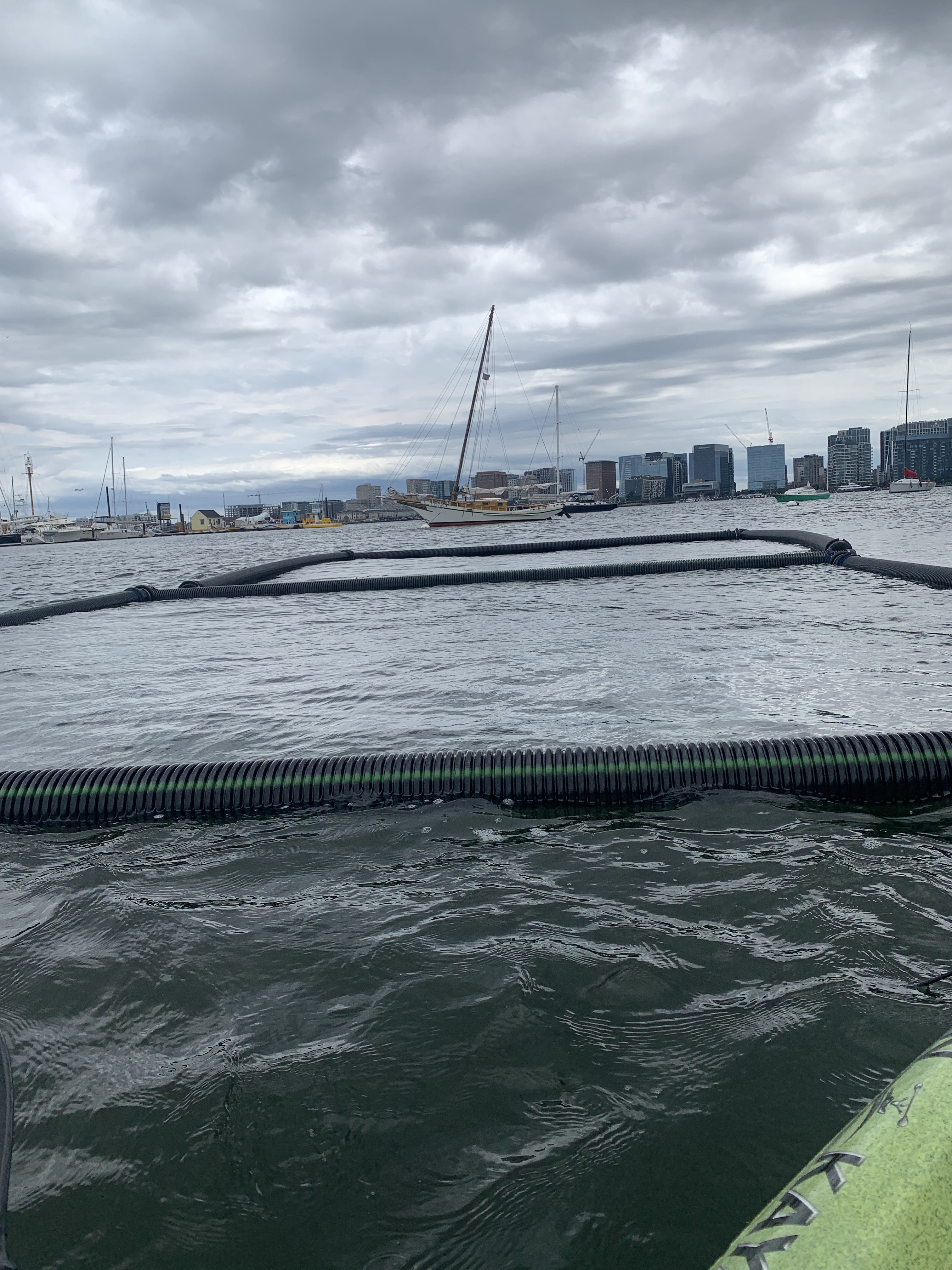
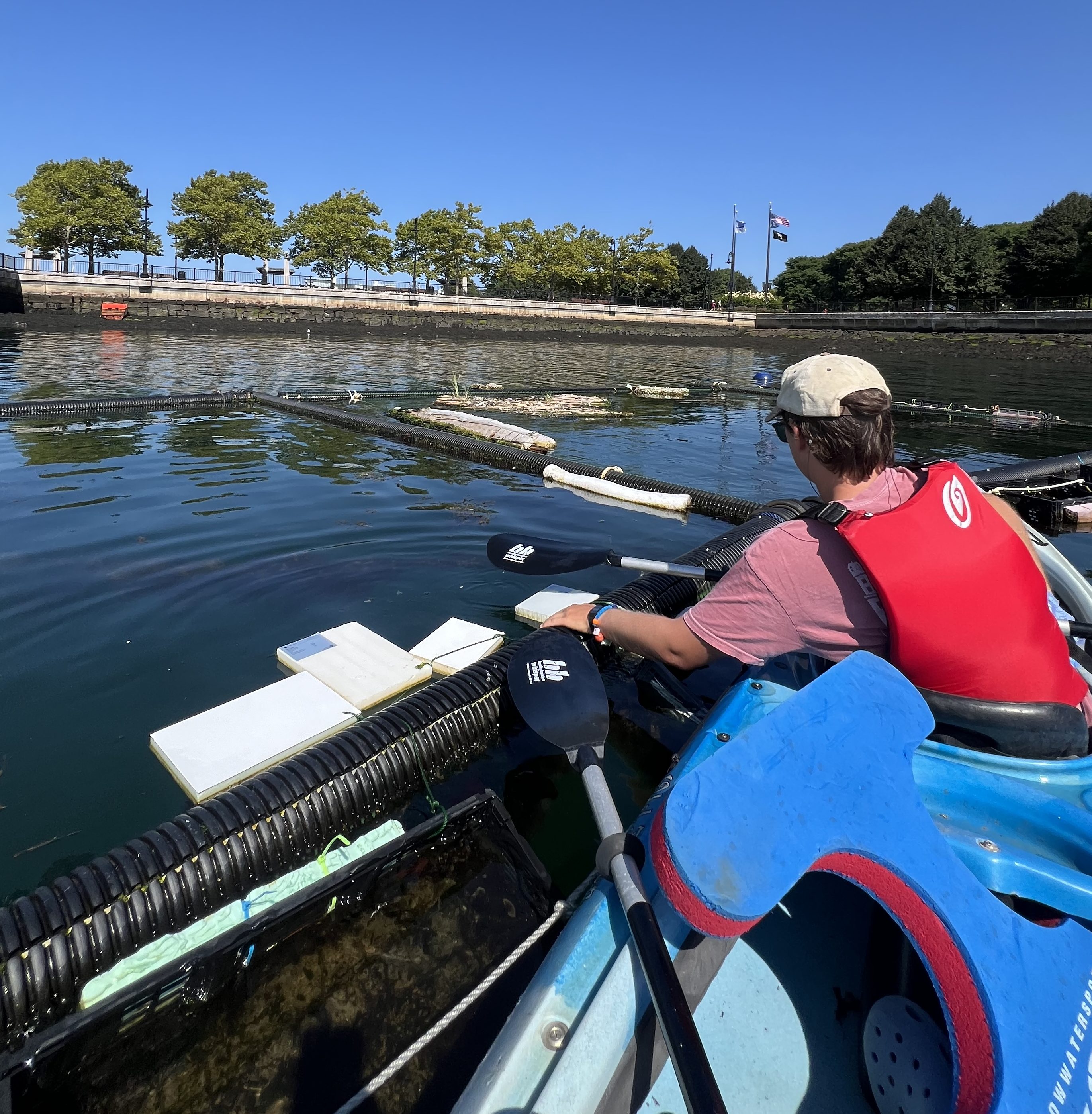
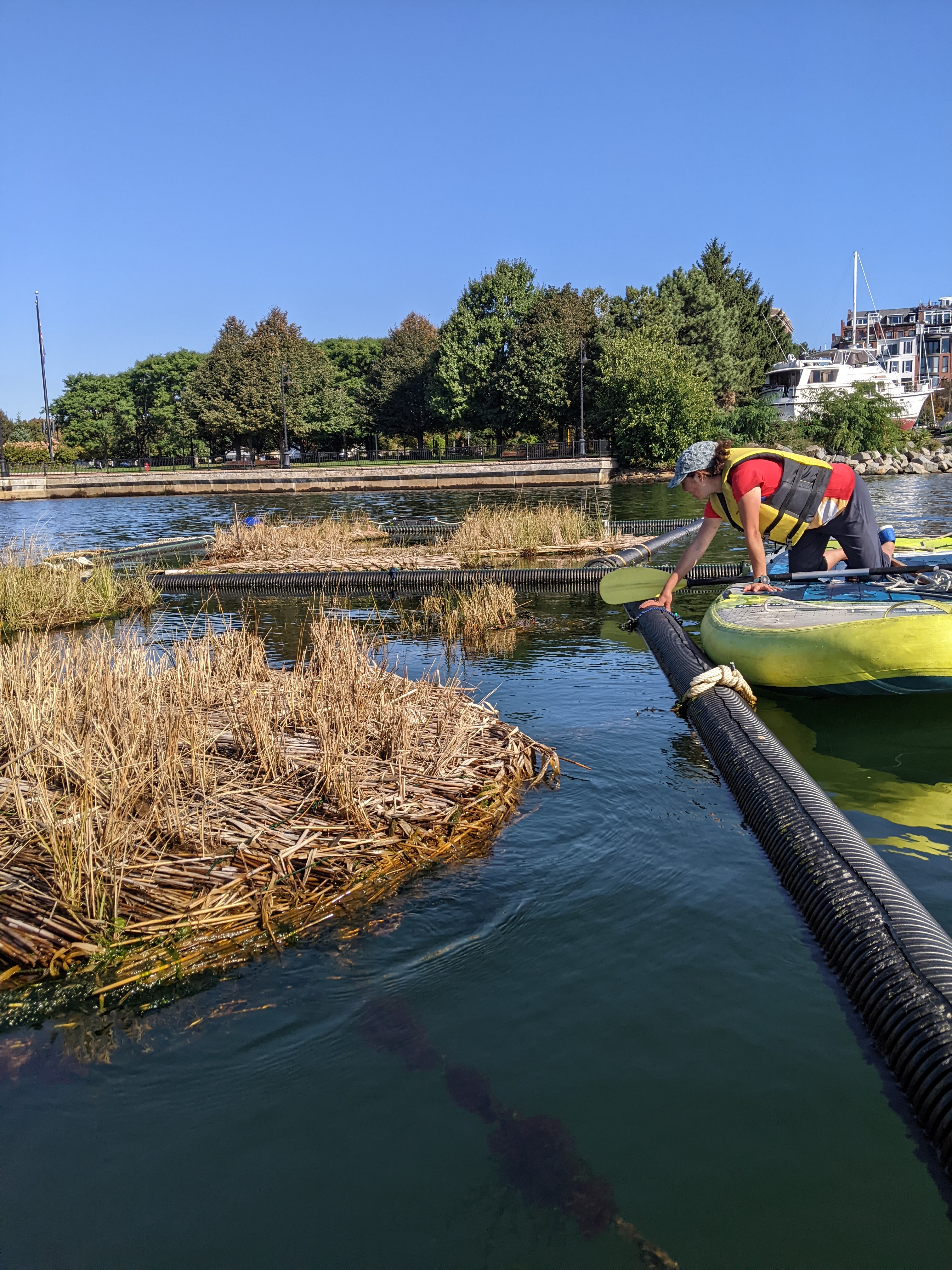
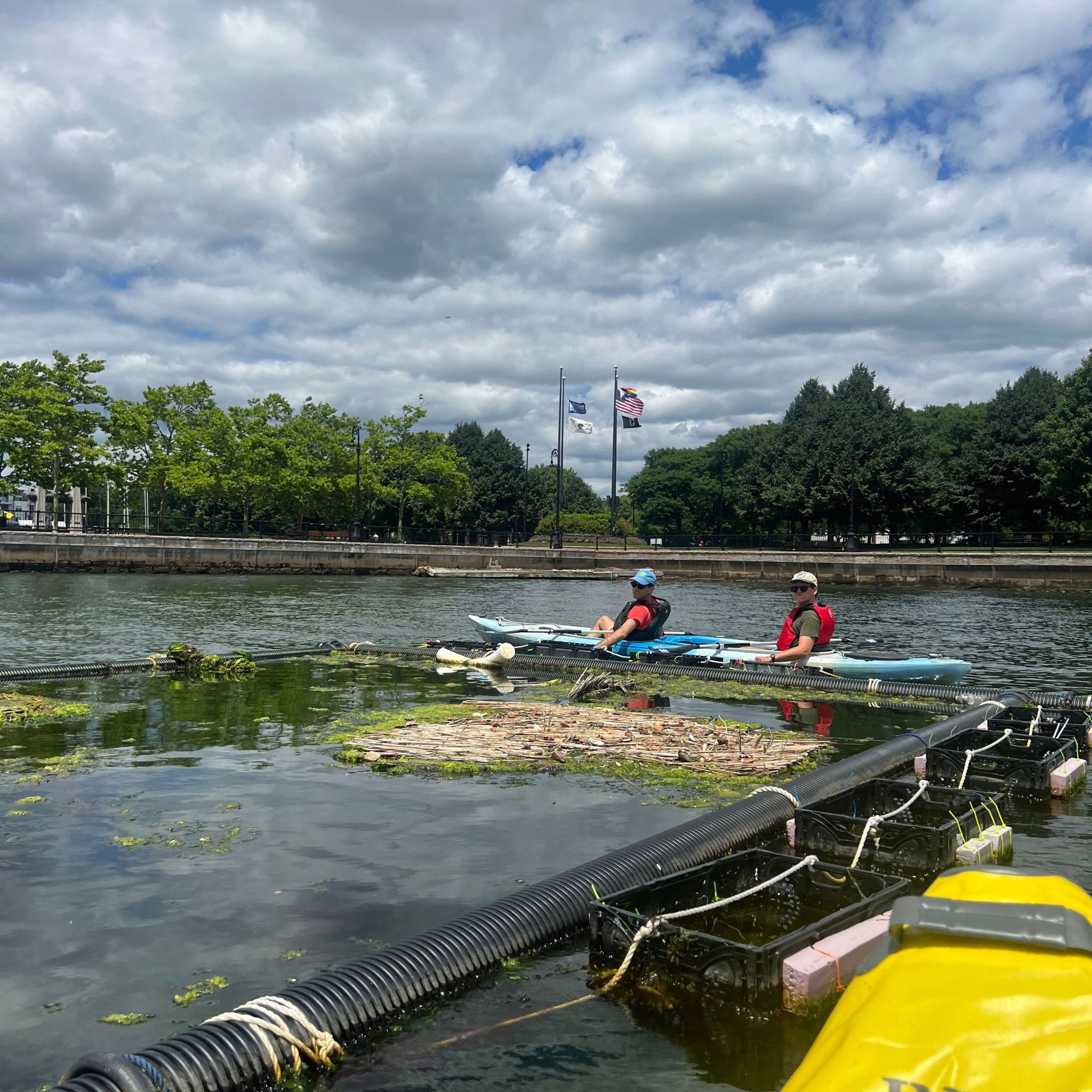
The Floating Frame is visible from shore at Piers Park in East Boston. It allowed for lots of experimentation with our prototype design, as we could quickly launch new prototypes there using only kayaks. The frame can hold up to a dozen prototypes, eliminating the challenge of individual anchors or buoys for each prototype, and making it much easier to routinely monitor them. Prototypes were positioned within the frame and affixed to it with nylon rope. Additional floating elements were attached to the outer perimeter to conduct smaller experiments that focused on Spartina seed immersion growing and buoyancy foam alternatives.
Having an accessible deployment location that is near our assembly yard unlocked our team’s potential for nimble, hands-on innovation: we were able to quickly move from idea to prototype, and back again, learning by trial rather than speculation.



Site Description
The Floating Frame is located 200 feet off the Southeast corner of Piers Park, tucked between Piers Park and Boston Shipyard and Marina, with about 20-30 feet of water depth. The frame is exposed to ship wake and low to moderate wave energy of Boston’s inner harbor. The frame itself is constructed of linear corrugated high-density polyethylene (HDPE) tubing that allows rope to be affixed at any point along an edge.
Prototypes

The floating frame holds most iterations of the floating wetland prototypes: the Spiral Net, Oriented Layered, and Pontoon Net. Prototypes are added to the floating frame upon completion, and routinely observed with a standardized monitoring protocol.
Monitoring
The Floating Frame provides easy access for monitoring throughout the year. Visible from the shore and accessible by kayak, the prototypes could be readily observed throughout the year. Our monitoring protocol consisted of:
- Assessing the Spartina alterniflora shoots on each prototype, measuring for average and maximum shoot height.
- Taking outer coconut fiber net stretch readings with a spring-loaded tension meter and a ruler.
- Measuring unit draft, or how low a prototype is sitting in the water, to track trends in buoyancy.
- Taking top-down and bottom-up photos and videos using a waterproof camera on a monopod.

Successes & Failures
Successes:
- The Piers Park Floating Frame was our first successful permit application with the Boston Conservation Commission, which gave us a crash course in the many government entities and bureaucratic hoops involved in such permit processes.
- Having a nearby deployment location allowed us to iterate and innovate quickly, resulting in leaps and bounds of research innovation and our most successful floating prototypes.
Failures:
- none!
 emerald-tutu.com