
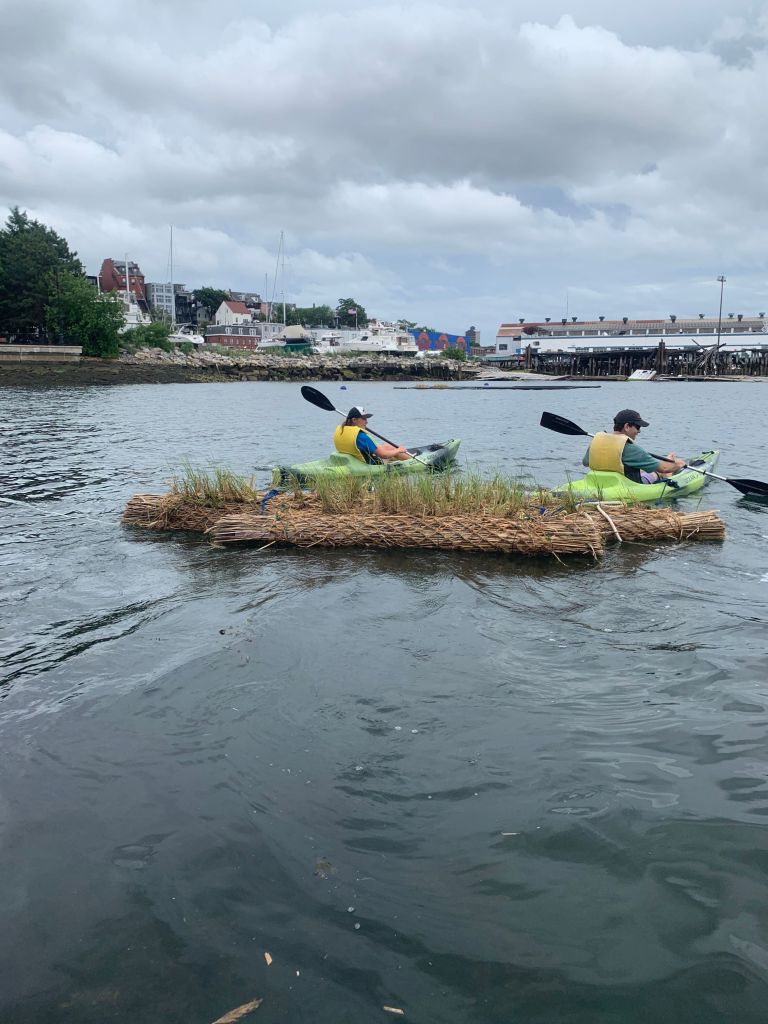
The Pontoon Net prototype consists of three linear coconut-fiber tube nets which are filled with Phragmites australis reeds. The outer two pontoons have a foam block at their core, and the middle pontoon contains only reeds. These pontoons are lashed together side-by-side, and are planted with Spartina alterniflora seedlings.
After launch, the three pontoons shifted in relation to one another based on their buoyancy distribution, and over time the center pontoon settled further down into the water and tilted. Since the center pontoon was ultimately suspended just underwater by its two neighbors, we saw the living Spartina alterniflora plants in it survive and, surprisingly, flourish.
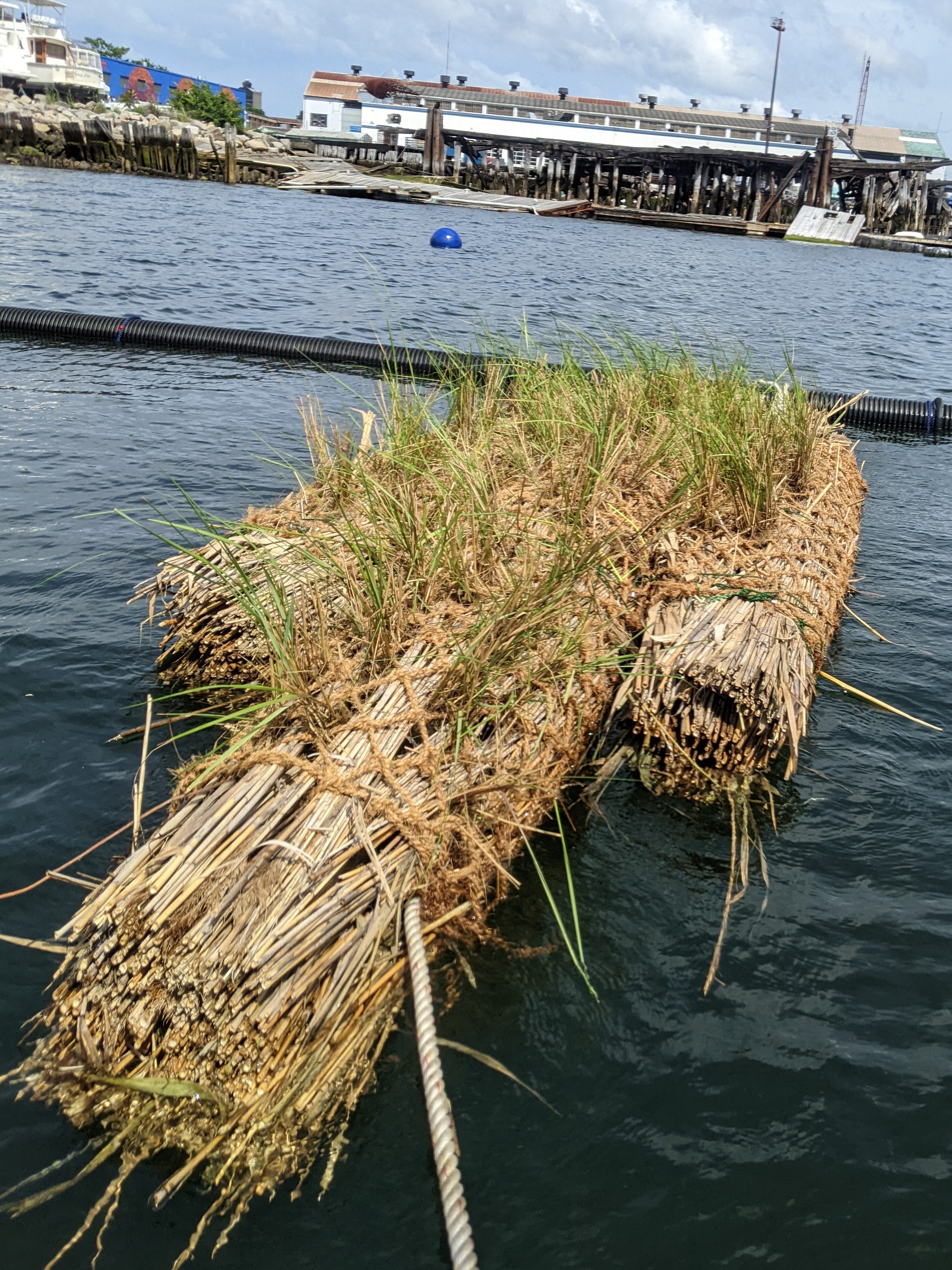
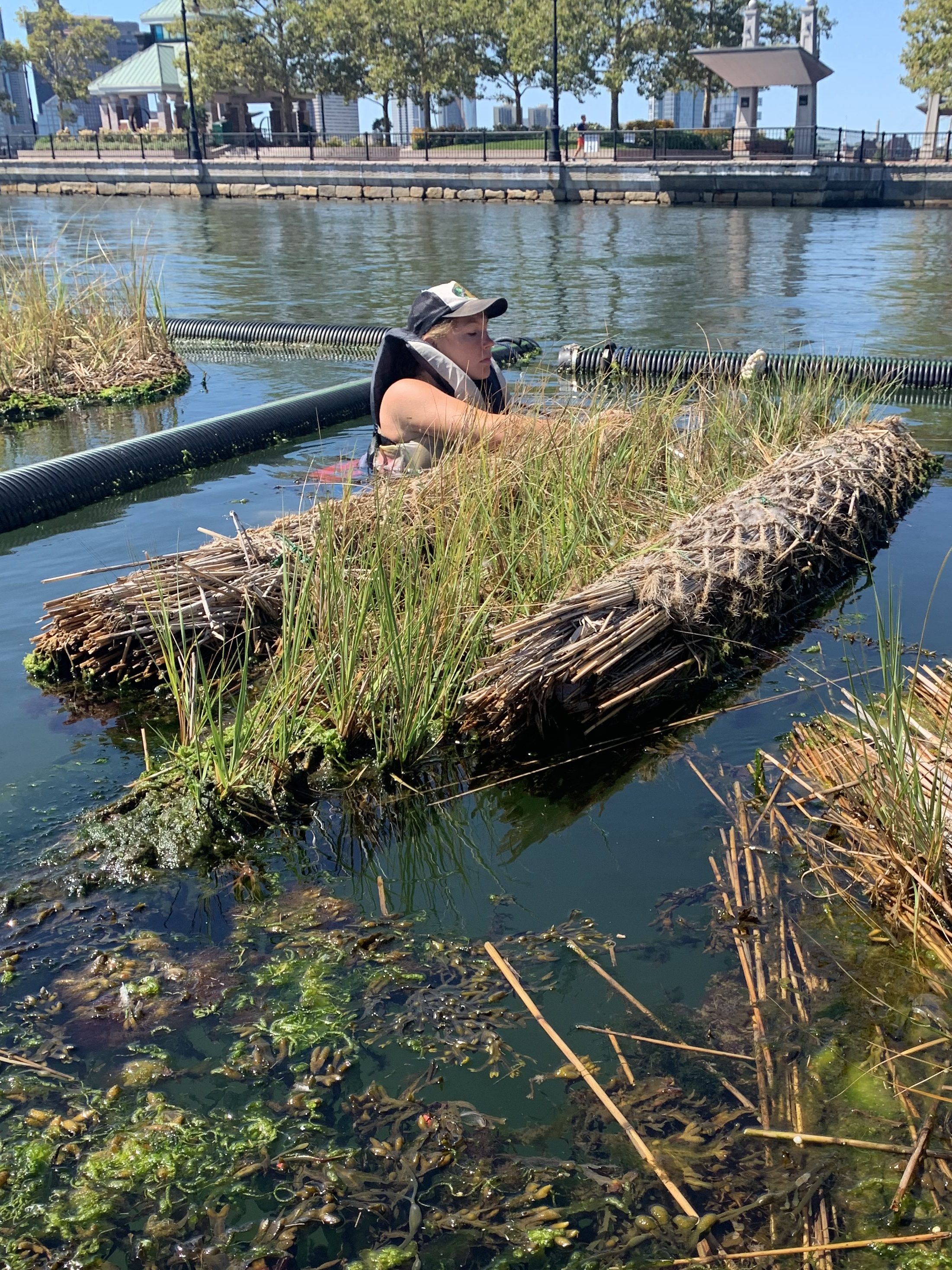
How It’s Made

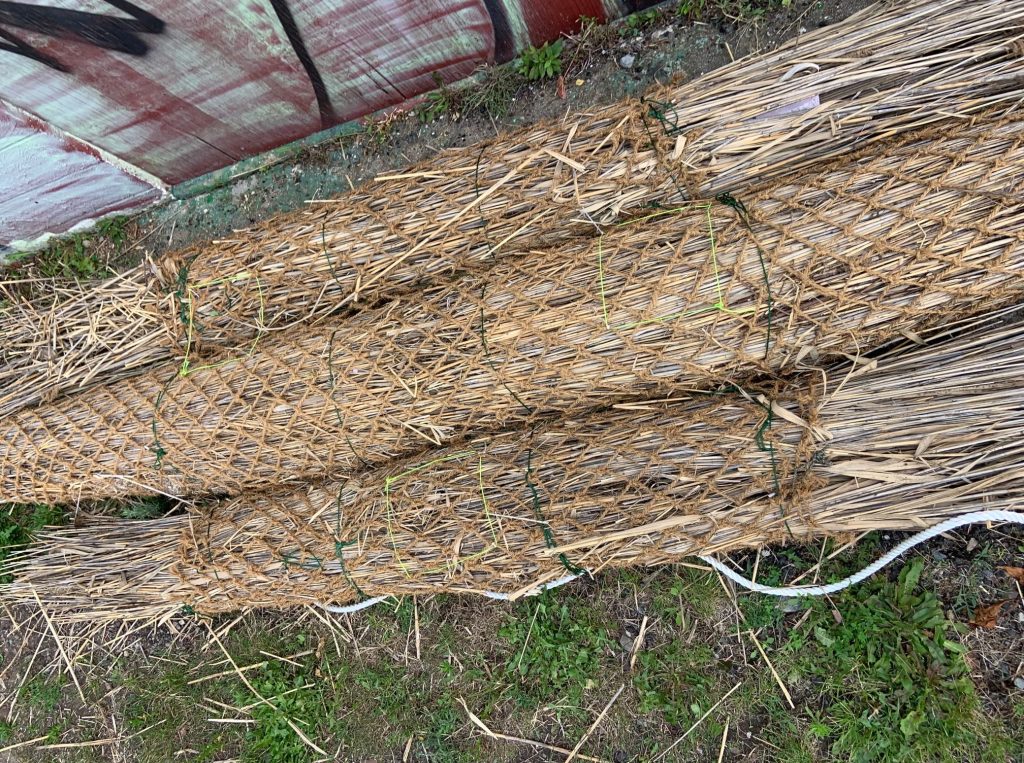
The pontoons are individually created by assembling the Phragmites reeds and foam blocks on a tarp. The tarp is wrapped around the biomass and foam, and a coconut fiber tube netting is slid over it. When the plastic tarp is removed, the netting stretches and conforms to the shape of the materials inside; since these pontoons are only about 6 feet long, their ends taper inward slightly.
The pontoons are then lashed together with thin nylon string to create a “raft” that holds its position rather than rolling in the water, as a single pontoon would.
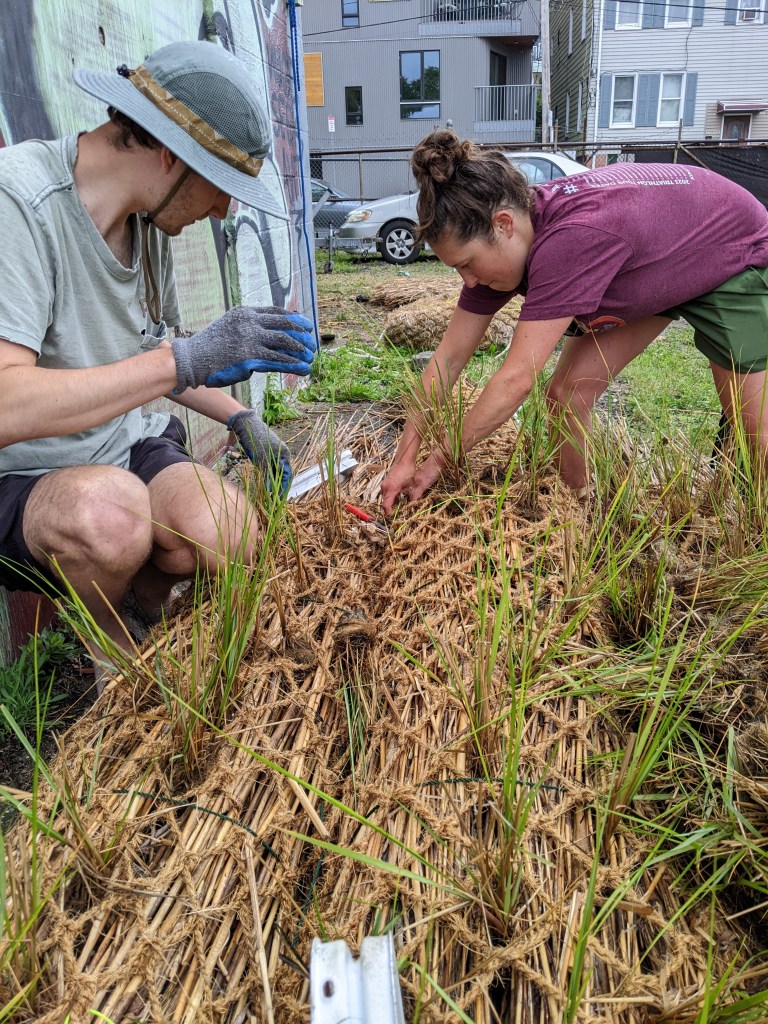
We adapted the frictional tension yoke attachment to this side-by-side design, lacing it through the center pontoon. Spartina alterniflora seedlings were planted into the prototype before deployment.

Deployment Locations
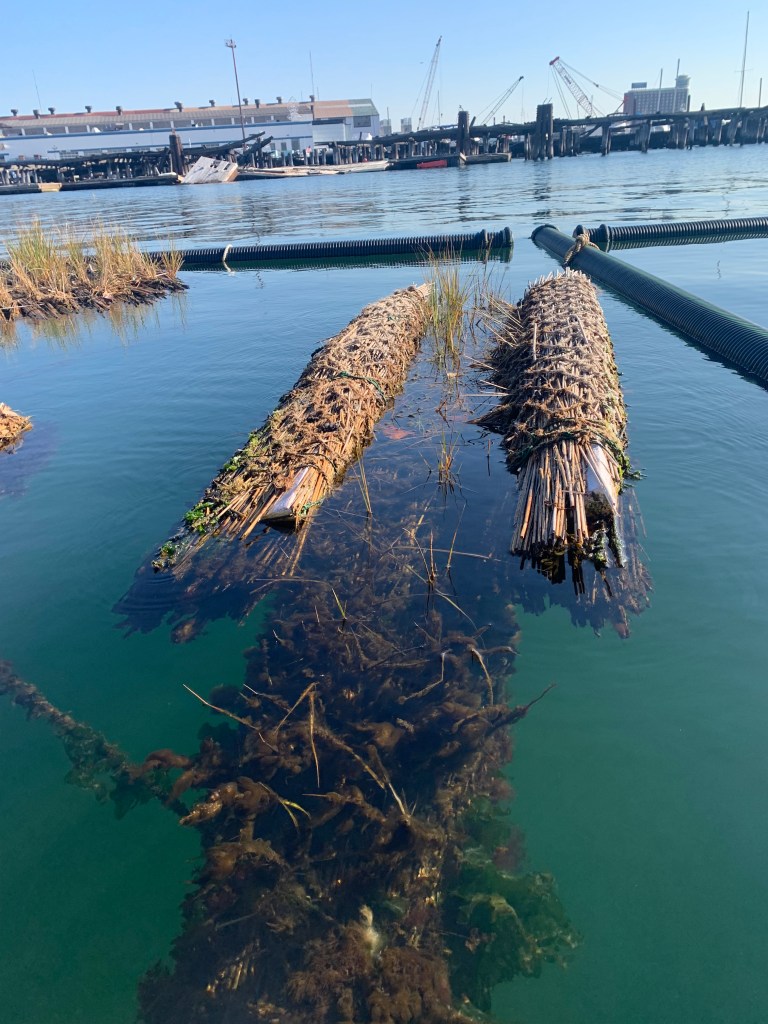
The Piers Park waterfront floating frame held the only Pontoon Net prototype that we created. The prototype was attached directly to the frame by rope that linked it to the frame on each end.
Successes & Failures
Successes:
- The rounded shape of the individual pontoons, the crevices between them, and the submerged center pontoon provided more inner shelter for the seedlings, which sprouted significant shoots and roots.
- The pontoons settled and tilted in a way that provided a range of water immersion depths (from -9” to +3”) of the Spartina alterniflora seedlings, which allowed us to observe the growth of seedlings in a range of settings below and above the water line.
Failures:
- The side-to-side arrangement of the pontoons allowed the substrate to loosen and the pontoons to shift. Observing this tendency encouraged us to move on to other prototype designs.
- The ends of the pontoons were weak points, with vulnerable reed ends and slack in the coconut fiber netting.
- The tension yoke attachment was ineffective in this form, because it ran parallel to the biomass fibers and was unable to get proper traction.
- The foam was not evenly distributed through the pontoons, and the disequilibrium caused the whole prototype to sag to one end.

 emerald-tutu.com