
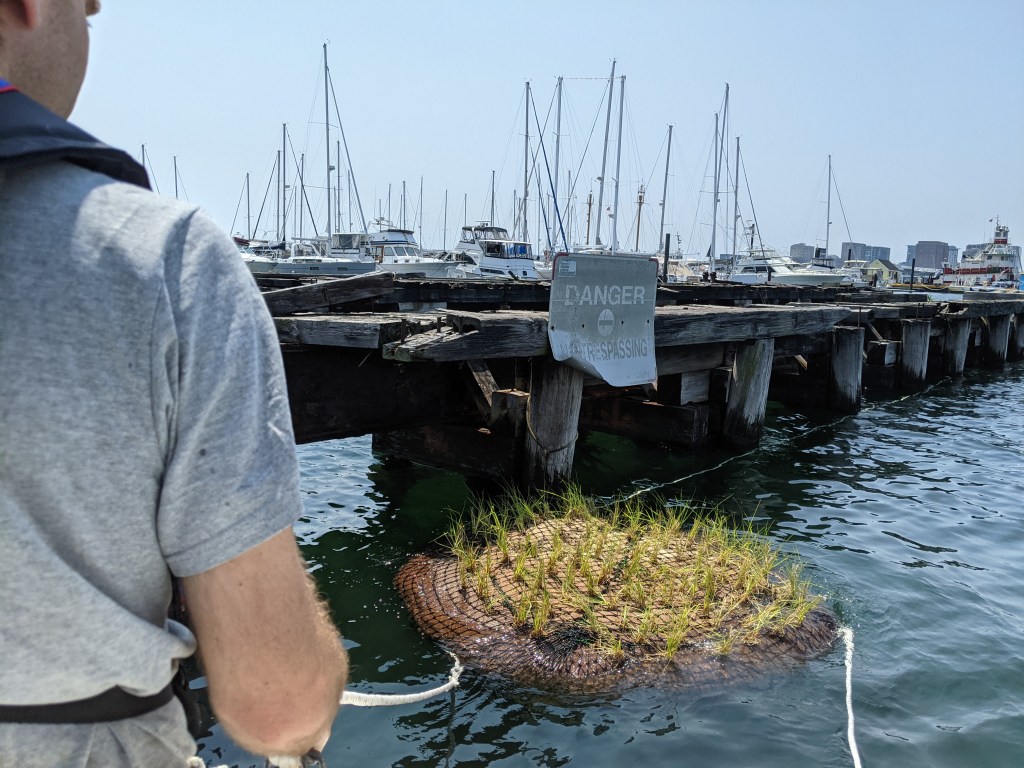
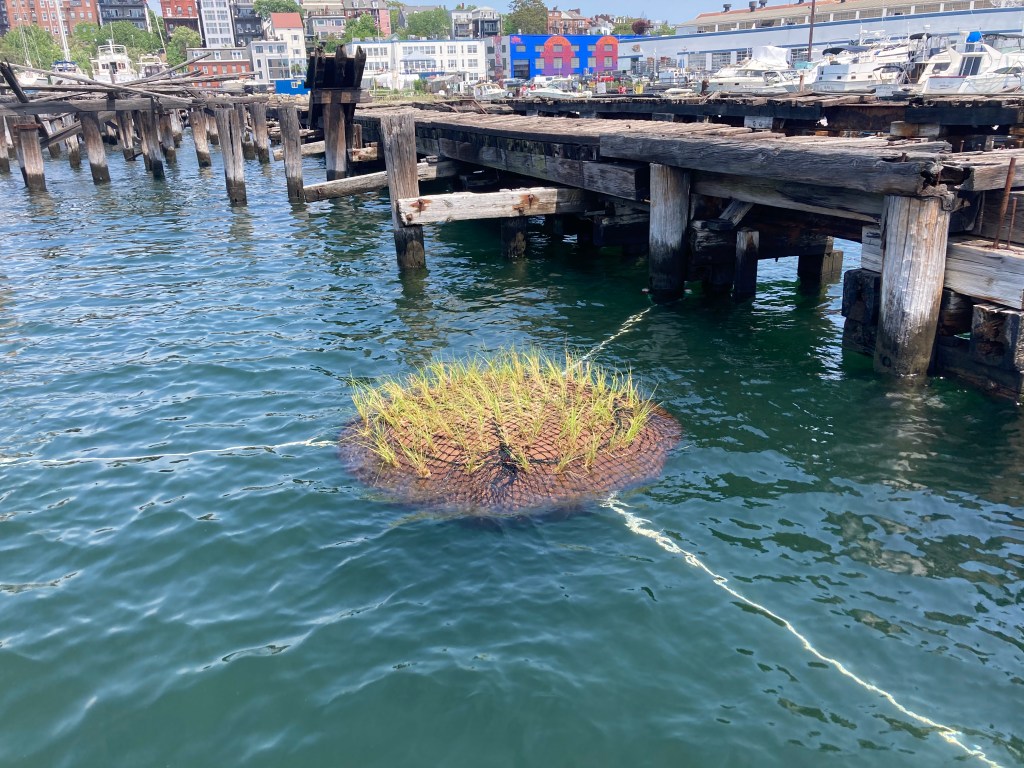
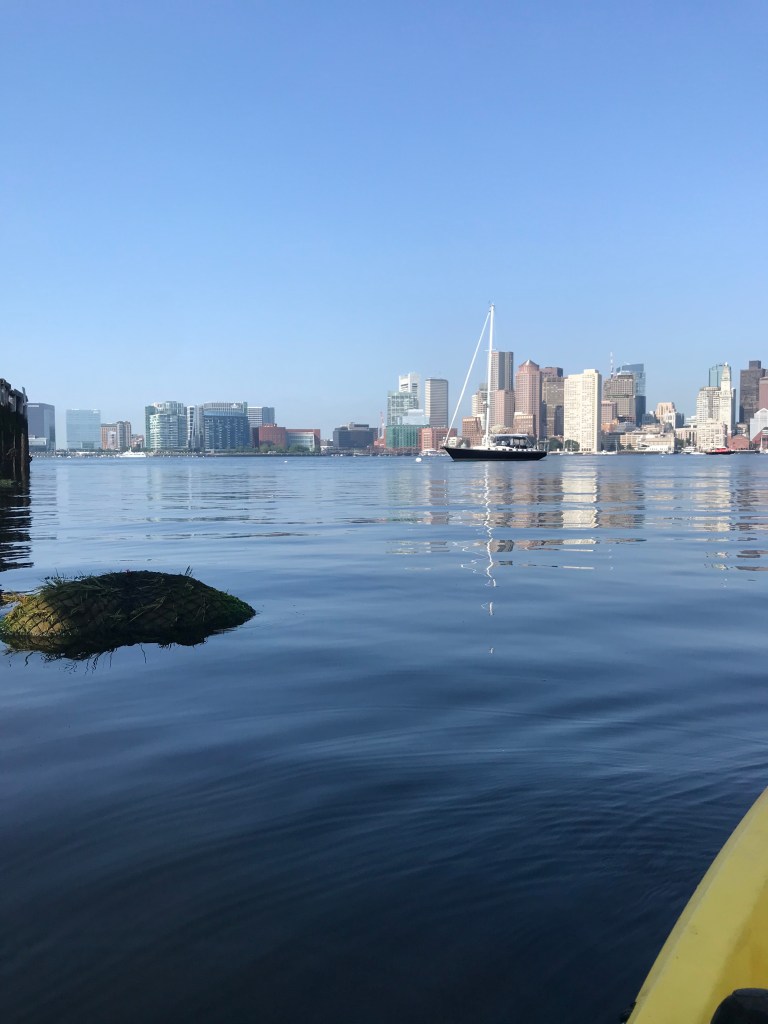
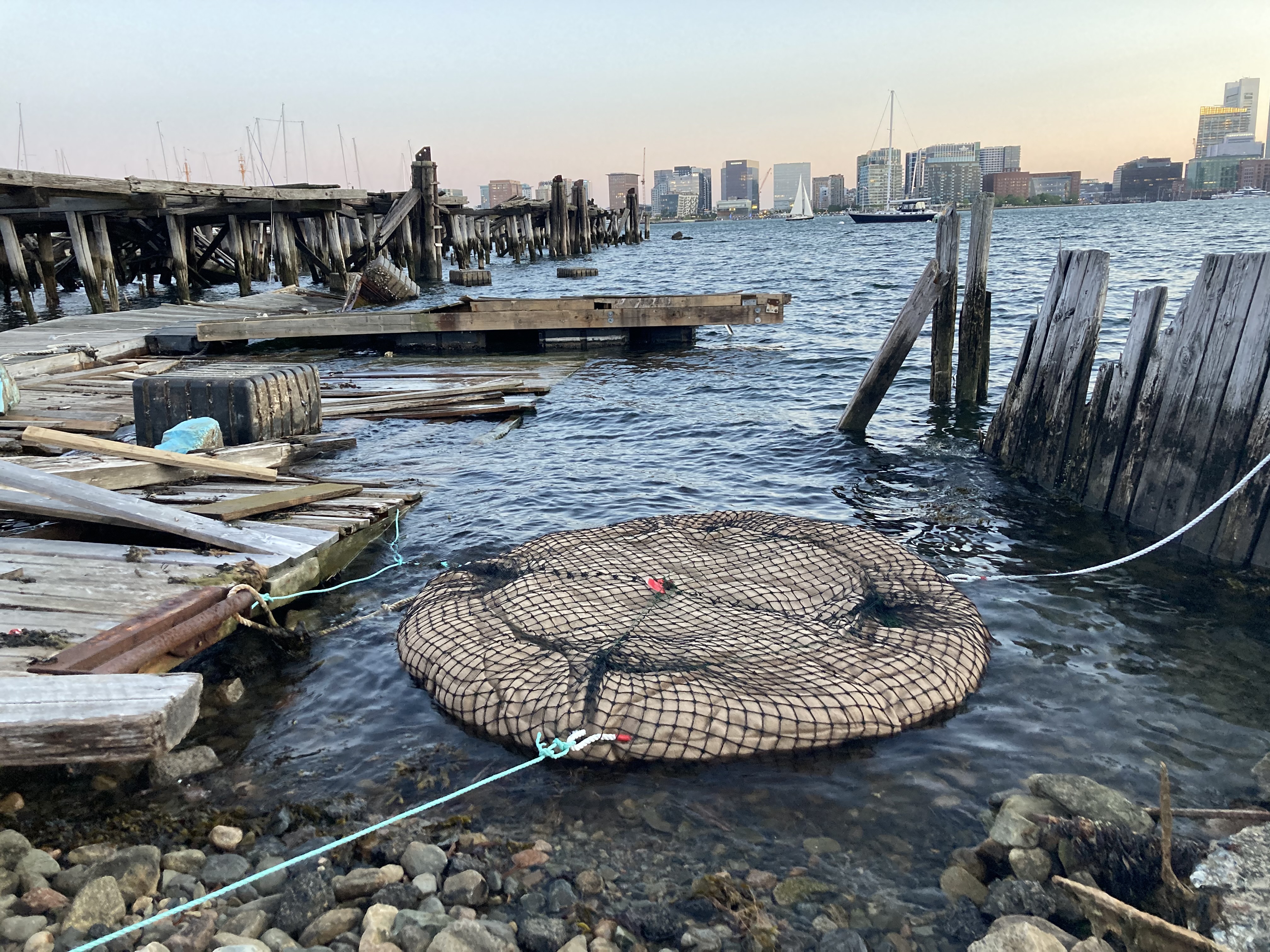
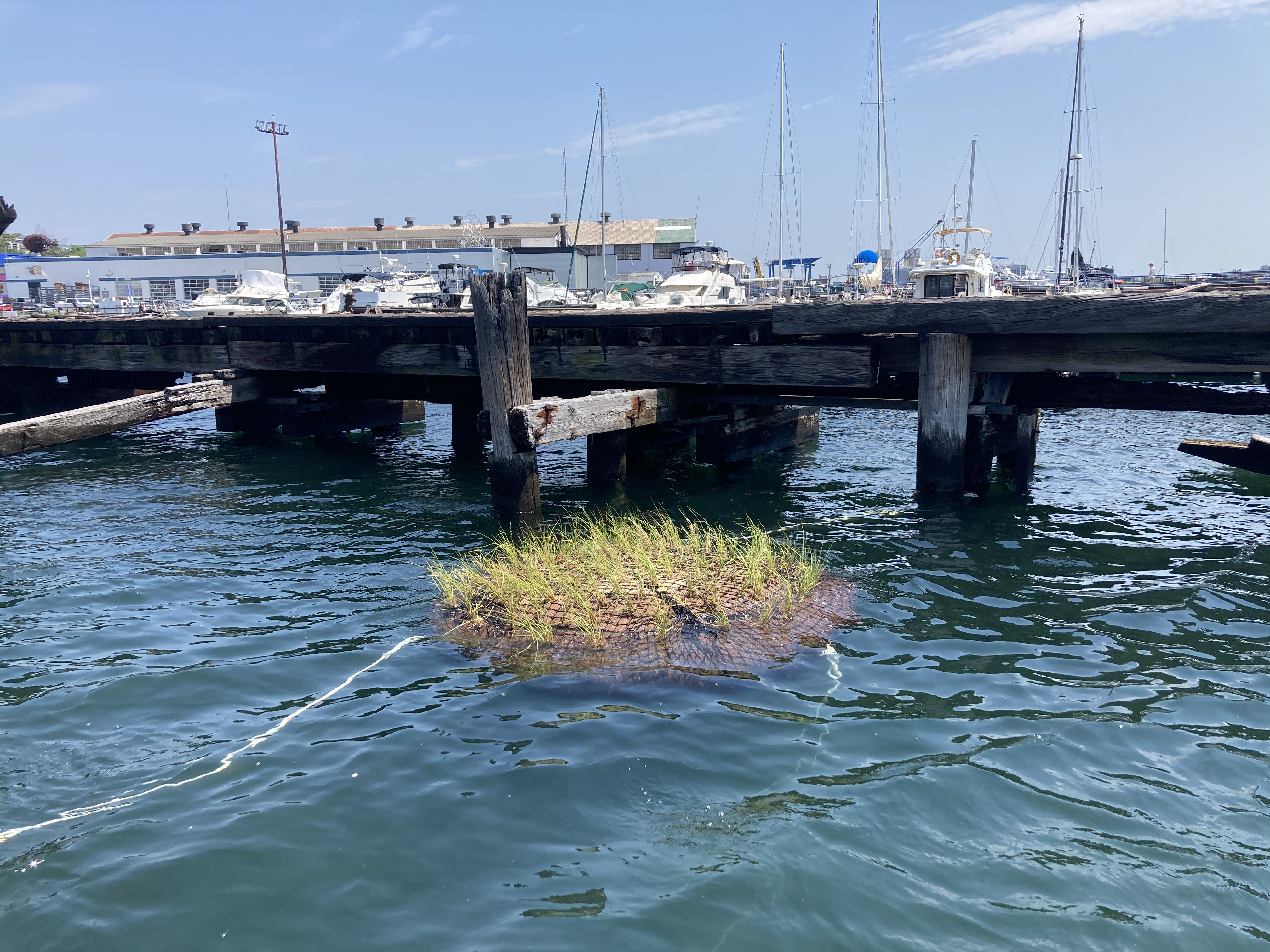
We installed our first full-scale prototype in East Boston Harbor in May 2021, leaving it in the water until the end of October. For this prototype test, we intended to assess the durability of the materials, the integrity of the unit design, and the health of the added Spartina alterniflora plants and the volunteered marine growth.
How It’s Made
With sewing needles, burlap, polystyrene foam, and a truckload of wood chips, we began building a massive mat of biomass below the high tide line on a rocky shore amidst abandoned piers in East Boston.
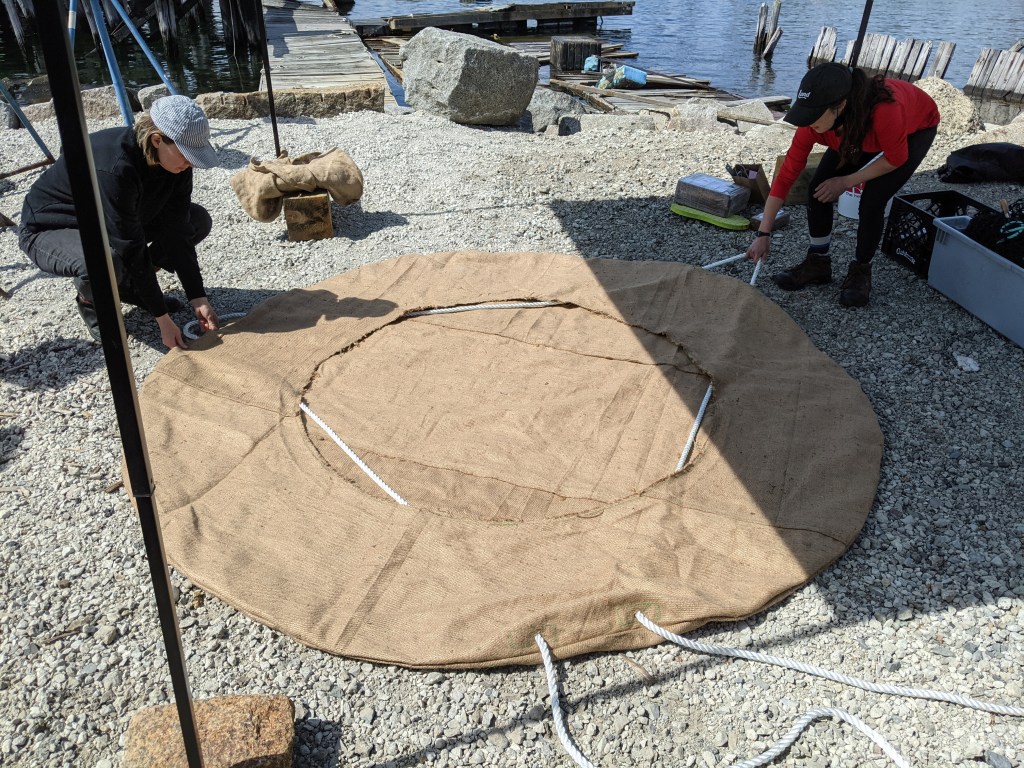
The biomass materials mixed together in this prototype were loose coconut fiber, coconut husk mulch, and wood chips. These were encased in a 6 foot diameter pre-made two-layer sack of burlap and nylon net, with added foam and a simple rope attachment system (that was the precursor to our tension yoke).
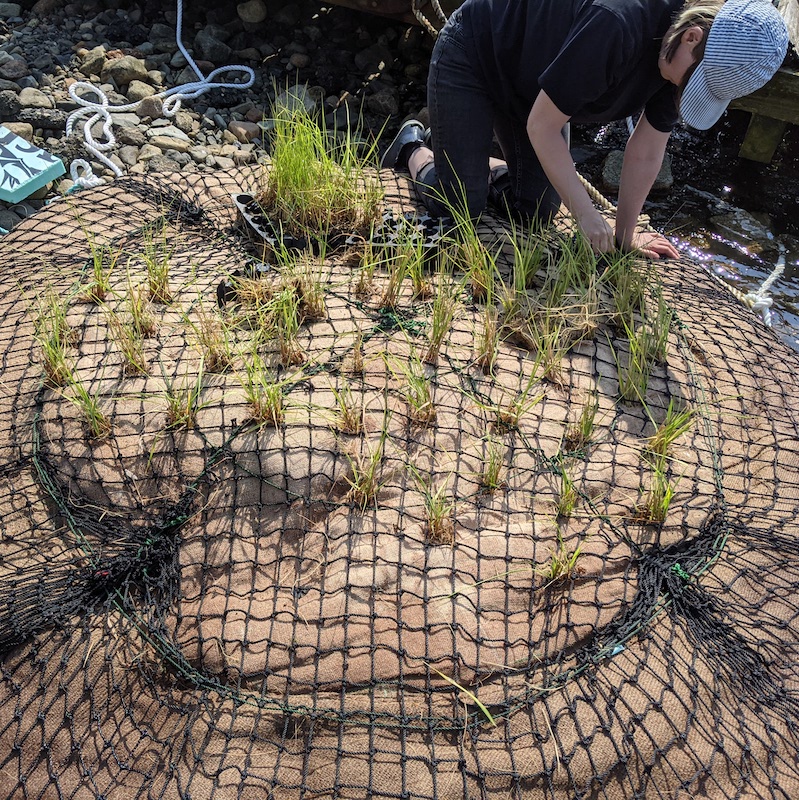
The burlap was sewn shut from a top center flap, and finally the net was laced shut over that with nylon string. Once closed, the Spartina alterniflora plugs were inserted through the outer layers into the mulchy top layer.
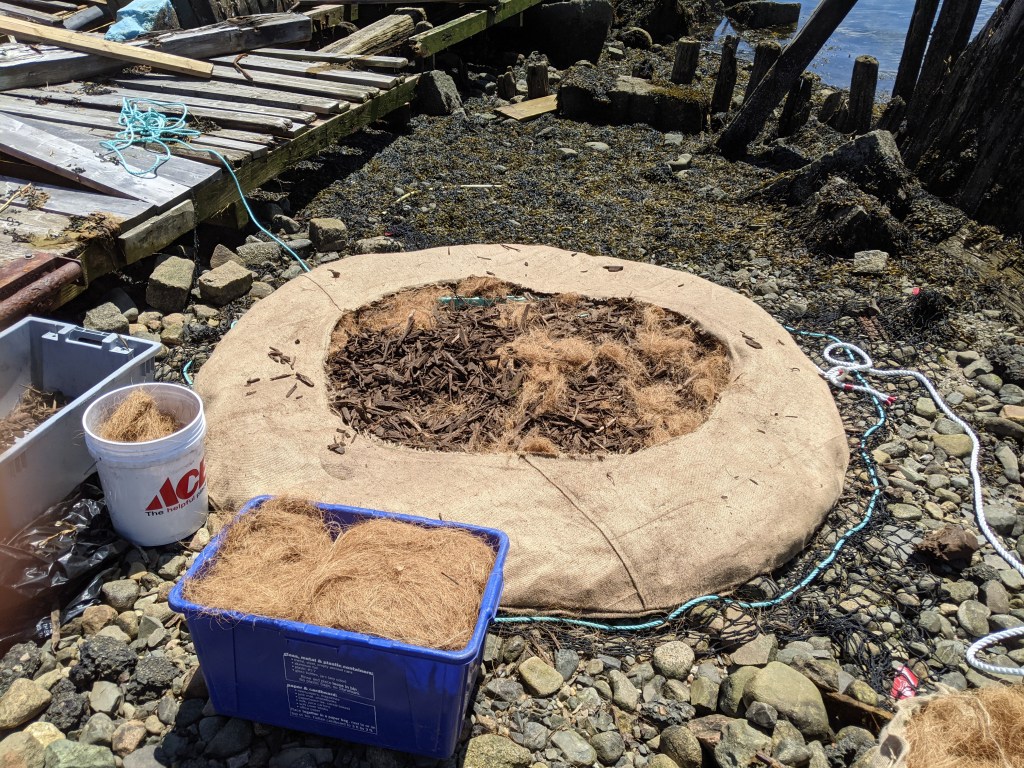
The entire prototype was assembled in one tidal cycle below the high tide line, enabling us to fabricate such a floppy heavy prototype without worrying about transportation and launch. The strategy worked, but the manual labor and harsh environment spurred us to prioritize off-site fabrication for all future prototypes.
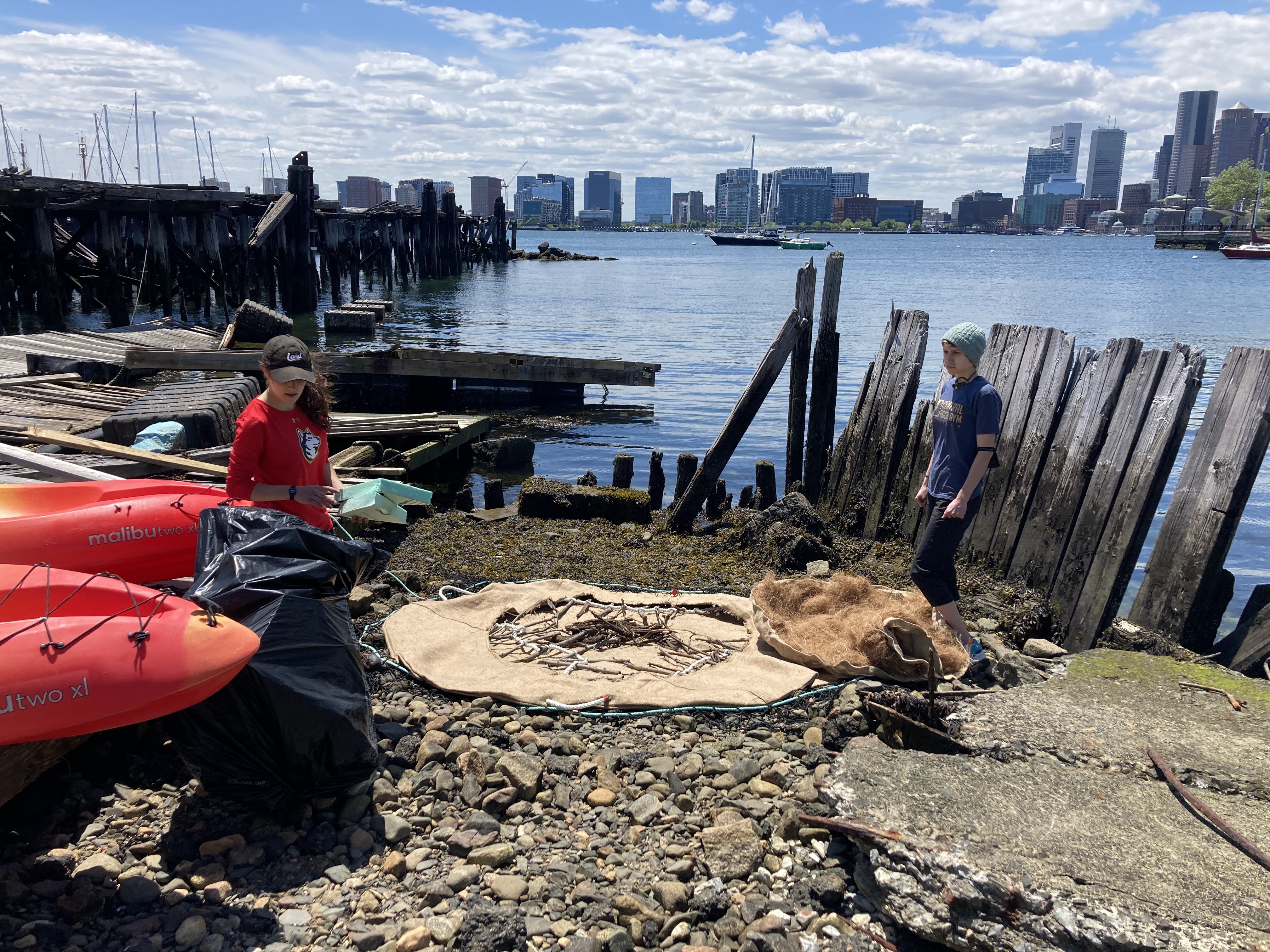
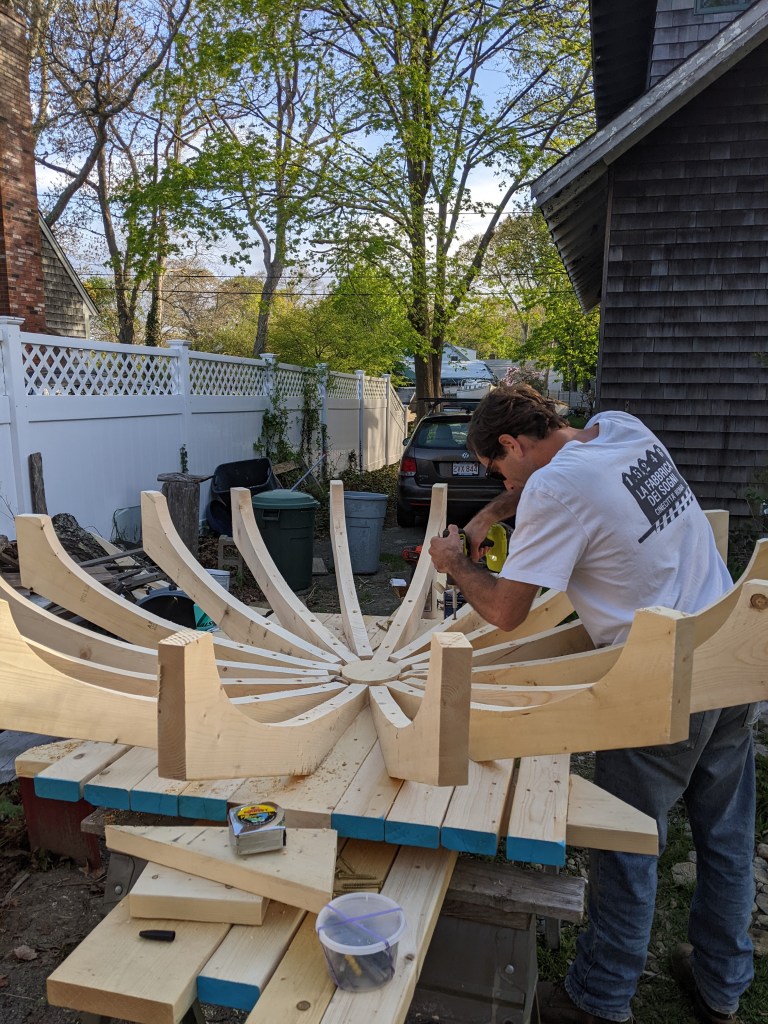
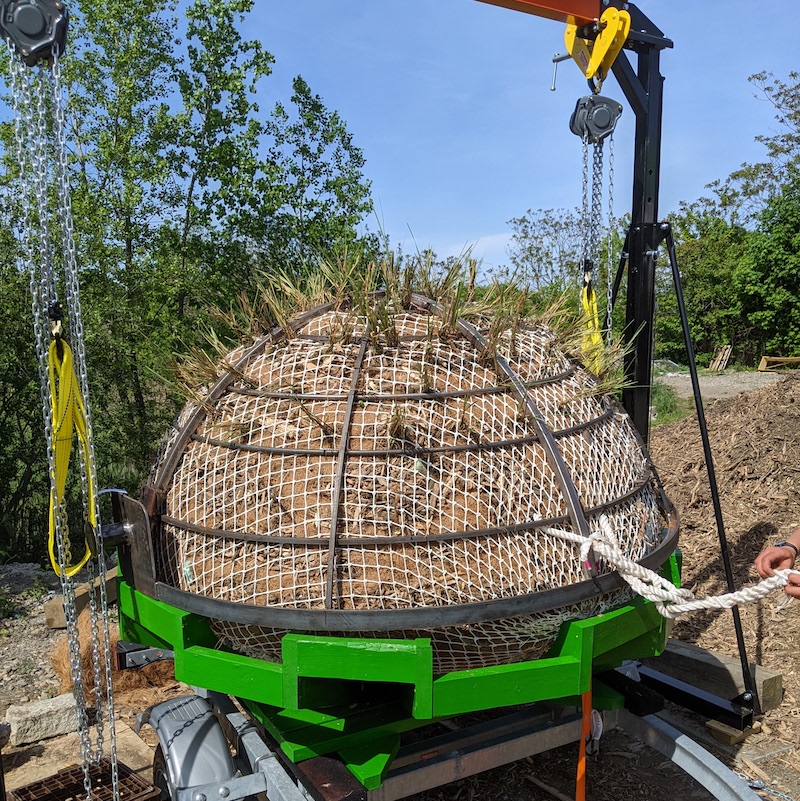
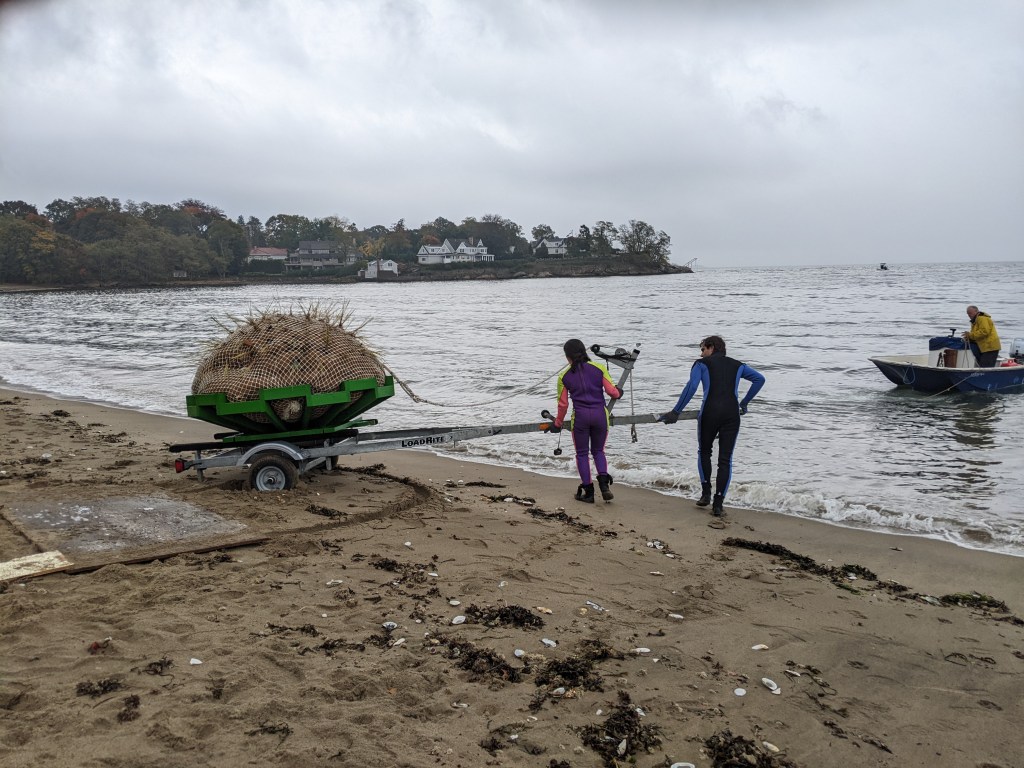
After the launch and monitoring of this unit, we designed and built an apparatus to help us prefabricate similar prototypes off-site and load them onto a trailer for launch. A suspended 5 foot diameter rounded metal “basket” provided a work area and mold form for layering biomass and other components together, and a rounded wooden cradle then received the completed prototype. Then, the cradle would be hoisted onto the rails of a boat trailer for delivery and launch. We used this system for a season before realizing that the prototype design had some fatal flaws.

Deployment Locations
The first prototype was launched in East Boston as a solo deployment, nestled among the decrepit pilings of old piers a short distance from the intertidal assembly area. The second generation of prototypes, created with the basket and cradle apparatus, was deployed in three locations: East Boston MA, New Haven CT, and Beverly MA.
Successes & Failures
Successes:
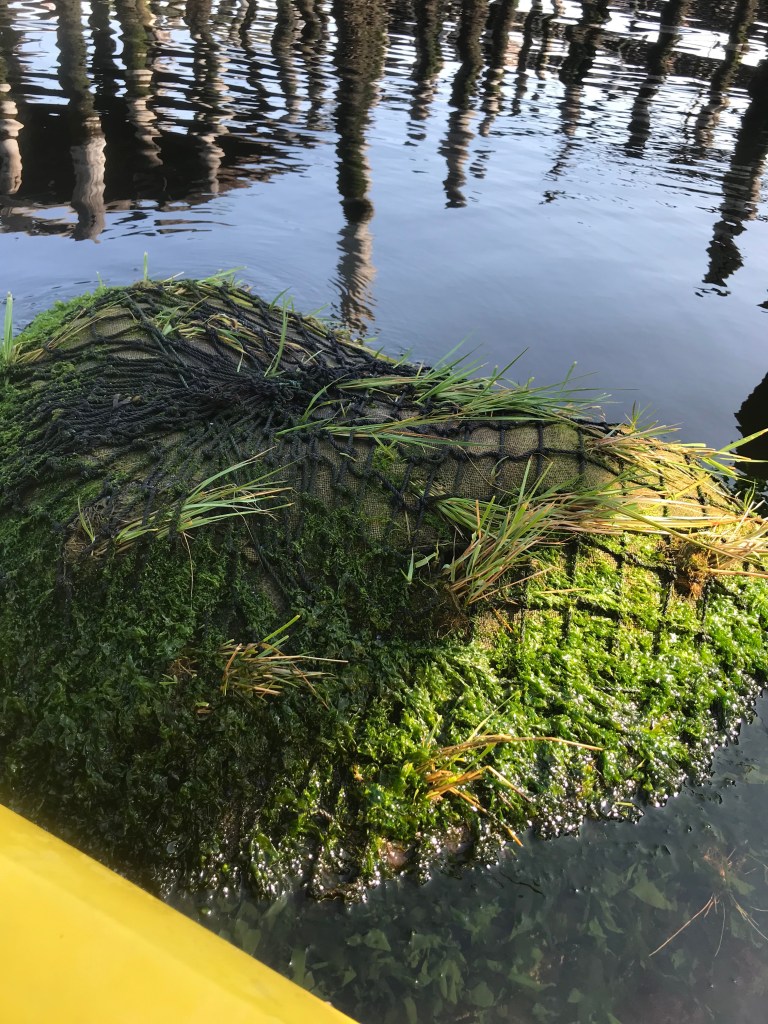
- Only 6 weeks after installation, in mid July, we observed significant growth of the planted marsh grass seedlings and substantial colonization by aquatic organisms on the very first of the Pouch Net prototypes.
- Using a GoPro camera, we were able to document and start identifying several of the submerged species attached to the prototype below the water.
Failures:
- By later that summer, the shape of the prototype had changed significantly, deforming from the disc shape into a loose vertically-stretched shape.
- By the fall, the prototype was nearly entirely submerged and much of the organism growth had slowed. While there was still sea lettuce growth near the top of the mat, the marsh grass was below water and had experienced significant stress.
- The second generation of prototypes failed for many of these same reasons, although we had attempted to adapt them by creating a more sizable round shape to begin with. Since they were deployed further away from our home base, we were not able to keep a close eye on them.
 emerald-tutu.com