
This study aimed to determine how much nitrogen Spartina alterniflora could uptake in our unique floating wetland prototype substrate compared to the natural peat-based substrate of marsh grass.
Nutrient uptake is the process in which plants absorb essential nutrients they need from the environment, primarily through roots in plants. Nutrient uptake ability is not only important to ensure that organisms have enough resources to grow and reproduce, but it can also provide a crucial ecosystem service in settings with an excess of nutrients. Too many nutrients in an aquatic ecosystem can lead to eutrophication, oxygen depletion, and eventual die-off. Nutrient levels are consistently high in Boston Harbor due to sewer overflows, fertilizers in runoff, and other human sources. Nutrient uptake by plants is important in keeping levels low enough to support a healthy ecosystem.
We wanted to know Spartina alterniflora’s capacity for nitrogen uptake from a typical urban harbor system to quantify the water quality improvement we can expect from our nature-based infrastructure prototypes.


Set Up
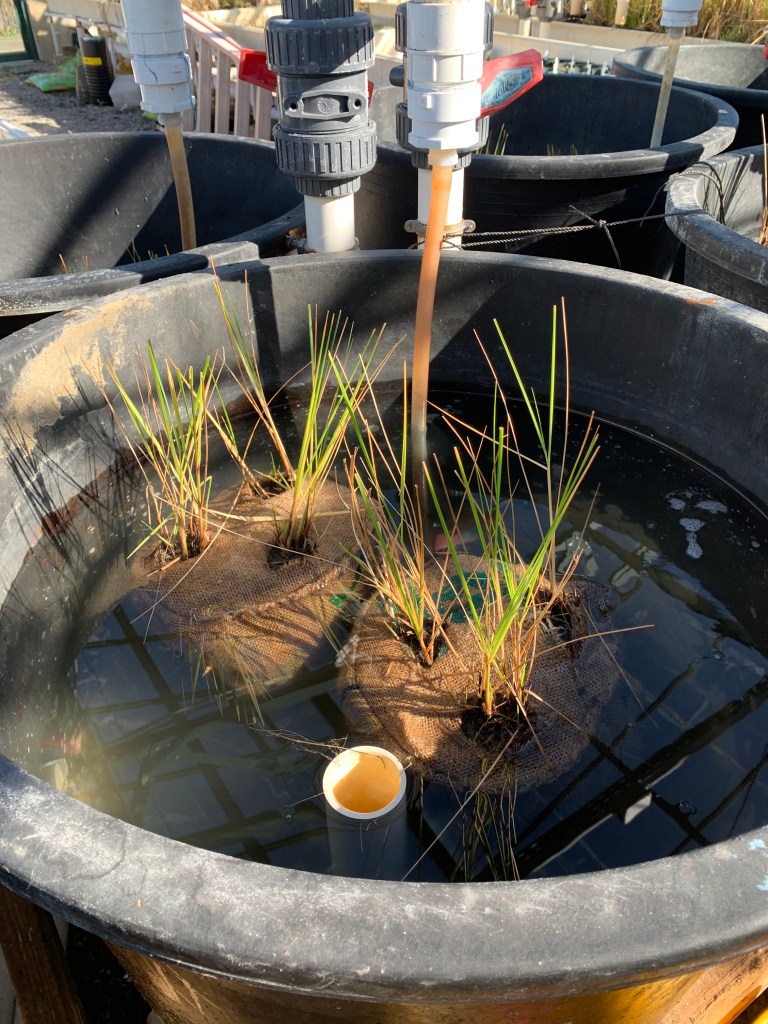
We investigated these questions by testing the growth and nutrient concentrations of Spartina alterniflora in a controlled laboratory experiment. We used highly controlled miniature systems, known as mesocosms, to enable us to remove external factors and carefully measure nutrient levels in different parts of the plants, substrates, and surrounding water. These mesocosms were built in separate ocean water-irrigated tanks in a marine research laboratory greenhouse.
In the first half of the mesocosms, we used a floating wetland biomass-based substrate made out of wood chips, coconut fiber and some soil. In the second half of the mesocosms we used a control peat-based substrate made with 2:1 mixture of peat soil to sand. We then added an isotope of nitrogen (15N), known as a “nitrogen tracer,” at varying concentrations. The different concentrations (High, Medium, Low, and Zero) and the different substrates (biomass-based, and peat-based) is the variable spread of this experiment.

Data collection
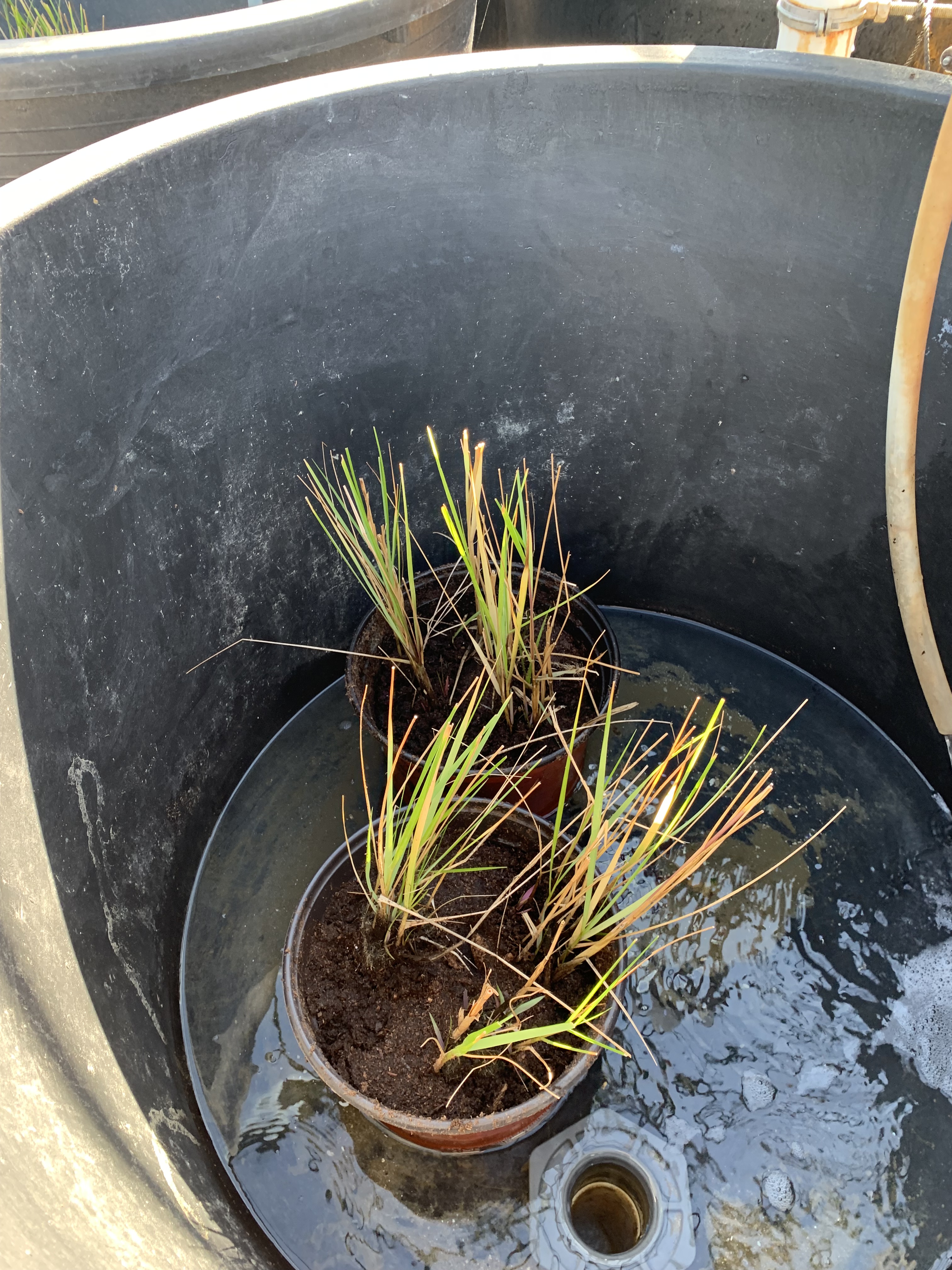
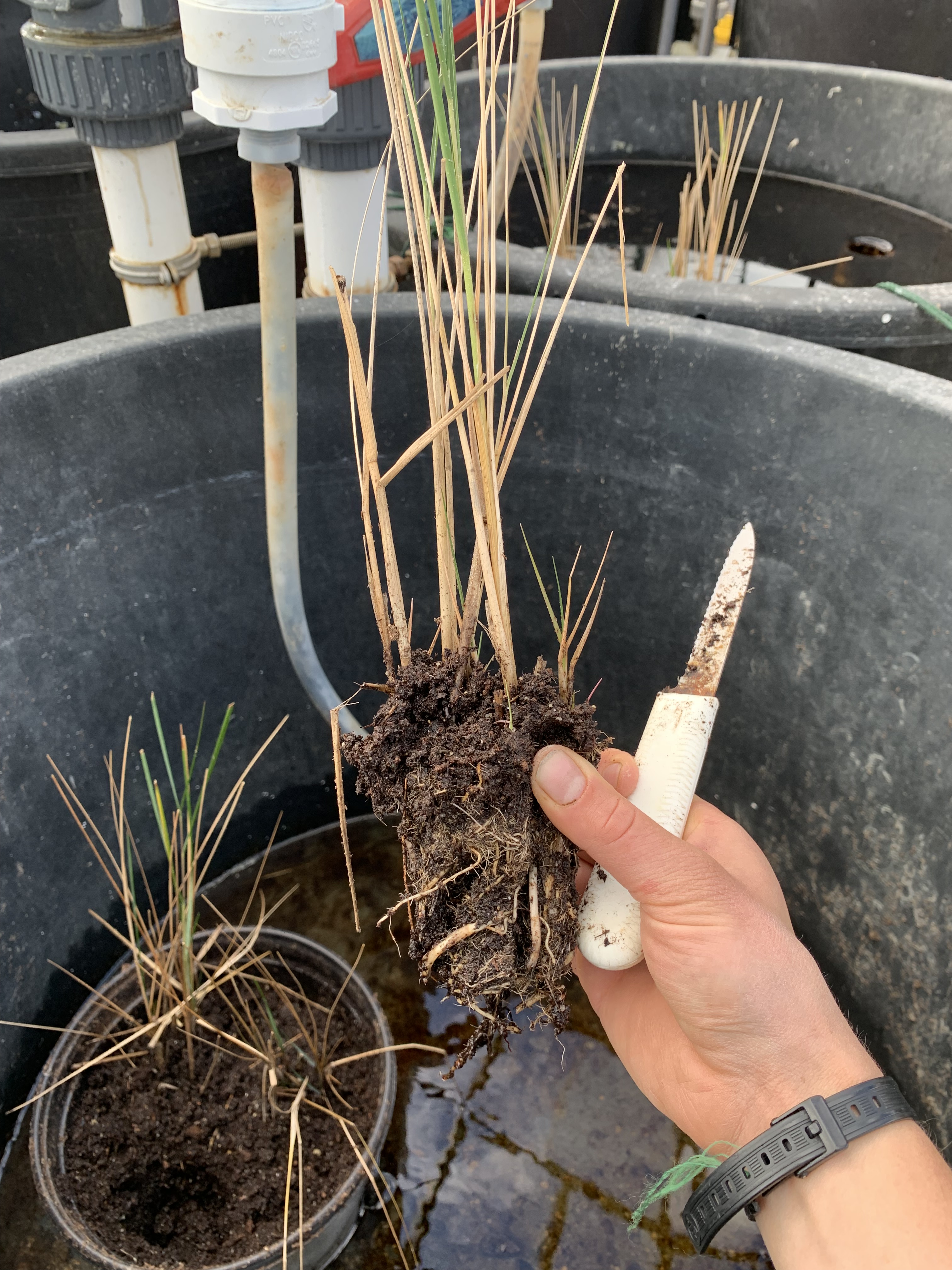
We measured the total nitrogen concentration and 15N concentration in the water, plant tissue, and soil over a 5-week test period (2 weeks of acclimation and 3 weeks of testing). The water and soil we could test non-invasively, but the plant samples had to be cut from the organisms roots and shoots each week in order to preserve a snapshot of the plant’s cumulative uptake at that time. The samples were sent to a stable isotope lab for analysis.


Results
We found that, in almost all cases, nitrogen uptake rates increased over the test period—indicating growth—and higher input concentrations of nitrogen were associated with higher uptake rates. Notably, there was no significant difference between uptake rates in peat-based tests and biomass-based tests, implying that the substrate itself does not impact plant productivity and both peat-based and biomass-based substrates can support plants to uptake a significant amount of nitrogen.
Below: Analysis of nitrogen uptake from the Spartina alterniflora plants per week. The color indicates the input concentration of nitrogen (blue = low, green = medium, red = high) while the symbol represents if the substrate was peat-based or biomass-based.

 emerald-tutu.com